
Iran Tensions Rise as Tehran Keeps Strait of Hormuz Closed Until US Meets Demands
Iran tensions have escalated as Iran has vowed to keep the Strait of Hormuz closed until the United States meets a list of demands that includes compensation for war damage, payment of frozen assets and the lifting of sanctions and blockades. Iran's Revolutionary Guards insisted they would not reopen the Strait of Hormuz until the United States complied with a list of demands, including paying compensation for war damage. Iran's effective blockade of the crucial energy conduit has rattled allies, roiled markets and driven up prices, but US President Donald Trump said he was "low-keying it" in his approach to Tehran, suggesting he believed he could wait them out economically. Iran's Supreme National Security Council laid out a list of conditions for reopening the strait, including an end to the war on all fronts, the lifting of a US counterblockade of Iranian ports, the end of sanctions, the release of frozen assets and compensation for wartime damage. Those conditions echoed the terms of the June agreement, which included a provision to create a $300 billion reconstruction fund for Iran. Iran's Revolutionary Guards said their strategy was to maintain their blockade "until the enemy accepts all our conditions... the strait is now actually a theatre of war for us and not just a waterway." Traffic through Hormuz has dropped significantly amid the ongoing attacks, with at least one tanker struck on Saturday, according to the UAE. Oman's foreign ministry condemned the repeated attacks, without naming Iran. The June memorandum had said Tehran and Muscat would hash out future arrangements for administering the strait in discussion with other Gulf countries and "in line with the applicable international law," which generally forbids tolling in such waterways. Iranian Foreign Minister Abbas Araghchi had said Tehran was only "exchanging messages" with the US via intermediaries. [3]
Iran Maintains Closure of Strait of Hormuz
Iran's Revolutionary Guards insisted Sunday that they would not reopen the Strait of Hormuz until the United States complied with a list of demands, including paying compensation for war damage. Iran's effective blockade of the crucial energy conduit has rattled allies, roiled markets and driven up prices, but US President Donald Trump said Sunday that he was "low-keying it" in his approach to Tehran, suggesting he believed he could wait them out economically. Tehran insists on retaining control of the Hormuz after the war and wants to charge tolls for passage, repeatedly striking ships it accuses of attempting to circumvent its preferred route. Attacks in the waterway, which was free to transit before the war, led to the collapse of an April ceasefire, and mediators have urged both sides to return to the terms of a subsequent June memorandum that set out a path for peace talks. Iran's Supreme National Security Council laid out on Saturday a list of conditions for reopening the strait, including an end to the war on all fronts, the lifting of a US counterblockade of Iranian ports, the end of sanctions, the release of frozen assets and compensation for wartime damage, the Tasnim news agency reported. Those conditions echoed the terms of the June agreement, which included a provision to create a $300 billion reconstruction fund for Iran. Iran's Revolutionary Guards said on Sunday that their strategy was to maintain their blockade "until the enemy accepts all our conditions... the strait is now actually a theatre of war for us and not just a waterway." [3]
US Military Enforces Iran Blockade
US Central Command redirected 55 commercial vessels, disabled two and boarded two others while enforcing an Iran blockade. The US military says it redirected 55 commercial vessels while enforcing Iran blockade. CENTCOM says it also disabled 2 vessels and boarded 2 others. [2]
US-Israel Rift Over Regional Conflicts
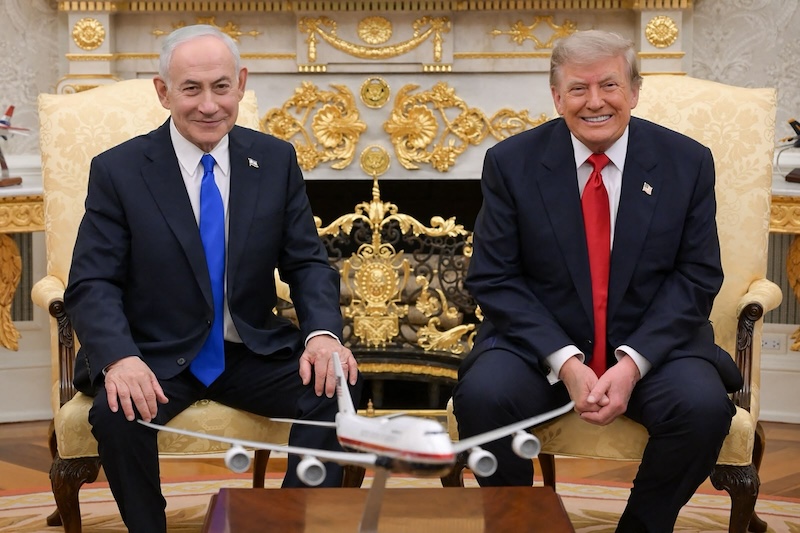
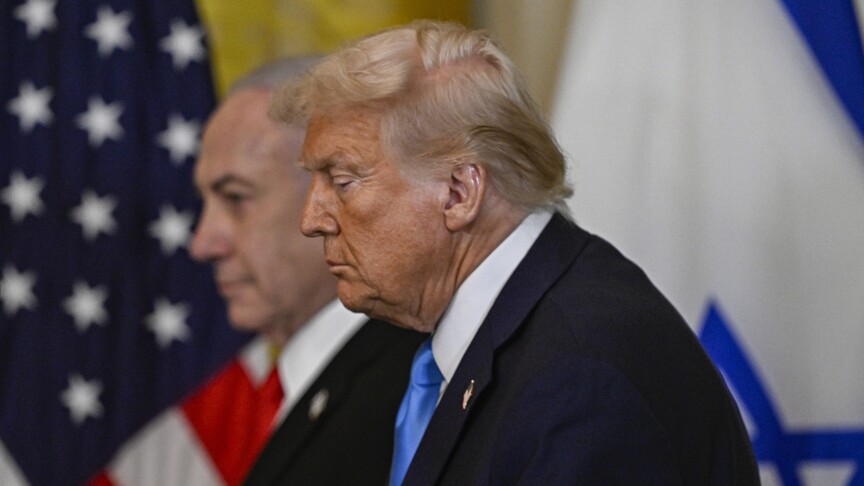
The US is pressing Israel to scale back fighting in Gaza and withdraw further from Lebanon while Israel insists on freedom to act against Iran, deepening a rift between Washington and Jerusalem. US presses for scaled-back fighting in Gaza and further Israeli withdrawals in Lebanon while Israel insists on freedom to act against Iran. [1]
Khamenei Appoints IRGC Veterans to Key Roles
Supreme Leader Mojtaba Khamenei appointed two veteran IRGC figures, Mohsen Rezaee and Mohammed Bagher Zolghadr, to senior political positions within the regime. Iranian Supreme Leader Ayatollah Mojtaba Khamenei appointed two figures who played key roles in the formation of the Islamic Revolutionary Guard Corps to senior political positions in statements attributed to Khamenei published on Sunday. Mohsen Rezaee, who commanded the IRGC from 1981 until 1997, was appointed as Khamenei's representative on the Supreme National Security Council. Rezaee has run in at least three presidential elections, coming third in 2009 with 1.7% of the vote, fourth in 2013 with over 3.8 million votes, and second in 2021 with 3.4 million votes. He has served as a member of the Expediency Discernment Council since 1997, and was appointed as Khamenei's military advisor in March. Additionally, Mohammed Bagher Zolghadr, who held several senior positions across the IRGC since the Islamic Revolution in 1979, including being deputy chief from 1997 until 2006, was appointed as Khamenei's political advisor. Zolghadr previously called for IRGC to hold stronger control over Iranian politics. In March, Zolghadr, who had just been appointed as the Secretary of the Supreme National Security Council following Israel's killing of Ali Larijani during Operation Roaring Lion, was cited by The New York Times as saying that the IRGC should gain more control over Iran. He was also described by The Economist as an "IRGC apparatchik" at the time. “He is one of the last remnants of the radical revolutionaries that armed themselves against the Pahlavi monarchy,” historian Shahram Kholdi told Iran International in March. [4]
Israel Receives Advanced Submarine for Deterrence
Israel took delivery of its newest Dolphin-class submarine, the INS Drakon, a $634 million German-built vessel intended to strengthen deterrence and second-strike capability against Iran. Israel has taken delivery of its most advanced and expensive submarine from Germany, expanding its fleet amid escalating regional threats, according to reports. The handover of the INS Drakon is expected to significantly bolster Israel's underwater strike and reconnaissance capabilities. The warship had been scheduled to be delivered in 2025. A statement following the submarine's naming ceremony in Kiel in 2024 said the INS Drakon is of the Dolphin AIP class and "equipped with unique systems, including groundbreaking technologies that expand the range of the IDF's capabilities across various arenas." Built specifically for the Israeli Navy by Germany's ThyssenKrupp Marine Systems (TKMS), the submarine is said to provide a vital sea-based layer of "deterrence and retribution," amid the war with Iran, defense analysts say. Dr. Ehud Eilam, an Israeli national security expert and former researcher for Israel’s Ministry of Defense, told Fox News Digital that maintaining a continuous undersea presence is paramount for the nation's national survival. "Some of them would have to be at sea, on high alert, around the clock, if Iran suddenly attacked Israel in such a way that would cripple the IDF, including its strategic capabilities," Eilam said. "In such a drastic scenario, Israel’s submarine/s that would be at sea could respond," he added. "Israel’s other submarines might be in Haifa harbor at the time. They might be attacked and unable to operate. This demonstrates how important it is to always have submarines at sea." TKMS reportedly handed over the INS Drakon—the sixth Dolphin-class vessel and third modified Dolphin II-class submarine in Israel's fleet—at its shipyard in Kiel, Germany, in late July. Measuring more than 70 meters (230 feet) in length with a displacement exceeding 2,000 tons, the vessel is reported to be the largest submarine constructed in Germany since World War II, carrying an estimated price tag of $634 million. According to Israeli outlet Ynet, Israel's Dolphin-class fleet also provides the nation with a critical sea-based second-strike capability in its defense program. "Everything is going according to plan with the new program for Israel," TKMS CEO Oliver Burkhard told Ynet Global. "That also applies to the handover of the last boat of the previous series, including the homecoming in Israel," he said of the expansive submarine program. "Israel has been acquiring submarines for several purposes. One of them is for deterrence and retribution, such as if Iran manages to develop nuclear weapons," Eilam said before adding that "Israel has to be ready." While submarines on active deployment carry out intelligence and reconnaissance missions across the Mediterranean Sea, their primary objective remains readiness for "doomsday scenarios," Eilam noted. "Israel’s new submarine is bigger than others, which suggests Israel wants to have more options, such as increasing the range of the submarine's missiles so they can reach every target in Iran, even if the Israeli submarine is in the Mediterranean Sea," Eilam said. "That way the submarine does not have to get closer to Iran, which requires crossing the Suez Canal, and this could be very risky, if not impossible in some situations," he added. "The other alternative is to bypass all of Africa, which would take a long time." The new submarine was named INS Drakon (Dragon) — a mythical sea creature symbolizing strength, uniqueness and power — was chosen because it contains the Hebrew letters ד׳, ק׳, ר׳ (Dakar), thus commemorating the legacy of the submarine INS Dakar and its crew, the Ministry of Defense said. [5]
Houthi Parallel Blockade and Attacks on Saudi Targets
Iran’s Houthi allies in Yemen have imposed a parallel maritime blockade on Saudi ports in the Red Sea and struck a Saudi oil facility, killing civilians and military personnel. As Iran throttles traffic in Hormuz, its Houthi allies in Yemen have declared a parallel maritime blockade on Saudi ports in the Red Sea, the oil-exporting giant's only other maritime route. The Houthis announced on Sunday that they had struck a Saudi oil facility on the country's Red Sea coast, after the Gulf kingdom said it had extinguished a fire at the site. Saudi Arabia has long propped up Yemen's internationally recognised government in its war against the Houthis, which was paused by a UN-backed 2022 accord that has appeared to break down since the rebels declared their blockade last month. A medical source in government-held Mokha said three civilians and eight military personnel were killed and a further 32 people wounded on Sunday, with all the civilian casualties resulting from Houthi strikes on the Yemeni city's port. Houthi military spokesman Yahya Saree said the group had targeted "Saudi enemy" troops and equipment in the area with missiles and drones. [3]
What to watch next: US Central Command actions to redirect, disable and board commercial vessels as part of the counter-blockade, alongside Israel's insistence on retaining freedom of action against Iran and the delivery of further Dolphin-class submarines.