
Iran Tensions Persist as US and Tehran Report Progress Toward 60-Day Peace Deal
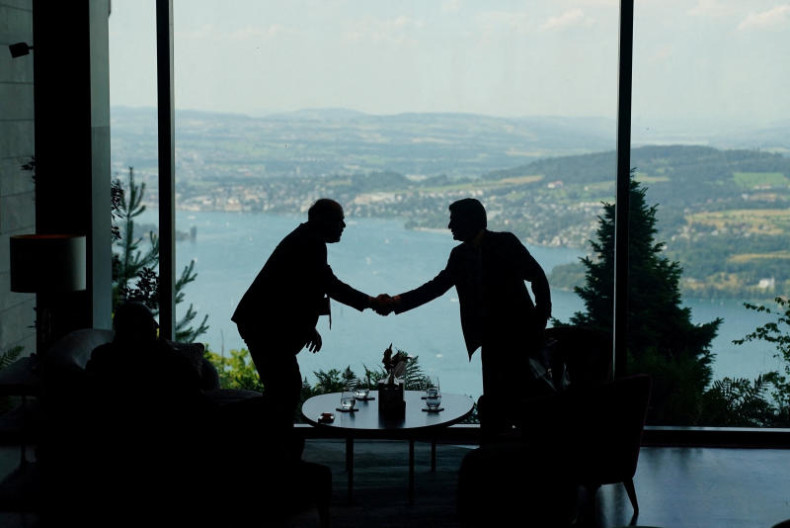
US and Iranian negotiators made encouraging progress in Switzerland on a roadmap for a permanent peace deal within 60 days under last week's memorandum of understanding, even as Iran tensions persisted over Lebanon and the waterway. [2][5] The first round of talks concluded early on Monday at the Qatari-owned Swiss mountain resort of Buergenstock. [5]
Progress Reported in First Round of US-Iran Peace Talks
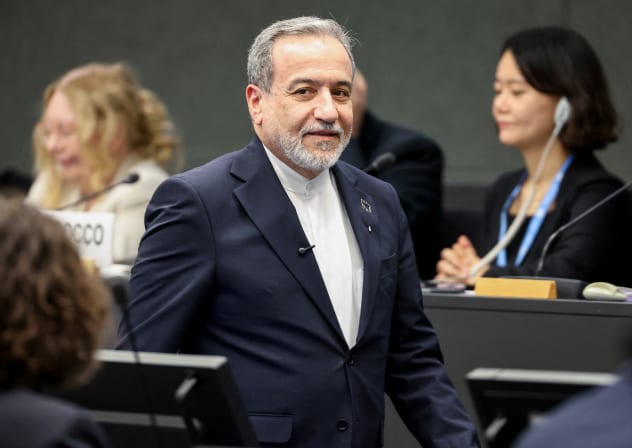
The United States and Iran made encouraging progress at the first round of talks aimed at reaching a final peace deal, with mediators Pakistan and Qatar stating that the discussions took place in a positive and constructive atmosphere. [5] Mediators Qatar and Pakistan described the talks as yielding a roadmap to reach a final deal within 60 days. [2][5] They also agreed on a mechanism to end fighting in Lebanon between US ally Israel and Iran-aligned Hezbollah. [5] Vice President JD Vance, who led Washington’s delegation, told reporters that the talks set a good foundation for a successful final deal and that progress had been made towards ending hostilities in Lebanon. [3][5] Vance said Trump had asked the team to turn over a new leaf to transform the relationship with the people of Iran. [5] The main Iranian negotiating team, including senior diplomat Mohammad Baqer Qalibaf, left Switzerland for Tehran, though technical talks were due to continue for the rest of the week. [5]
Iran Tensions Persist Over Strait of Hormuz and Lebanon
Iran showed it will drive an excruciating bargain with Washington amid ongoing Iran tensions. [2] Iran is seeking to apply its newly acquired leverage and has claimed to shut down the Strait of Hormuz. [2] Iran shut the Strait of Hormuz on Saturday in response to Israeli strikes on Hezbollah, causing a sharp drop in shipping traffic to five vessels on Sunday from 26 the day before. [5] A communications line was opened to ensure safe passage for commercial ships through the strait. [5] President Trump threatened to take over the strait or resume attacks if Iran did not comply. [2][5] Vice President Vance said the talks set a good foundation and that the US seeks to transform its relationship with Iran if it ends regional instability and nuclear ambitions. [2][5] Iran’s declaration that the Strait of Hormuz is closed was intended to force Trump to enforce a ceasefire in Lebanon following Israeli strikes on the Iranian-backed Hezbollah militia. [2] The violence between Hezbollah and Israel has abated since late on Saturday, with security sources in Lebanon saying Israel’s last airstrike was on Saturday evening. [5] Israeli President Isaac Herzog said Israel was not opposed to a diplomatic end to the Iran war, but any agreement must ensure Tehran cannot use funds it receives as part of the deal for military purposes or to support regional proxies. [5]
Expert Analysis and Political Criticism in Washington
Professor Michael Clarke, a prominent British defense analyst and former Director-General of the Royal United Services Institute, explained that Iran’s tactics are illegal under international law. [1] The right to keep the Strait of Hormuz open is guaranteed by the doctrine of transit passage under the 1982 United Nations Convention on the Law of the Sea and customary international law. [1] Clarke suggested that Iran was trying to normalize the need for shipping companies to coordinate with the Persian Gulf Strait Authority as a matter of necessity. [1] Clarke noted that the war against Iran has been largely unpopular in the United States and with US federal elections approaching, Trump is interested in ending the war. [1] Clarke asserted that the Americans essentially lost the war on the 8th of April with the ceasefire and that the whole thing is a strategic failure of the first order. [1] In Washington there is rare bipartisan concern that the president gave too much away to make the agreement. [2] Republican Sen. Lindsey Graham defended Trump’s approach, saying if there is no diplomatic path through the MOU then there would have to be war or some other form of coercion. [2] Sen. Cory Booker called the Iran agreement a cataclysmic failure of Trump’s own making and an abject surrender. [2]
Oil Market Reaction and Broader Regional Implications
Oil prices had risen sharply when Tehran started blockading the Strait of Hormuz, prompting a US blockade of Iranian ports, but after the interim deal they fell to their lowest since before the war began on February 28. [5] Oil prices fell further after Monday’s joint statement, with global benchmark Brent crude trading below $80 per barrel. [5] With a fifth of global oil and liquefied natural gas supplies now disrupted for over three months, Clarke noted that Iran had the potential to gain more from the already overwhelmingly favorable MOU. [1] The turbulence undercut Trump’s claims that he won a historic victory and suggests global economic relief secured by ending the war is tenuous. [2] Yet the memorandum still represents the best hope of averting a return to conflict that could cost many more Iranian and American lives, draw Gulf states back into the crossfire, and again rock the global economy. [2]
What to watch next: Technical talks are due to continue for the rest of the week, with Iran’s chief negotiator Mohammad Bagher Ghalibaf indicating Tehran has no intention of giving the US president a fast deal. [2][5]