
Iran Tensions Ease as IAEA Inspectors Return and Strait of Hormuz Reopens
Recent developments have eased Iran tensions after U.S. Vice President JD Vance announced that Iran has agreed to allow IAEA inspectors back into the country and that the Strait of Hormuz is open with oil and gas flowing, following the first session of U.S.-Iran talks in Switzerland that produced a roadmap for a final deal within 60 days. [1]
Breakthrough in U.S.-Iran Talks
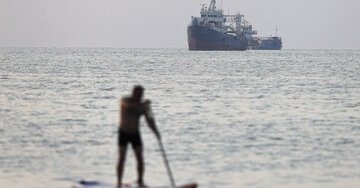
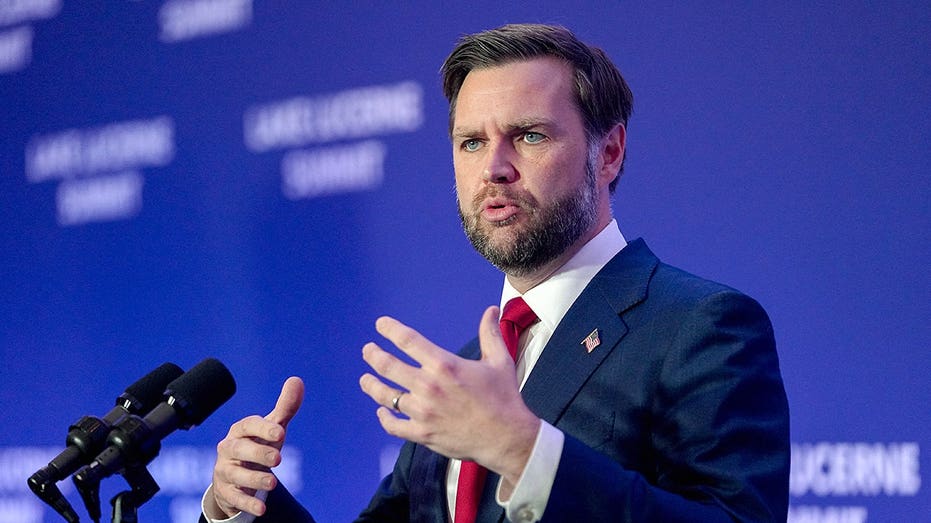
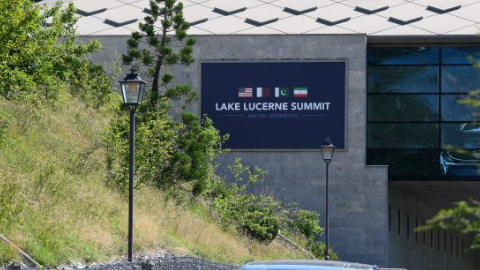
U.S. Vice President JD Vance said the Strait of Hormuz is open and crude oil and natural gas are flowing through. [1] He stated that the Iranians have agreed to invite the International Atomic Energy Agency inspectors back into their country. [1] Vance called this a major milestone and the first step in permanently denuclearizing or permanently ending a nuclear weapons program in Iran. [1] The U.S. and Iranian negotiators under Qatari and Pakistani mediation began their talks on Sunday at the Buergenstock mountain resort in central Switzerland. [1] This marked the first direct talks between the two sides since the signing of the Islamabad Memorandum of Understanding last week. [1] Vance said the U.S. negotiating team working with the Iranians, the Qataris, and the Pakistanis made great progress on Sunday. [1] The teams will continue to work at the technical level at Buergenstock and technical negotiations will continue over the weeks and days to come. [1] He added that there is still a lot to do regarding the nuclear and economic talks as well as demining the Strait of Hormuz to ensure that the flow of traffic continues to pick back up. [1]
Sanctions Suspension and Economic Measures
The United States temporarily suspended sanctions on Iranian oil on Monday after Vice President JD Vance said Iran would allow UN nuclear inspectors to return to the country. [3] The U.S. Treasury said it was temporarily lifting sanctions on Iran to allow it to produce, sell and deliver crude oil and related products through August 21. [3] U.S. Treasury Secretary Scott Bessent cited Tehran's commitment to free and open transit in the Strait of Hormuz and permission for International Atomic Energy Agency inspectors to enter their country as a reason for pausing the sanctions. [3] Iran's Foreign Minister Abbas Araghchi posted on social media that oil and petrochem exports are waived, blockade lifted, some frozen assets released, and major reconstruction and development plan launched for Iran. [3] Vance insisted assets had not yet been unfrozen and that, if they were, they would be used to buy U.S. goods such as soy beans and would not fund terrorism. [3] He called it a classic Trump deal, where if Iranian assets are ever unfrozen, they are going to go to make American farmers richer and to feed the Iranian people. [3] The lifting of sanctions will be a boon for Iran which used to produce around 4.6 million barrels of oil per day, exporting around 1.5 million barrels per day before the U.S. imposed its own blockade to compete with Iran's closure of the Strait of Hormuz. [5]
Roadmap and Mediation Framework
Switzerland said on Monday that it welcomes the constructive progress made during talks between Iran, the United States and the mediators that continued throughout Sunday night at the Buergenstock resort in Switzerland. [2] The Swiss Foreign Ministry said in a statement that the country welcomes the establishment of a high-level committee by the parties under the MoU signed by the United States and Iran, calling it a positive step toward further political and technical processes. [2] The foreign ministry said the agreement on a roadmap aimed at reaching a final agreement within 60 days creates the conditions for the immediate resumption of new technical discussions. [2] Switzerland remains ready to support this process. [2] According to a joint statement issued early on Sunday by the mediators, Pakistan and Qatar, the first session of high-level talks under the MoU has concluded at the Buergenstock resort. [2] Building on the MoU, the parties agreed to establish a high-level committee, which will provide political oversight on the mediation. [2] The committee has also agreed on a roadmap toward reaching a final deal within 60 days, laying the foundation for the immediate commencement of further technical talks. [2] Mediators Pakistan and Qatar said the negotiators reached agreement on a roadmap towards reaching a final deal within 60 days, with technical talks to continue for the rest of the week at the Swiss resort. [3] Pakistan's Prime Minister Shehbaz Sharif hailed it a success and announced that a roadmap towards a final deal within 60 days had been achieved during the summit. [5]
De-confliction Efforts in Lebanon and Hormuz
The parties agreed to create a de-confliction cell involving the parties and the Lebanese Republic, facilitated by the mediators, to ensure adherence to the termination of military operations in Lebanon, as per the MoU. [2] Tehran and Washington have set up communication lines to end the fighting in Lebanon and to keep the vital Strait of Hormuz open, mediators said. [3] Mediators Pakistan and Qatar said the negotiators reached agreement on a roadmap towards reaching a final deal within 60 days, with technical talks to continue for the rest of the week at the Swiss resort. [3] Encouraging progress has been made, they said, including a contact channel set up to avoid incidents and miscommunication in the Strait of Hormuz. [3] In the weeks and days before the U.S.-Iran talks, the war in Lebanon between Israel and Iran's close ally Hezbollah threatened to collapse the ceasefire, though the country has been relatively calm since Saturday evening. [3] A de-confliction cell between the parties and the Lebanese authorities has been agreed to prevent fighting from erupting again. [3] Israeli leaders have nonetheless expressed deep misgivings over the deal, and Prime Minister Benjamin Netanyahu on Monday insisted Israeli troops have full freedom of action to thwart any direct or developing threat in south Lebanon. [3] The overall death toll from the fighting in Lebanon has now surpassed 4,100, the health ministry said. [3] A survey by the UN Development Programme and Lebanon's government-linked National Council for Scientific Research said damage to buildings in south Lebanon in the latest fighting was estimated at around $1.38 billion. [3]
Differing Views on Nuclear Commitments
Iranian foreign Ministry spokesman Esmaeil Baqaei said a very brief discussion took place regarding the nuclear issue, but there was no discussion of details and that nuclear talks had not begun. [3] Shortly after that statement, US President Donald Trump chimed in on Truth Social saying everybody is fully aware that Iran will agree to have Major Weapons Inspections in order to ensure Nuclear Honesty long into the future. [5] Iran's Foreign Ministry spokesperson Esmail Baghaei said it did not negotiate over the nuclear issue and no new commitments had been made regarding inspections during talks. [5] Baghei added that any engagement with the agency would take place under existing procedures set by Parliament and the Supreme National Security Council. [5] Iran stressed that any agreements to let inspectors in would not be made without parliamentary approval and the sign-off of the Supreme National Security Council. [5] Under the nuclear deal with Iran negotiated by Barack Obama, the IAEA had unprecedented continuous access to monitor Iran's nuclear sites as well as uranium mines. [5]
Follow-on Diplomatic Engagements
US Secretary of State Marco Rubio is due to start a trip to the United Arab Emirates, Kuwait and Bahrain, to discuss the deal and efforts to secure full and free safe transit through the Strait of Hormuz. [3] Iran's negotiating delegation, including Ghalibaf and Araghchi, meanwhile left Tehran on Monday, headed for Omani capital Muscat to discuss joint efforts to stabilise Iranian arrangements for managing the Strait of Hormuz, according to state news agency IRNA. [3] After Monday's talks, Iran's chief negotiator Ghalibaf announced on his Telegram account that he would be traveling to Oman to discuss bilateral cooperation and joint efforts to consolidate the management of the Strait of Hormuz. [5] Iranian Foreign Minister Abbas Araqchi will also be present during the visit. [5] Pakistan announced on Monday that Iran's President Masoud Pezeshkian would visit Pakistan on Tuesday to continue discussing the negotiations. [5]
What to watch next: US Secretary of State Marco Rubio will visit the UAE, Kuwait, and Bahrain to discuss the deal while Iranian negotiators travel to Oman and Pakistan's president visits Pakistan.