
Five Eyes Warns Frontier AI Models Will Transform Cyber Capabilities in Months
Five Eyes Warns of Rapid AI-Driven Cyber Threats
The Five Eyes intelligence alliance issued an urgent warning that frontier AI models will transform offensive and defensive cyber capabilities within months, not years, prompting accelerated US government responses including shortened vulnerability remediation deadlines. The intelligence alliance commonly known as the “Five Eyes” said in a three-page statement that, “Frontier AI models are anticipated to exceed current industry expectations, fundamentally transforming both offensive and defensive cyber capabilities. The timeline is not years, it is months.” [1] The statement was light on details and mostly restated core cybersecurity advice, such as swiftly patching faulty software and not putting systems online unless necessary. [1] The officials also urged defenders to use AI “to strengthen defence,” for example by identifying weaknesses sooner or responding more quickly to incidents. [1] The warning was another indication of officials’ increasing concerns over models such as Anthropic’s “Mythos” or OpenAI’s “GPT-5.5-Cyber,” which are said to allow users to quickly execute complex — and potentially devastating — hacks. [1]
US Actions Reflect Growing AI Concerns
US Actions Reflect Growing AI Concerns as the government moved to restrict access to certain advanced models and tightened response timelines for vulnerabilities. Earlier this month, Anthropic was forced to disable a version of Mythos after the U.S. government ordered it to suspend access to the models for foreign nationals over alleged national security concerns. [1] Around the same time, the U.S. cyber defense agency CISA — which was among those cosigning Monday’s statement — reduced the deadlines imposed on government officials to deal with serious digital vulnerabilities in their networks to three days, citing AI threats. [1] These steps align with the Five Eyes assessment that frontier AI models like Anthropic’s Mythos and OpenAI’s GPT-5.5-Cyber will enable rapid execution of complex hacks. [1] The alliance emphasized that the shift in capabilities is expected to occur on a timeline of months rather than years, underscoring the need for immediate defensive adaptations. [1]
US Bolsters Philippine Maritime Capabilities
The United States transferred four Ocean Aero Triton autonomous underwater and surface vehicles to the Philippine military in a transaction valued at US$13 million, the US Embassy in the Philippines said on Tuesday. [2] The embassy said in a statement that the delivery demonstrates the United States' commitment to the alliance and will enhance the Philippines' ability to detect and respond to maritime challenges. [2] "The delivery demonstrates how aligned investments, training and shared standards translate into credible, ready capabilities that deter aggression and support regional stability," the embassy said. [2] The transfer of the four vehicles is presented as a concrete step to strengthen detection and response in the maritime domain. [2]
Lebanon Ceasefire Holds Amid Persistent Doubts
A ceasefire largely held in Lebanon on Monday, marking the longest lull in three months of war between Hezbollah and Israel, even as persisting fears of a collapse kept displaced residents from returning. [4] While adherence to the ceasefire was “almost total” since Saturday evening, a senior Lebanese security official said an Israeli tank fired shells toward a village near Tyre. [4] Israeli forces also fired sound grenades in two other locations on Monday, and an Israeli drone buzzed over Beirut. [4] Hassan Wazni, director of a hospital in the heavily bombarded southern city of Nabatieh, said calm had prevailed since Saturday. [4] “I’m monitoring the situation day by day, and most of the time I’m sleeping in the hospital. This is the longest a ceasefire has held,” Wazni said. [4] However, people remained hesitant to return, he noted, as a prior ceasefire declared on Friday quickly collapsed, leaving 20 people dead in Israeli attacks Saturday, according to Lebanon’s civil defence. [4] Israeli forces remain deployed deep inside southern Lebanon, occupying a self-declared security zone where they have been razing villages. [4] Israeli Prime Minister Benjamin Netanyahu said troops retain full freedom of action to thwart any Hezbollah threats and will remain in Lebanon for “as long as is necessary”, while Hezbollah chief Naim Qassem rejected any Israeli “security zone” inside Lebanon. [4]
Diplomatic Efforts Focus on Deconfliction and Talks
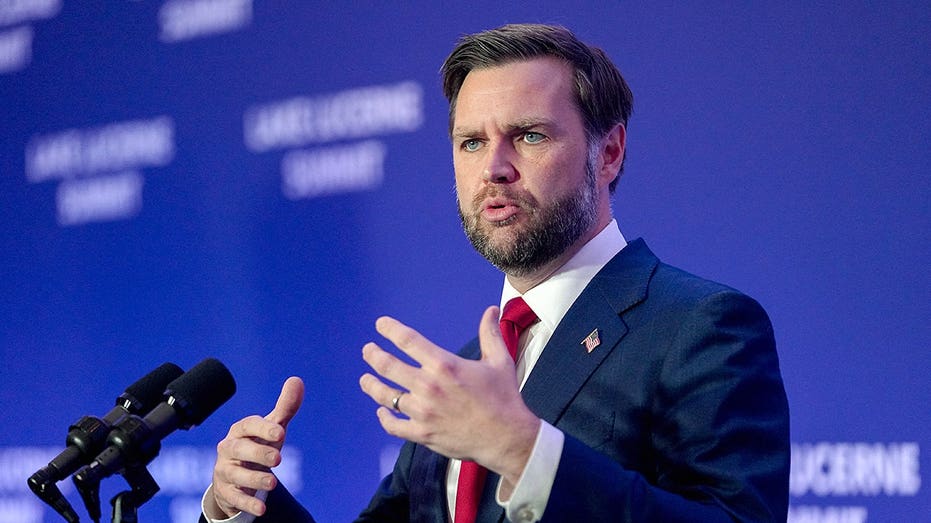
Lebanese President Joseph Aoun discussed efforts to consolidate the ceasefire and halt Israeli military escalation during a phone call with US Vice President JD Vance, senior adviser Jared Kushner and Qatari Prime Minister Sheikh Mohammed bin Abdulrahman Al Thani. [4] They discussed “the issue of consolidating the ceasefire in Lebanon, stopping the Israeli military escalation and steps that should be taken in this regard, including the possibility of forming a cell for this purpose,” the statement from the Lebanese presidency said. [4] Vance told reporters in Switzerland that the mechanism aims to ensure “that when things happen, they don’t spiral into a broader escalation.” [4] “We do believe … that we can get to a place where Lebanon’s territorial integrity and sovereignty is protected, Israel’s security is protected,” Vance said. [4] “That’s going to require some coordination with the Lebanese armed forces, and also it’s going to require the Iranians to rein in Hezbollah.” [4] Israel and Lebanon are set to meet in Washington to discuss normalization and Hezbollah disarmament, with Israel's Ambassador to the US, Yechiel Leiter, focusing on the political and diplomatic aspects, while Brig.-Gen. Amichai Levin will lead separate meetings on military issues. [5] Under US pressure, Lebanese officials began direct talks with Israel in April, with a fifth round scheduled for today. [4] Lebanese authorities are seeking the withdrawal of Israeli troops and to separate their negotiations from the US-Iran deal. [4] “We negotiate for ourselves, and we do not accept any other party doing so for us,” Aoun said. [4]
Broader Context of Regional Agreements
Israel and the US launched Operations Roaring Lion and Epic Fury on February 28, with the stated aim of creating conditions for regime change. [5] Ayatollah Ali Khamenei was killed by an Israeli strike on a Tehran bunker. [5] Iran’s defense minister and several IRGC generals were also killed in the largest-ever aerial attack by the IAF. [5] Iran retaliated by firing across the Middle East at Gulf nations and US military bases in the region. [5] A ceasefire deal was announced on April 7 and went into effect on April 8. [5] Israel, Lebanon to meet in Washington to discuss normalization, Hezbollah disarmament. [5] Majority of Israelis see MoU as win for Iran, loss for Israel's security. [5]
What to watch next: Upcoming direct talks between Israel and Lebanon in Washington on normalization and Hezbollah disarmament, alongside continued discussions on a Lebanon deconfliction cell involving US, Qatari, and Lebanese officials.