/data/photo/2026/07/12/6a53874a2c9e3.jpg)

Iran Strikes US Sites in Syria Kuwait and Bahrain as US Hits Iranian Bridges for Sixth Night
The United States conducted a sixth consecutive night of strikes on Iranian military targets including bridges, ports and infrastructure, while Iran strikes retaliated with missile and drone attacks on US-linked sites in Syria, Kuwait, Bahrain and other locations, further disrupting shipping through the Strait of Hormuz.
Sixth Night of US Strikes on Iranian Targets
US Central Command reported strikes on dozens of Iranian military targets such as coastal surveillance positions, air defense sites, logistic infrastructure, five to six bridges in Hormozgan province, a maritime tower in Chabahar, a railway station in Bandar Hamir and an airport in Iranshahr. [2] American forces including combat aircraft, drones and warships launched precision munitions against targets on Kish Island and near Bandar Abbas, home to Iran's largest port and key naval and Revolutionary Guard facilities. [2] The strikes formed part of efforts to further weaken Iranian military capabilities after more than four months of conflict that began in February. [3] Iranian state media reported that five bridges were hit along with the railway station in coastal Bandar Hamir and the airport in Iranshahr in southeastern Iran. [2] One civilian died in an American strike on the Pasabandar area near the southeastern port city of Chabahar, according to Iran's semi-official Tasnim news agency. [2] Seven people died in American strikes on bridges in Bandar Hamir, a southern port city, according to Iran's state news agency IRNA. [2]
Iranian Retaliation Across the Region
Iran's IRGC claimed it attacked a US special operations command center at al-Tanf in Syria for the first time in the conflict, in retaliation for Iranian soldiers killed, and struck US-linked sites including a missile defense radar, ammunition depots, HIMARS launchers and a logistics center in Kuwait, plus targets in Bahrain, Jordan and a radar in Oman. [2] Iran's Islamic Revolutionary Guard Corps stated it launched the attack on the US special operations command centre at al-Tanf in Syria on Friday as retaliation for the killing of Iranian soldiers in Iranshahr. [4] A Syrian military source told Reuters that Iran carried out an attack near al-Tanf but had not hit the base itself and there were no casualties or material damage. [4] Iranian forces fired missiles and drones at US military bases in neighboring countries including an air base in Jordan. [2] Iran's military stated it attacked US facilities in Bahrain and Kuwait. [2] Iranian state media reported that the Revolutionary Guard targeted and destroyed a maritime radar system on the Salama islands as well as a US air traffic control radar in the Ganem area in Oman. [2] Explosions were heard in Qatar's capital Doha according to witnesses, while Qatar's Interior Ministry stated one child was injured by shrapnel. [2]
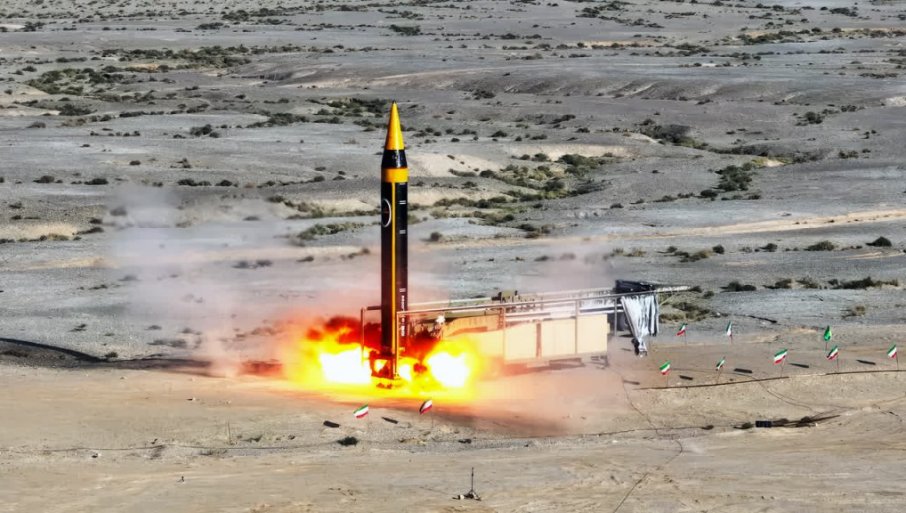
Iranian missiles target US-linked sites in Syria, Bahrain and Kuwait during retaliatory strikes. — Source: gdelt
Iran Accuses US of War Crimes on Civilian Sites
Iran accused the US of war crimes for deliberately targeting civilian infrastructure including a grain silo in Hoveyzeh, a mineral water factory in Musian, a maritime tower in Chabahar used by fishermen, and an area near a children's cancer hospital in Ahvaz. [1] Iran's Foreign Ministry stated in a statement broadcast on IRIB television that the United States had committed war crimes by targeting civilian infrastructure in attacks that violated international law and the UN Charter. [1] The ministry said the United States had intensified attacks aggressively in recent days and imposed a naval blockade on Iran. [1] Iran's Foreign Ministry accused the United States of deliberately targeting civilian facilities and infrastructure and described the attacks as war crimes, including strikes on a grain storage silo in Hoveyzeh in southwestern Iran, a mineral water factory in Musian in western Iran, and the maritime watchtower in Chabahar used to assist fishermen. [1] The ministry stated that an American strike also hit an area near a children's cancer hospital in Ahvaz in southwestern Iran on Wednesday and condemned it as a "barbaric" act. [1] Iran's Foreign Ministry said the attacks constituted clear violations of the UN Charter and basic principles of international law. [1]
Disruption to Strait of Hormuz Shipping
The renewed fighting has nearly halted all shipping through the Strait of Hormuz, with the US reinstating a naval blockade on Iranian ports, Iran responding with its own blockade and attacks on a tanker, and threats to involve Houthi allies to close Bab el-Mandeb. [2] The escalation of the conflict has once again almost completely halted traffic through the Strait of Hormuz, the world's most important maritime route for oil and gas transport, raising oil prices and renewing concerns over the impact on inflation. [2] Tehran renewed the blockade of the strait while Washington reinstated its blockade of Iranian ports from Wednesday. [2] Iran signaled it could encourage its Houthi allies in Yemen to close another key maritime passage, Bab el-Mandeb at the entrance to the Red Sea, if Washington continues attacking Iranian infrastructure. [2] Iran last week attacked ships sailing through a security corridor in the Strait of Hormuz. [2] The British military reported that a tanker traveling through the Strait of Hormuz came under attack Friday morning. [3] American forces fired on a ship they accused of attempting to break the US naval blockade on Iran this week. [3]
Status of Peace Efforts and Diplomacy
A fragile interim peace memorandum mediated by Pakistan has been undermined, with both sides continuing attacks despite ongoing mediation efforts and statements from the White House that President Trump remains open to diplomacy while insisting Iran must face consequences. [1] The truce reached last month has turned into daily attacks and counterattacks. [2] In President Trump's primetime address on Thursday he insisted the war is going well even as tensions are escalating. [3] White House spokesperson Karoline Leavitt stated on Thursday that President Donald Trump will not "sit idly by and allow such terrorist acts to continue in the strait without Iran facing consequences," according to Reuters. [2] She added that the president is "at the same time always open to diplomacy." [2] Iranian sources stated that Tehran's goal is to establish control over the strait but that Iran is not inclined toward further escalation that would jeopardize the memorandum of understanding reached in June, which it still considers to provide most of what it wanted. [2] Regional officials involved in mediation efforts said attempts to save the deal to end the war are ongoing even though the interim peace agreement has been halted. [3]
Regional Ripple Effects
Related clashes involving Iranian-backed groups in Lebanon and Iraq, plus the damage to a Kuwait desalination plant that highlights infrastructure vulnerabilities in the Middle East. [2] In Lebanon fighters from Iran-backed Hezbollah clashed with Israeli forces while in Iraq armed groups backed by Tehran carried out drone and missile attacks. [2] Iranian strikes on Friday hit a power and water desalination plant in Kuwait damaging one of the key sources of drinking water in the small desert nation. [5] It is the latest attack on essential infrastructure across the Middle East that has exposed extreme vulnerabilities in the region. [5]
What to watch next: Regional officials involved in mediation efforts said attempts to save the deal to end the war are ongoing even though the interim peace agreement has been halted, with the US reinstating its naval blockade on Iranian ports this week and Iran responding with its own attacks.





/data/photo/2026/07/13/6a54e9fe9f50b.jpg)