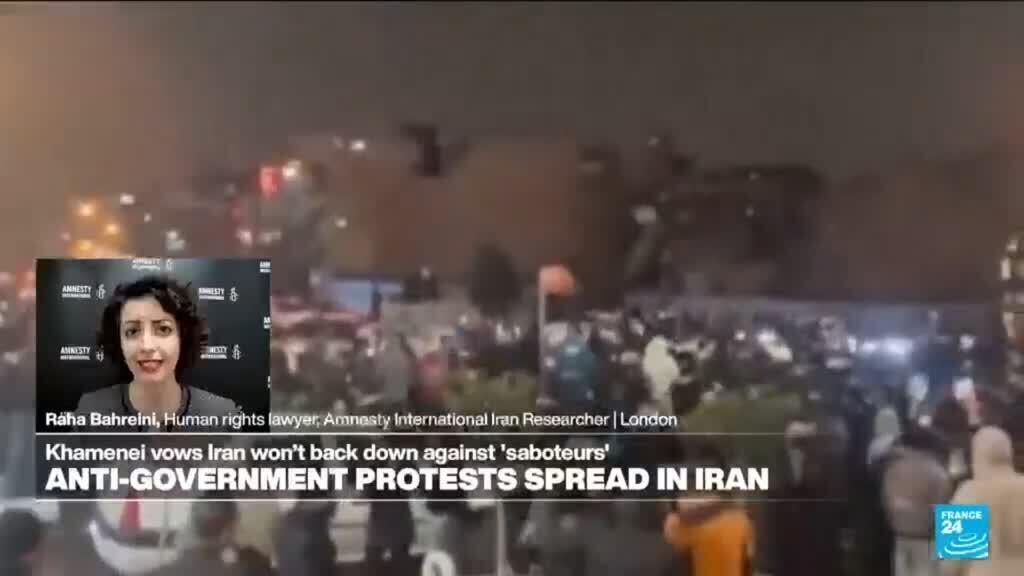

Iran Protests Escalate as Khamenei Vows Crackdown, Trump Issues Stark Warning
Protests across Iran have intensified into widespread civil unrest, prompting Supreme Leader Ayatollah Ali Khamenei to signal an imminent security crackdown while U.S. President Donald Trump warned of severe consequences if demonstrators face violence. Reports indicate deaths among officials, internet shutdowns, and flight cancellations, as demonstrators call for the regime's downfall and chant the name of the exiled son of Iran's last shah.
The unrest, which began unfolding on January 9, 2026, has seen protesters marching through streets and shouting from windows overnight, according to multiple reports. Khamenei accused the demonstrators of "ruining their own streets" to please Trump, dismissing the U.S. president as having "hands stained with the blood of Iranians." State media has labeled the protesters "terrorists," heightening fears of a violent response. Iran's judiciary chief echoed this stance, vowing "decisive" punishment for those involved amid the ongoing turmoil.
Violence has already claimed lives, with authorities reporting that a prosecutor and four security staff were killed in Esfarayen, North Khorasan province. According to Fars news agency, demonstrators set fire to a container housing the officials. The incidents underscore the protests' severity, classified as high-risk civil unrest.
Government measures to contain the demonstrations include a nationwide internet cutoff, as reported amid the escalation. Airlines have also been affected, with flights canceled between Dubai and Iran due to the expanding protests. These disruptions highlight the breadth of the unrest, which has spread to multiple provinces.
Protesters' demands center on regime change, with calls for a new system that "respects dignity, freedom, and human rights," as articulated in coverage from human rights observers. BBC reports quote individuals inside Iran describing the crowds as "more angry and determined now," reflecting sustained momentum. Chants invoking Reza Pahlavi, the exiled son of the last shah, Mohammad Reza Pahlavi, have placed him at the symbolic center of the movement. BBC Persian profiles Pahlavi as once again seeking a role in Iran's future, amid resurfacing historical discussions, including a 1979 New York Times article praising Ayatollah Ruhollah Khomeini that has circulated online.
Khamenei further warned against "collaboration with foreigners," urging national unity and directly lambasting Trump. "I cannot tolerate collaboration with foreigners," he stated, framing the protests as externally influenced.
The U.S. response has added an international dimension. On January 8, Trump issued a direct threat to Iran's leadership, stating there would be "hell to pay" if the regime kills protesters. This pledge to support peaceful demonstrators has been cited by Khamenei as provocation, escalating rhetorical tensions between Tehran and Washington.
Background
Iran has a history of large-scale protests challenging the Islamic Republic's authority, though specific triggers for the current wave remain unclear from available reports. Past movements, such as those in 2019 over fuel prices and 2022 following Mahsa Amini's death, saw similar government crackdowns, internet blackouts, and international scrutiny. The invocation of Reza Pahlavi evokes nostalgia for the pre-1979 monarchy among some demonstrators, contrasting with the revolutionary legacy of Khomeini, whose early Western endorsements—like those from thinkers including Michel Foucault—are now resurfacing amid the chaos.
Human rights advocates, including Amnesty International's Raha Bahreini, have provided stark assessments, warning of potential abuses as security forces mobilize.
Outlook
As protests continue to grow, the standoff between demonstrators and authorities risks further violence. Khamenei's signals of a crackdown, combined with judicial threats and infrastructural controls, suggest Tehran is preparing a firm response. Trump's intervention raises prospects of diplomatic fallout, while the protests' focus on regime overthrow and figures like Pahlavi indicates deep-seated discontent. Regional stability, including air travel and digital access, remains precarious pending de-escalation or intensification.
(Word count: 612)






