
India's Jaishankar Reaffirms Right to Self-Defense Amid Pakistan Tensions and Strategic Autonomy
New Delhi, January 6, 2026 – India's External Affairs Minister S. Jaishankar has strongly asserted the nation's inherent right to self-defense against terrorism, spotlighting persistent threats from neighboring Pakistan, while underscoring New Delhi's commitment to strategic autonomy in global affairs. The remarks, delivered on January 2, 2026, come at a time of heightened regional sensitivities and reflect India's unwavering stance on national security.
In a pointed address, Jaishankar highlighted India's resolve to counter cross-border terrorism, explicitly referencing challenges emanating from Pakistan. "India reserves the right to self-defense against terrorism," he stated, emphasizing that such actions are non-negotiable in the face of provocations. The minister also reaffirmed India's strategic autonomy, a cornerstone of its foreign policy that allows the country to pursue independent decisions without aligning fully with any major power bloc. This position enables India to balance relations with diverse partners, from the United States and Quad allies to Russia and the Global South.
The statement arrives against the backdrop of decades-long India-Pakistan rivalry, marked by four wars since partition in 1947, including conflicts over Kashmir in 1947-48, 1965, 1971, and the 1999 Kargil incursion. Terrorism has been a flashpoint, with major attacks such as the 2008 Mumbai assaults (claimed by Pakistan-based Lashkar-e-Taiba), the 2016 Uri army base attack, and the 2019 Pulwama bombing that killed 40 Indian paramilitary personnel. The latter prompted India's Balakot airstrikes deep inside Pakistan, targeting Jaish-e-Mohammed camps – a group designated terrorist by the UN and responsible for numerous attacks.
India has consistently accused Pakistan of harboring terrorist outfits operating from its soil, a charge Islamabad denies, often attributing militancy to internal Kashmiri dynamics. Post-Balakot, bilateral ties remain frigid, with trade suspended, no high-level dialogue, and ongoing skirmishes along the Line of Control (LoC) in Kashmir. The revocation of Jammu and Kashmir's special status in 2019 further strained relations, leading Pakistan to downgrade diplomatic ties.
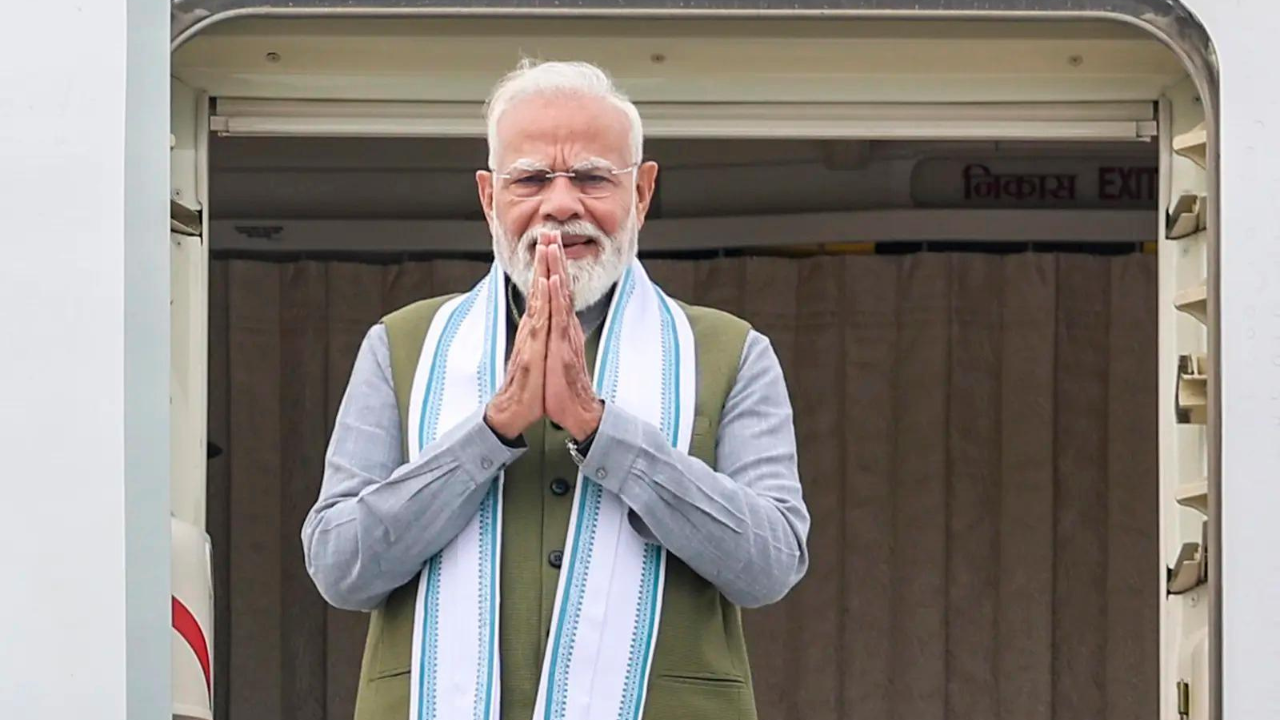
Jaishankar's emphasis on strategic autonomy aligns with India's multi-alignment approach under Prime Minister Narendra Modi. This policy has seen India deepen security ties with the US via the Quad (with Japan and Australia) to counter China in the Indo-Pacific, while maintaining robust defense purchases from Russia – including S-400 systems despite US sanctions threats. India also plays a pivotal role in BRICS, SCO, and G20, advocating for the Global South. Recent developments include India's neutral stance on the Russia-Ukraine war, abstaining from some UN votes while providing humanitarian aid, and hosting the 2023 G20 summit that produced a consensus declaration amid divisions.
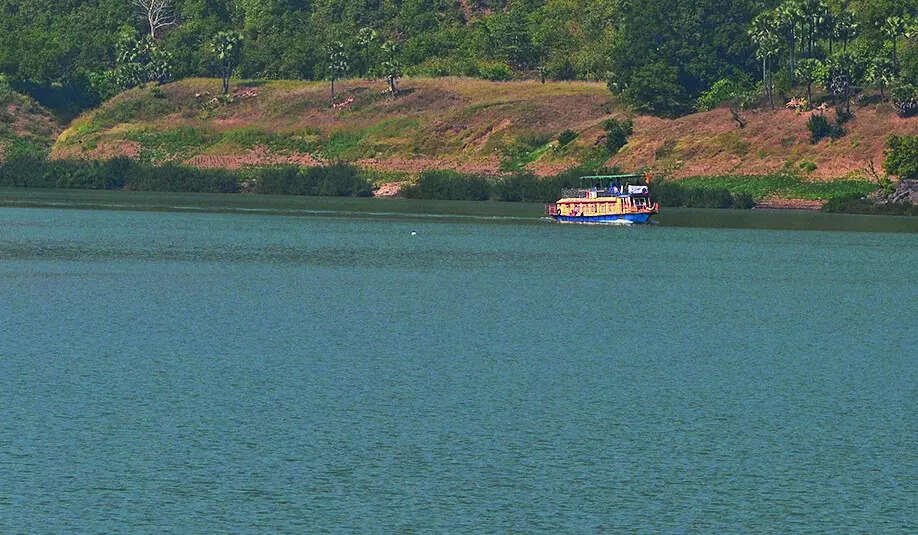
Domestically, India grapples with internal challenges that indirectly influence its geopolitical bandwidth. On January 6, 2026, Telangana approached the Supreme Court accusing Andhra Pradesh of attempting to "steal" its share of Godavari river water via the Polavaram-Nallamala Sagar Project. According to reports from The Times of India, Telangana claims Andhra Pradesh is misappropriating water meant for its allocation post the 2014 state bifurcation. Andhra Pradesh counters that the project harnesses excess floodwater with prior consent from Telangana, dismissing the suit as an effort to derail farmer welfare initiatives. This longstanding inter-state dispute underscores tensions in federal water-sharing arrangements under the Godavari Water Disputes Tribunal, potentially diverting political focus from external threats.
Background on India-Pakistan Dynamics
India's security doctrine prioritizes a "proactive" response to terrorism, evolving from the 2016 surgical strikes across the LoC to the 2019 Balakot operation. Nuclear-armed since 1998, both nations adhere to no-first-use policies, but India's "Cold Start" limited war strategy and massive conventional superiority shape deterrence. Pakistan's reliance on tactical nuclear weapons adds volatility.
Internationally, India has garnered support for its anti-terror stance. The UN Security Council has sanctioned Jaish-e-Mohammed leader Masood Azhar, and the Financial Action Task Force (FATF) has scrutinized Pakistan's counter-terror financing efforts, greying it out in 2018 before partial delisting in 2022 after reforms.
Jaishankar's intervention also reflects broader Indo-Pacific realignments. With China encroaching along the Line of Actual Control (LAC) – leading to the 2020 Galwan clash killing 20 Indian soldiers – India bolsters border infrastructure and partnerships like the US-led Initiative on Critical and Emerging Technology (iCET).
Outlook
As tensions simmer, Jaishankar's remarks signal no softening of India's position. Analysts note that while diplomatic channels like the SCO remain open, normalization with Pakistan hinges on dismantling terror infrastructure – a precondition reiterated in New Delhi. Strategic autonomy affords India flexibility, positioning it as a pole in a multipolar world.
Meanwhile, resolution of internal disputes like the Godavari row could free resources for external focus. The Supreme Court's intervention may clarify allocations, echoing past rulings on rivers like Cauvery and Krishna.
India's dual emphasis on robust defense and independent diplomacy underscores its navigation of a complex geopolitical landscape, prioritizing sovereignty amid persistent challenges.
(Word count: 712)