
India's Home Minister Declares Drug Crisis a Form of Narco-Terrorism, Calls for Heightened Vigilance
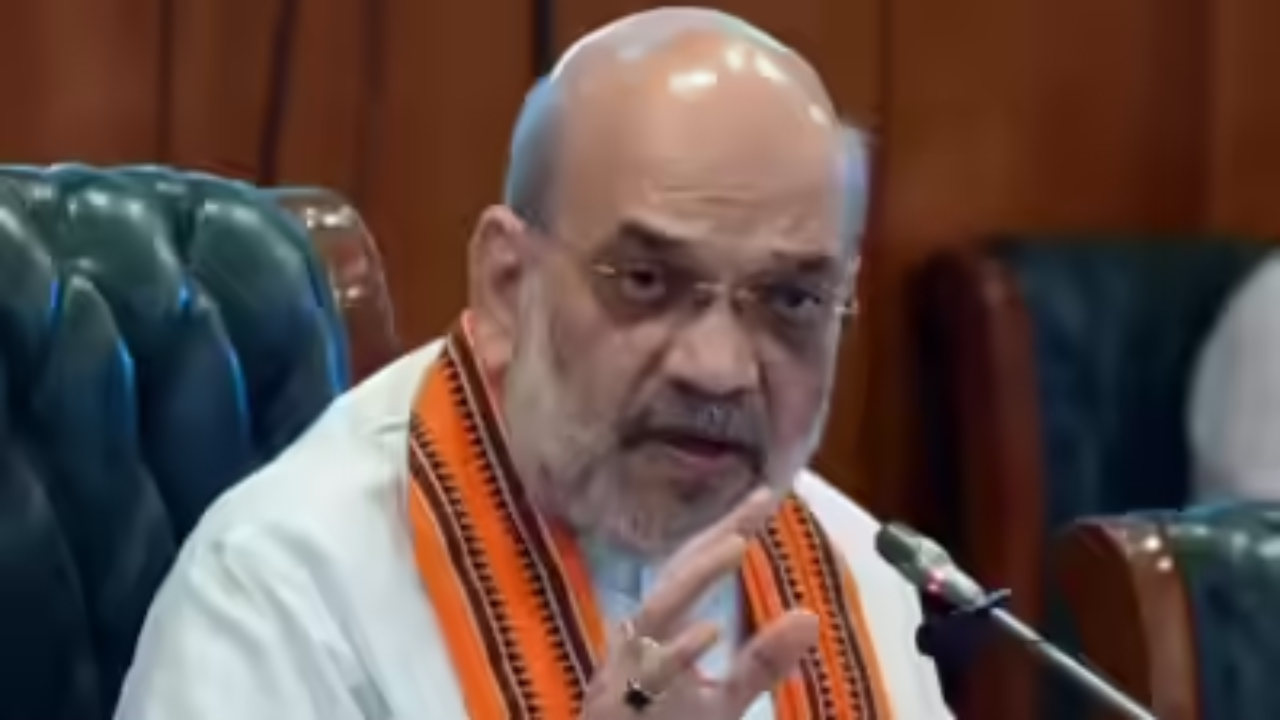
New Delhi, India – Indian Home Minister Amit Shah has reframed the nation's escalating drug problem as a deliberate act of "narco-terrorism," urging a shift in perspective from viewing it merely as a criminal issue to recognizing it as a national security threat backed by terrorist networks.
In a recent statement, Shah emphasized that the drug menace infiltrating India is not an isolated law enforcement challenge but a sophisticated strategy employed by adversaries to destabilize the country. "The drugs problem is narco-terrorism, not a mere issue of crime," Shah declared, highlighting the need for a comprehensive counter-strategy that treats narcotics trafficking as intertwined with terrorism financing and radicalization efforts.
This pronouncement comes amid ongoing concerns over drug smuggling routes originating from neighboring regions, particularly Pakistan and Afghanistan, which have long been identified as hubs for such activities. Shah's remarks, reported by the Times of India on January 9, 2026, underscore the government's determination to intensify operations against these converging threats.
Escalating Narco-Terror Nexus in India
Narco-terrorism, a term describing the use of drug profits to fund insurgent and terrorist groups, has been a persistent challenge for India, especially in border states. Punjab, in particular, has grappled with a synthetic drug epidemic, including cheap heroin variants and methamphetamine, which authorities link to networks operated by Pakistan's Inter-Services Intelligence (ISI) and Khalistani separatist outfits. Recent intelligence reports have pointed to increased seizures along the India-Pakistan border, with over 1,000 kg of heroin confiscated in Punjab alone in the past year, according to Narcotics Control Bureau (NCB) data.
Shah's intervention aligns with a series of high-profile busts. In late 2025, NCB operations dismantled modules in Gujarat and Rajasthan that funneled drug money to terror camps in Pakistan-occupied Kashmir (PoK). These syndicates, often involving local operatives and international cartels, exploit porous borders and maritime routes via the Arabian Sea to inundate Indian markets. The Home Minister's statement signals an escalation in rhetoric and policy, potentially paving the way for enhanced coordination between security forces, the NCB, and state police.
Experts note that narco-terrorism weakens societal fabric by fueling addiction, crime, and extremism. In Jammu and Kashmir, drug trafficking has been tied to funding Lashkar-e-Taiba and Hizbul Mujahideen activities, while in the Northeast, insurgent groups like the United Liberation Front of Asom (ULFA) have historically derived revenue from narcotics. Shah's framing elevates the issue to a terrorism severity level of "medium," as per internal assessments, prompting calls for stricter border surveillance and international cooperation.
Historical Context and Government Response
India's battle against narco-terrorism traces back to the 1980s Punjab insurgency, when drug smuggling surged alongside Khalistani militancy. The 1990s saw a temporary dip following Operation Black Thunder, but revival occurred post-2010 with ISI-backed revivalism. Afghanistan's opium boom after the Taliban resurgence in 2021 exacerbated inflows, with the United Nations Office on Drugs and Crime (UNODC) estimating India as a primary transit hub for heroin destined for Europe.
Under Prime Minister Narendra Modi's administration, responses have included the 2019 launch of the Narcotics Control Division and aggressive "zero-tolerance" drives. The NCB's annual seizures crossed 100 tons in 2024, a record high, bolstered by drone surveillance and AI-driven analytics. Shah, who assumed office in 2019, has previously championed the Andhra Pradesh model of de-addiction centers and community policing, now eyed for national rollout.
International partnerships, such as those with the U.S. Drug Enforcement Administration (DEA) and Iran's anti-narcotics forces, have yielded joint operations. In December 2025, India-Pakistan backchannel talks indirectly addressed smuggling, though tensions persist amid broader geopolitical strains.
Outlook: Toward a Unified Counteroffensive
Shah's declaration is poised to galvanize a multi-agency crackdown, integrating the Border Security Force (BSF), Coast Guard, and intelligence wings under the Multi-Agency Centre (MAC). Proposed measures include advanced non-intrusive scanners at checkposts and expanded rehabilitation programs to counter radicalization via addiction.
While challenges remain—corruption vulnerabilities and demand-side factors—government officials project a 20-30% reduction in inflows by 2027 through sustained vigilance. As India marks its G20 presidency legacy on security, Shah's stance reaffirms narcotics as a frontline in the war on terror, demanding societal and global solidarity.
(Word count: 612)






