
India's Evolving Geopolitical Landscape: A Deep Dive into Strategic Alliances and Regional Realignments
Introduction
India's geopolitical landscape is undergoing significant transformation, shaped by strategic alliances and regional realignments. This article explores India's historical context, the rise of strategic partnerships, regional dynamics, military collaborations, and the role of water diplomacy, culminating in a predictive outlook for India's future in a multipolar world.
Historical Context: India's Geopolitical Foundations
India's geopolitical stance post-independence in 1947 was profoundly shaped by Jawaharlal Nehru's vision of non-alignment, a doctrine that positioned the country as a leader of the Non-Aligned Movement (NAM) during the Cold War. This approach allowed India to navigate superpower rivalries, securing aid from both the Soviet Union and the West while prioritizing strategic autonomy. Key historical inflection points include the 1962 Sino-Indian War, which exposed vulnerabilities against China and prompted military modernization; the 1965 and 1971 wars with Pakistan, culminating in Bangladesh's creation and solidifying India's regional dominance; and the 1998 nuclear tests, which asserted India's status as a nuclear power amid global sanctions.
Post-1991 economic liberalization marked a pivot from ideological non-alignment to pragmatic multi-alignment. India's "Look East" policy (evolving into "Act East" in 2014) fostered ties with ASEAN and Japan, countering China's assertiveness. The 2008 Indo-US Civil Nuclear Agreement symbolized deepening Western partnerships, while the 2017 Doklam standoff with China underscored border tensions. Recent events, as chronicled in a pivotal timeline, contextualize this evolution:
- January 2, 2026: External Affairs Minister S. Jaishankar emphasizes India's "right to self-defense" in a speech, signaling readiness amid Pakistan and China pressures.
- January 9, 2026: India-Bangladesh Ganges Water Talks resume, highlighting water as a diplomatic lever.
- January 11, 2026: German Chancellor's visit boosts economic-defense ties.
- January 14, 2026: India-Greece Joint Services Staff Talks expand Mediterranean outreach.
- January 16, 2026: Reports outline India's regional challenges, from Taliban engagement to QUAD reinforcements.
These milestones reflect India's shift from passive non-alignment to proactive balancing, driven by a $3.5 trillion economy (IMF 2025 data) and a 1.4 billion population, positioning it as a counterweight to China's Belt and Road Initiative (BRI). Historically, this mirrors the 1971 Bangladesh intervention, where India leveraged regional instability for strategic gains, now amplified by digital diplomacy and tech transfers.
The Rise of Strategic Partnerships: India-Israel and Beyond
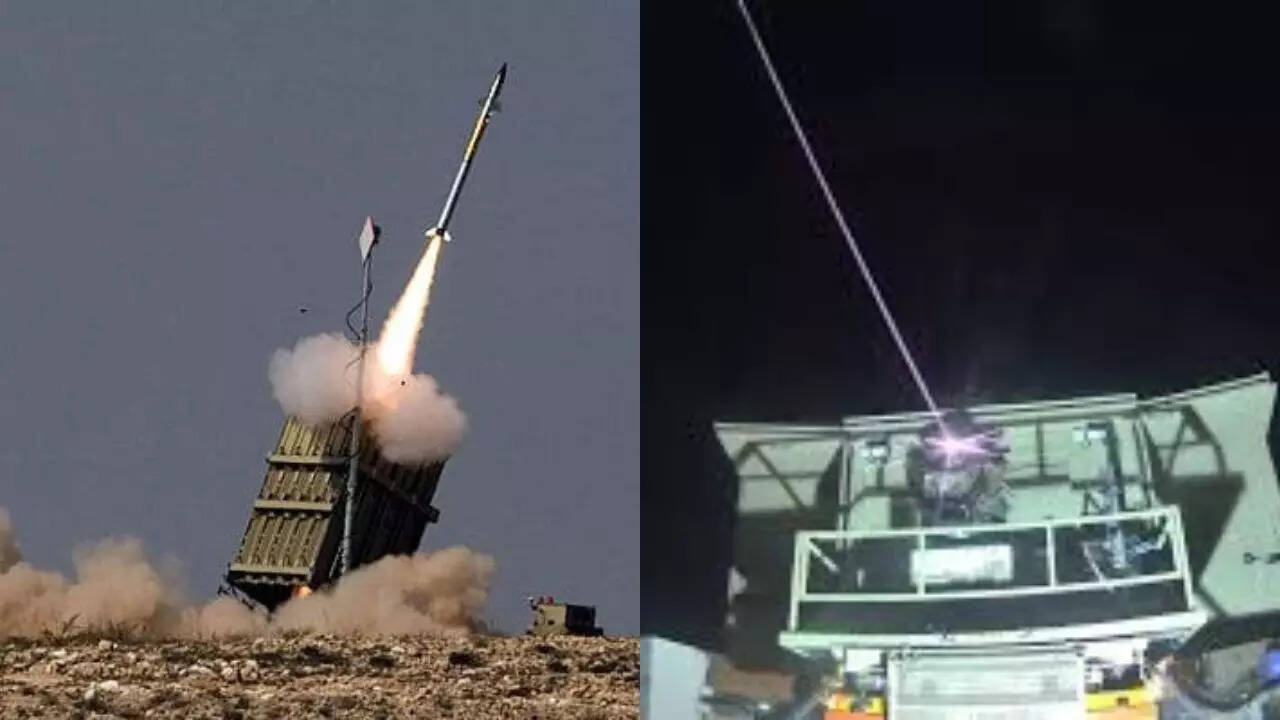
India's burgeoning ties with Israel represent a cornerstone of its strategic realignment, evolving from covert defense cooperation in the 1980s to overt partnerships under Prime Minister Narendra Modi. Recent pledges by Modi to stand by Israel against "terrorism" coincide with prospective MoUs on Iron Dome, Iron Beam, and missile tech transfers. Bilateral trade hit $10.7 billion in FY2024, with defense deals exceeding $3 billion since 2017, including Heron TP drones and Spike missiles—critical for India's border skirmishes.
This axis fits India's broader Western pivot: the Quad (with US, Japan, Australia) has conducted 20+ exercises since 2017, deterring China in the Indo-Pacific. Israel's role enhances this via I2U2 (India-Israel-UAE-US), focusing on semiconductors and AI. Policy implications are profound: tech transfers bolster India's $75 billion defense budget (2025), reducing import dependency from 70% in 2014 to 55% now. Yet, it strains ties with Arab states and Iran, amid US-Iran tensions where Modi visited Israel.
Multiple perspectives emerge: Proponents view it as "de-hyphenation" from Pakistan, enabling counter-terror ops post-Pulwama 2019. Critics, including Pakistani analysts, decry it as anti-Muslim alignment, potentially fueling radicalization. Geopolitically, this connects to historical patterns—India's 1971 Soviet tilt against US-Pakistan-China—now inverted, with Israel as a tech surrogate for US sanctions on Russia.
Regional Dynamics: Navigating Tensions with Neighbors
India's neighborhood remains a geopolitical minefield, where recent diplomatic overtures like the Taliban's first envoy to New Delhi mark a milestone amid reshaping alliances. This pragmatic engagement—despite no formal recognition—aims to secure Afghanistan's $1 billion mineral trade and counter Pakistan's ISI influence, echoing India's historical Chabahar port investments. Pakistan views it warily, invoking Trump's claim of averting a nuclear war saving "35 million lives," highlighting enduring rivalry post-2019 Balakot strikes.
China tensions exacerbate this: Ladakh clashes since 2020 displaced 100,000 troops, with 20+ fatalities. 'Make in India' faces pushback—US scrutiny on Chinese components and Beijing's export curbs on rare earths threatening India's $1 trillion manufacturing goal by 2030. India's response: Atmanirbhar Bharat, attracting $150B FDI since 2020, and border infrastructure like 75 all-weather roads.
Perspectives diverge: Indian hawks advocate deterrence via QUAD; doves urge SAARC revival. Pakistani media frames Taliban ties as encirclement; Chinese state outlets label it "hegemonism." Data shows India's edge—defense exports rose 78% to $2.5B—but Pakistan's JF-17 jets and Taliban safe havens pose risks. This dynamic recalls 1962's underestimation of China, now mitigated by US intelligence sharing.
Military Collaborations: Exercises with Global Forces
Joint exercises underscore India's military modernization, with recent drills alongside US and Japanese forces enhancing interoperability. Yudh Abhyas 2025 simulated mountain warfare, involving 1,000 troops; Malabar 2025 focused on anti-submarine ops in the Bay of Bengal. These build on 50+ annual exercises, aligning with India's 1.4M active personnel and $81B budget.
Implications for stability: They signal to China amid 300+ PLA incursions yearly, boosting readiness via tech like US P-8I Poseidon. US interdictions of tankers in the Indian Ocean highlight maritime synergy against Houthi/Iran threats, securing 80% of India's oil imports.
The Role of Water Diplomacy in Geopolitical Strategy
Water emerges as a strategic fulcrum, with Ganges Water Talks reviving treaty mechanisms amid climate stressors. Sharing 37,000 cusecs during dry seasons averts floods displacing millions annually. India's aid to Bangladesh leverages this for BIMSTEC cohesion.
Broader policy: Indus Waters Treaty tensions with Pakistan; Brahmaputra with China. Data indicates India faces a 50% water deficit by 2030, weaponizing diplomacy like Teesta delays pressuring Dhaka against China.
Looking Ahead: Predictive Outlook for India's Geopolitical Strategy
Trends forecast India's ascent as a pole in a multipolar order. QUAD evolutions—potentially including arms sales—could counter BRI's expansion, with India hosting a summit in 2026. Israel ties may yield indigenous Iron Dome by 2028, offsetting Chinese border edge.
Risks include escalatory skirmishes with China and a Pakistan-Taliban axis fueling Kashmir tensions. However, India's projected $5 trillion economy by 2027 enables greater independence in global affairs. India's leadership in G20 and a UNSC bid signal its growing global role.
Conclusion: India in a Changing World Order
India's geopolitical identity—rooted in non-alignment and propelled by Modi-era pragmatism—positions it as a swing state amid US-China rivalry. Strategic pacts with Israel and the US, cautious neighborly probes, and resource diplomacy weave a resilient web, impacting global supply chains. Yet, tensions risk flashpoints. A nuanced lens reveals India's agency: not a junior partner, but architect of Indo-Pacific balance. Policymakers must prioritize de-escalation to avoid repeating historical hubris. As alliances flux, India's maneuvers herald a rebalanced world order.






