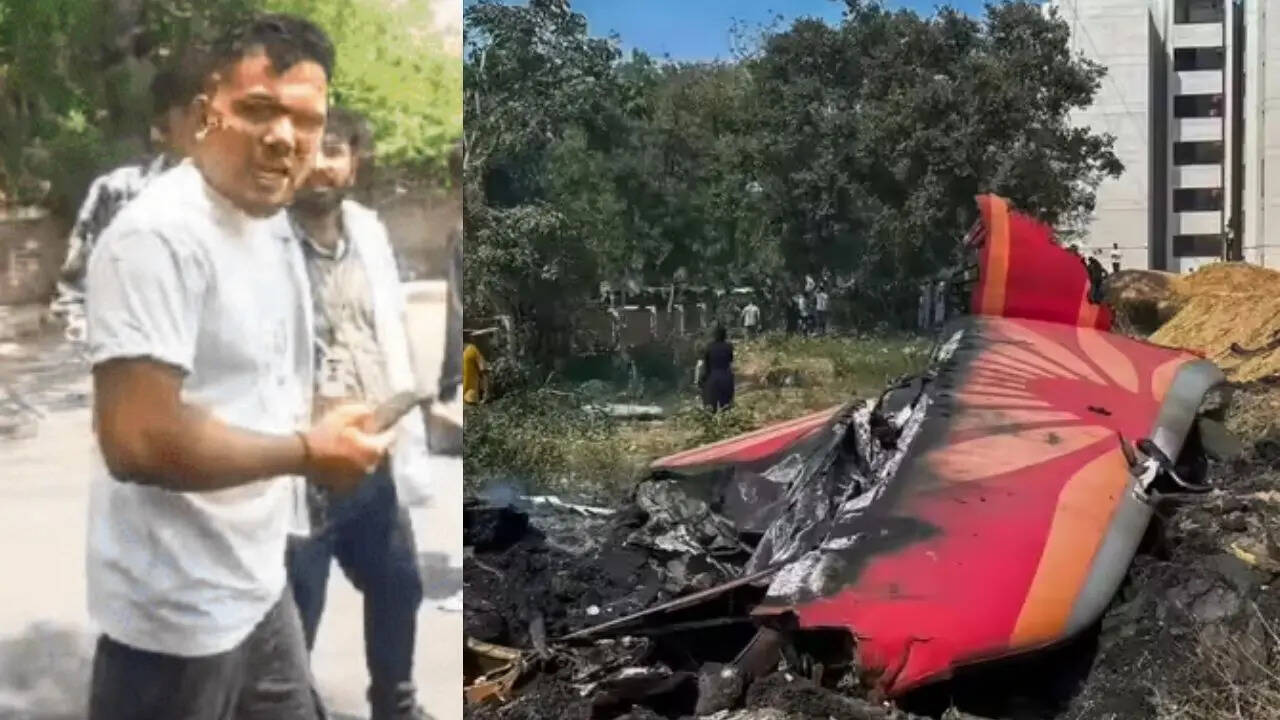

India Disaster Claims 241 Lives in Air India Flight 171 Crash Near Ahmedabad
The India disaster unfolded when Air India Flight 171 crashed shortly after takeoff from Ahmedabad, leaving only one survivor amid widespread loss. A British national of Indian origin survived the Air India Flight 171 crash in Ahmedabad that killed 241 others after being ejected from his seat and shielded by a mud embankment. [1]
Crash of Air India Flight 171
Air India Flight 171, a Boeing 787 Dreamliner carrying 242 people, crashed 1.7km from Ahmedabad airport 32 seconds after takeoff on June 12, 2025. [1] The flight had departed for London Gatwick at 1.38pm on a sunny Thursday with clear visibility. [1] The aircraft plunged to earth after losing altitude, resulting in the deaths of 241 people on board, including two pilots and 10 cabin crew. [1] This India disaster marked one of the world’s deadliest aviation tragedies in recent years, with the Boeing 787 Dreamliner coming down near the airport perimeter. [1]
Miraculous Survival of Viswashkumar Ramesh
Viswashkumar Ramesh in seat 11A was hurled 50ft from the wreckage while still strapped to his seat and landed behind a 10ft mud embankment that protected him from the fireball and blast force. [1] Sources familiar with an internal assessment by Gujarat police described how the mid-air ejection occurred near an emergency exit beside a section of fuselage that split apart on impact. [1] The mud wall, created by construction and landscaping work, insulated Ramesh from heat and blast force after he landed in a muddy patch. [1] Seconds later the forward section erupted in flames, yet the embankment absorbed much of the heat, flames and blast force unleashed by the explosion. [1] Ramesh sustained only a dislocated shoulder and minor facial injuries and was shifted to Ahmedabad civil hospital. [1] “The mound acted as a shield between him and the aircraft. It protected him from the direct impact of the fireball, heat and flames generated by the explosion,” a source said. [1]
Investigation Findings
Investigators used CCTV footage and a video from the opposite side of the aircraft to reconstruct the sequence, determining the rear section hit a medical college hostel-mess complex before the forward section erupted in flames. [1] Police pieced together the chain of survival involving seat 11A, the 50ft trajectory and the protective role of the 10ft mud embankment. [1] The rear section of the aircraft slammed into BJ Medical College’s hostel-mess complex after losing altitude shortly after takeoff. [1] When the aircraft broke apart, the force flung Ramesh and his seat about 50ft from the wreckage. [1] Investigators obtained additional video recorded from the opposite side of the aircraft, offering a fresh perspective on the crash sequence. [1]
Personal Cost to the Survivor
Ramesh sustained only a dislocated shoulder and minor facial injuries; his younger brother Ajay, who was traveling with him, died in the crash. [1] Survival came at a crushing cost as Ajay perished in the India disaster. [1] After returning to the UK in Sept last year to reunite with his wife and young son, Ramesh continues to battle physical injuries, emotional scars and financial hardship. [1] The loss of his brother compounded the physical toll of the dislocated shoulder and facial injuries sustained during the ejection and landing behind the embankment. [1]
Separate IAF An-32 Crash in Assam
Separately, an Indian Air Force An-32 transport aircraft crashed during landing at Rowriah airbase in Jorhat, Assam, killing five personnel while the co-pilot survived. [2] The crash occurred during a routine sortie at approximately 1000h on Saturday. [2] The co-pilot miraculously survived and is undergoing treatment. [2] The IAF has begun a detailed probe into the cause. [2] “The Indian Air Force deeply regrets the loss of five personnel in the An-32 accident at Jorhat, Assam. Sqn Ldr Prashant Singh, Flt Lt Shubham Kumar, Sgt Jitendra Sharma, Agniveervayu Khemaram Kumawat and Agniveervayu Danish Alam made the supreme sacrifice in the line of duty. IAF extends its deepest condolences to the bereaved families and stands firmly with them in this hour of grief,” IAF said in a post on X on Saturday. [2] Defence minister Rajnath Singh wrote on X, “Deeply anguished by the loss of five air warriors in the An-32 accident at Jorhat, Assam…made the supreme sacrifice in the line of duty. Their courage and service to the nation will always be remembered with pride and gratitude. My heartfelt condolences to the bereaved families. The nation stands firmly with them in this hour of grief.” [2] The crash at Jorhat is the third major AN-32 tragedy in the Northeast since 2009. [2]
Context on An-32 Fleet
Antonov An-32 serves as the backbone of IAF’s medium-lift fleet. [2] The force currently operates a fleet of approximately 100 An-32 aircraft. [2] Originally designed and built in erstwhile Soviet Union at the request of IAF, it is a highly capable aircraft for remote and high-altitude regions. [2] It is used for tactical airlifting, troop transport and remote-area resupply. [2] However, the fleet is aging. [2] IAF is, therefore, planning to replace An-32 fleet with newer medium transport aircraft like Airbus C-295, with the first made-in-India aircraft recently completing its maiden test flight from the final assembly line in Vadodara, Gujarat. [2]
What to watch next: Investigators continue to examine CCTV footage and the additional video from the opposite side of the aircraft in the Air India Flight 171 case, while the IAF probe into the An-32 accident at Jorhat remains ongoing alongside fleet replacement efforts with Airbus C-295 aircraft.