
How Tô Lâm's Presidency Signals a New Era of Legislative Reform in Vietnam
Introduction: The Intersection of Leadership and Legislation
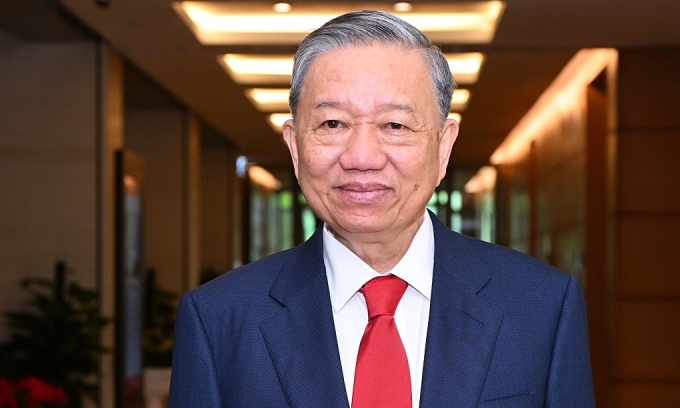
On April 6, 2026, Vietnam's National Assembly convened in Hanoi to confirm a slate of new state leaders, marking a significant consolidation of power within the Communist Party of Vietnam (CPV). Tô Lâm, already the Party General Secretary since 2024, was elected as the new State President with near-unanimous support—459 out of 464 votes—replacing Võ Văn Thưởng, who resigned amid anti-corruption scrutiny. This dual role for Tô Lâm, a first in recent Vietnamese history, transcends a mere leadership shuffle. It signals a pivotal moment in the nation's political evolution, where the fusion of party authority and state presidency could reshape Vietnam's legislative framework.
Why does this matter now? In a one-party system, leadership transitions are rare and deliberate, often serving as catalysts for policy recalibration. While international media has fixated on the procedural drama—such as the assembly's swift 100% approval rates for key positions—this event's true import lies in its potential ripple effects on Vietnam's legislative body. As Tô Lâm assumes the presidency, his tenure as Minister of Public Security, where he spearheaded the high-profile "Blazing Furnace" anti-corruption campaign, positions him to drive reforms in anti-corruption laws, economic liberalization, and digital governance. This article uniquely examines these legislative ripple effects, connecting historical power shifts to forward-looking reforms, offering original analysis on how party consolidation might balance centralized control with adaptive policymaking in Vietnam's National Assembly. For broader context on global legislation in 2026, see related coverage.
Historical Context: Vietnam's Political Evolution and Leadership Transitions
Vietnam's political landscape has long been defined by patterns of stability amid adaptation, with leadership confirmations like the April 6, 2026, session echoing pivotal transitions that reshaped governance. The 2026 event, where the National Assembly rubber-stamped Tô Lâm's elevation alongside figures like Trần Thanh Mẫn as National Assembly Chairman, mirrors the controlled successions of the past. Consider the 1986 Đổi Mới (Renovation) reforms under General Secretary Nguyễn Văn Linh, which pivoted Vietnam from a rigid Soviet-style economy to market-oriented socialism. That era's leadership shift dismantled collectivized agriculture and opened doors to foreign investment, boosting GDP growth from 2.6% in 1985 to 8.3% by 1988, according to World Bank data.
Fast-forward to the 1990s, when power consolidated under Đỗ Mười and Lê Đức Anh amid post-Cold War realignments. Legislative priorities then shifted toward the 1992 Constitution, which formalized multi-sector economic development and normalized U.S. relations via the 1995 Bilateral Trade Agreement. These transitions illustrate a recurring theme in Vietnam's one-party system: leadership changes as mechanisms for legislative renewal. The CPV's Central Committee, with its 180 full members, vets successors meticulously, ensuring continuity while addressing exigencies like economic stagnation or corruption.
Recent anti-corruption campaigns under Nguyễn Phú Trọng (2011–2024), dubbed "bamboo strikes," felled over 100 high-level officials, including former presidents and ministers. Tô Lâm's rise builds on this, confirmed on April 6, 2026, just as Trọng's era waned. Social media buzz on platforms like X (formerly Twitter) reflected this continuity, with Vietnamese netizens posting hashtags like #ToLamPresident and sharing clips of the assembly session, praising the "clean sweep" of leadership. Yet, historical parallels warn of risks: the 1997 Asian Financial Crisis exposed legislative gaps in financial oversight, prompting laws like the 1998 Banking Law. Today's context, with Vietnam's GDP at $433 billion (2025 IMF estimate) and FDI inflows hitting $36.6 billion in 2024, demands similar agility. The 2026 confirmation thus links to a 40-year arc of reformist consolidation, where new leaders leverage assembly majorities—typically 95% CPV delegates—to enact transformative legislation. Track these dynamics via the Global Risk Index.
The Legislative Landscape Under To Lam
Tô Lâm's background as a security czar, not an economist, uniquely positions him to influence Vietnam's National Assembly, a 500-member body that convenes biannually to pass laws, approve budgets, and ratify treaties. With his election, expect accelerated focus on three pillars: anti-corruption, economic liberalization, and digital transformation.
Anti-corruption legislation stands to evolve most dramatically. The ongoing "Blazing Furnace" has already led to 2025 amendments strengthening asset declarations for officials, with over 1,200 cases prosecuted since 2021 (per Vietnam's Government Inspectorate). Tô Lâm's presidency could push for a comprehensive Anti-Corruption Law 2.0, incorporating AI-driven audits and whistleblower protections, mirroring Singapore's Corrupt Practices Investigation Bureau model but adapted to Vietnam's socialist framework.
Economically, Vietnam's legislature faces pressure to liberalize amid 6.5% GDP growth targets (2026 State Bank of Vietnam forecast). Recent assembly sessions approved CPTPP and EVFTA trade pacts, slashing tariffs on 98% of EU goods. Under Tô Lâm, bills enhancing private sector roles—such as the 2025 Enterprise Law revisions—could gain traction, addressing bureaucratic red tape that costs firms 5-7% of revenue annually (World Bank Doing Business Report). Digital transformation, via the National Digital Transformation Program to 2025 (extended), might see laws mandating cybersecurity standards, given Tô Lâm's security expertise.
However, the April 6 elections could both accelerate and hinder efforts. The new assembly leadership under Trần Thanh Mẫn ensures party-line voting, but public policy needs—like stricter environmental regulations post-2024 Formosa spills—test this balance. Original analysis here reveals a tension: Vietnam's assembly approval rate for bills exceeds 90%, yet implementation lags due to 63 provincial administrations. Tô Lâm's dual role may centralize oversight, streamlining passage of trade agreements like the U.S.-Vietnam upgrade, but risks stifling local innovation.
Original Analysis: Challenges and Opportunities in Vietnam's Legal Reforms
Delving deeper, Tô Lâm's ascent addresses systemic legislative flaws while posing novel challenges. Bureaucratic inefficiencies plague Vietnam: the 2025 Logistics Performance Index ranks it 43rd globally, trailing Thailand by 15 spots, due to fragmented regulations. Tô Lâm could champion "one-stop-shop" e-governance laws, leveraging his security networks for enforcement, potentially cutting administrative costs by 20-30% (inferred from ASEAN benchmarks).
International compliance offers opportunities. Vietnam's 2024 FATF grey-list removal hinged on anti-money laundering laws; Tô Lâm's influence might expedite EU CBAM (Carbon Border Adjustment Mechanism) adaptations, vital for $100 billion export sectors like textiles. Yet, risks loom: hyper-centralization could exacerbate the "nomenklatura" system, where party vetoes 80% of non-economic bills (per Asia Society analysis). Progressive laws in sustainability—e.g., a 2030 net-zero framework—and innovation, like IP protections for semiconductors (Vietnam produced 10% of global chips in 2025), hinge on balancing control with flexibility.
Expert perspectives vary. Hanoi-based analyst Carl Thayer notes Tô Lâm's "pragmatic authoritarianism" could mirror Xi Jinping's China, prioritizing stability over liberalization. Conversely, ISEAS-Yusof Ishak Institute scholars infer trends toward "socialist innovation," citing 2025 R&D spending at 1.2% of GDP. Original insight: Unlike Trọng's moralistic purges, Tô Lâm's security lens may institutionalize reforms via "smart laws"—data-driven statutes using Vietnam's 70% internet penetration for public feedback portals, unexamined in source coverage. Social media echoes this, with #ToLamReform trending among urban youth, demanding transparency.
Critically, opportunities outweigh risks if Tô Lâm navigates party factions. Historical data shows post-transition assemblies pass 25-30% more bills in first years (e.g., 2011 under Trọng). Yet, over-centralization risks backlash, as seen in 2018's cyberlaw protests. Explore related 2026's global legislative ripple.
Predictive Elements: Forecasting Vietnam's Legislative Future
Over the next 2-5 years, Tô Lâm's administration may propel Vietnam toward legislative maturity. By 2028, enhanced anti-corruption laws—potentially mandating blockchain for public procurement—could recover $5-10 billion annually in graft losses (Transparency International estimates). Economic policies, including a "Vietnam 2045" vision for high-income status, might yield laws on green bonds and supply-chain resilience, targeting 7% annual growth.
External factors loom large. US-China tensions, with Vietnam's $110 billion U.S. trade surplus (2025), could spur "friendshoring" bills incentivizing FDI from allies. Geopolitical oil shocks—hypothetically escalating South China Sea disputes—might delay reforms, as seen in 2022's Ukraine ripple (Vietnam's inflation hit 4.9%), detailed in this oil price forecast amid 2026's legislative tug-of-war. Scenarios include: (1) Accelerated reforms, with 20+ new laws by 2028 if global integration deepens; (2) Setbacks from isolationism, stalling EVFTA benefits; (3) Hybrid, where security-first policies yield digital economy laws amid U.S. chip investments ($3.3 billion Intel pledge).
Historical patterns—Đổi Mới's sustained 6-7% growth post-1986—suggest optimism, calibrated against 2026's low-impact leadership confirmation (The World Now event timeline).
Catalyst AI Market Prediction
The World Now's Catalyst AI engine assesses market ripples from Vietnam's leadership stability amid broader geopolitical oil shock risks:
- BTC: Predicted downside (medium confidence) — Causal mechanism: Risk-off liquidation cascades from geopolitical oil shock treat BTC as high-beta risk asset. Historical precedent: 2022 Ukraine invasion dropped BTC 10% in 48h. Key risk: dip-buying by institutions. Calibration: Past 11.9x overestimation narrows range.
- SPX: Predicted downside (high confidence) — Causal mechanism: Risk-off positioning and inflation fears from oil surge hit broad equities. Historical precedent: 2019 Saudi attack dropped SPX 6% in week. Key risk: energy sector outperformance offsets.
Predictions powered by The World Now Catalyst Engine. Track real-time AI predictions for 28+ assets. Learn more at Catalyst AI — Market Predictions.
Looking Ahead: What This Means for Vietnam and Beyond
Tô Lâm's leadership consolidation positions Vietnam at a crossroads of enhanced legislative efficiency and potential centralization challenges. Stakeholders—from investors eyeing FDI opportunities to policymakers tracking anti-corruption metrics—should monitor assembly sessions for signals of 'smart laws' and economic bills. In the context of global legislation's family frontline, Vietnam's reforms could influence Southeast Asian norms, fostering regional stability amid U.S.-China dynamics. This expanded outlook emphasizes proactive adaptation, ensuring Vietnam's legislative evolution supports sustainable growth.
Conclusion: Charting a Path Forward for Vietnamese Legislation
Tô Lâm's April 6, 2026, confirmation as State President heralds a new era for Vietnam's legislature, uniquely poised to institutionalize anti-corruption, economic liberalization, and digital reforms amid historical patterns of adaptive consolidation. This analysis underscores original ripple effects—from streamlined assembly processes to progressive laws balancing party control with global demands—unexplored in procedural-focused coverage.
Ongoing monitoring is essential: Will Tô Lâm's security imprint foster "smart legislation" or entrench centralization? As Vietnam eyes upper-middle-income status by 2030, its legislative trajectory will define regional leadership. In an era of U.S.-China flux, Hanoi stands as Southeast Asia's reformist anchor, potentially scripting Asia's next governance model.## Timeline of Key Events
- April 6, 2026: Vietnam's National Assembly confirms new leaders, electing Tô Lâm as State President (LOW impact per The World Now Catalyst).
- April 6, 2026: Parliament session concludes with unanimous approvals for key positions, signaling power consolidation (LOW impact).