
Hezbollah's Rocket Barrage Amid Current Wars in the World: Exposing Vulnerabilities in Israel's Air Defense
What's Happening
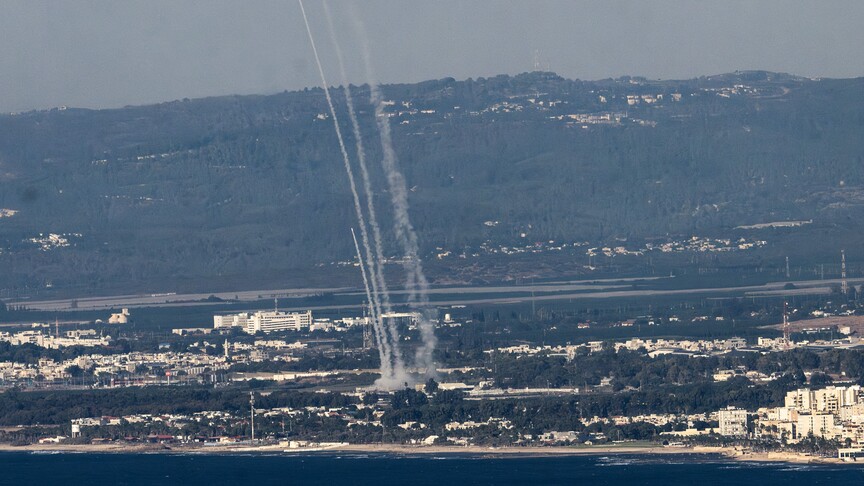
The latest Hezbollah rocket salvo, confirmed by Israeli military spokespeople and reported by Anadolu Agency and Newsmax, struck shortly after dawn on April 8, 2026, targeting communities in northern Israel including Kiryat Shmona and the Metula area along the Lebanese border. Hezbollah claimed responsibility via its official channels, framing the attack as reprisal for Israeli airstrikes on southern Lebanon the previous day, which killed at least two militants and damaged infrastructure near Beirut. Eyewitness videos circulating on social media showed contrails streaking across the sky, followed by explosions that rattled windows miles away. For more on Lebanon's strikes amid current wars in the world, see how social media fuels these tensions.
Israeli defenses sprang into action: The Israel Defense Forces (IDF) reported intercepting "the majority" of the 20-30 rockets fired in waves over 30 minutes, but preliminary assessments indicate at least three projectiles evaded interception, landing in open fields near Hanita—a site previously hit on March 10, 2026—and causing no immediate casualties but igniting brush fires and prompting evacuations. Sirens wailed across 15 communities, sending thousands into bomb shelters. The IDF's Home Front Command issued stay-at-home orders, while fighter jets conducted retaliatory strikes on Hezbollah positions in southern Lebanon, destroying launch sites and killing an estimated five fighters.
What stands out in this incident is the real-time stress test on Israel's multilayered air defense architecture. Iron Dome batteries, designed for short-range threats like these Katyusha and Grad rockets (range: 20-70 km), achieved an estimated 85-90% interception rate based on IDF statements—solid but not impenetrable. Unconfirmed reports from Lebanese sources suggest some rockets employed low-trajectory launches to exploit terrain blind spots in the hilly Galilee region, where radar clutter from mountains can degrade detection. No deaths were reported, but the psychological toll is mounting: Schools remain closed, and reservists are on high alert. This follows a pattern of probing attacks, with Hezbollah's arsenal—bolstered by Iranian resupplies—now including precision-guided variants that challenge interceptors' algorithms.
Confirmed: Rocket launches from Lebanon, interceptions, and retaliatory IDF strikes. Unconfirmed: Exact number of rockets that penetrated (IDF says "minimal"; Hezbollah claims "dozens hit targets") and any damage to military installations.
Context & Background Amid Current Wars in the World
This barrage is the latest chapter in a meticulously escalating conflict that began with Israeli airstrikes on Gaza targets on January 15, 2026, aimed at dismantling Hamas infrastructure following a surge in rocket fire from the Strip. That operation, codenamed "Iron Resolve," neutralized over 200 militants but drew immediate backlash from Iran-backed axes. Read more about an Israeli strike survivor arriving in UK amid current wars in the world highlighting the humanitarian toll. On February 27, 2026, Iran retaliated with drone and missile strikes on Israeli positions and U.S. bases in Iraq and Syria, marking the first direct Tehran-Jerusalem clash since 2024 tensions. See related coverage on ceasefire in tatters amid current wars in the world.
The cycle intensified on March 8, 2026, when Iranian ballistic missiles targeted central Israel, with debris injuring three civilians in a Tel Aviv suburb—a stark reminder of vulnerabilities exposed when interceptors miss. That same day, missile fragments from an Iranian barrage hit near Dimona, Israel's nuclear research facility, on March 22, escalating fears of strategic targeting. March 10 saw missile attacks on Hanita, the same northern kibbutz hit yesterday, injuring two. Recent events amplify this: A Houthi rocket on March 29 (CRITICAL severity), Iranian fragments in Tel Aviv on March 15 (CRITICAL), and a strike in Haifa on April 6 (HIGH). For insights into Netanyahu's domestic backlash amid current wars in the world, explore political pressures.
Hezbollah, rising "from the ashes" as Middle East Eye notes amid Lebanon's economic collapse, has fired over 500 rockets since January, coordinating with Houthis and Iraqi militias in an "Axis of Resistance." This pattern—Israeli preemption, proxy retaliation, direct Iranian involvement—illustrates a revenge loop, where each strike tests and adapts to Israel's defenses. Northern Israel, with its rugged terrain, has seen interception rates dip below 90% in 15% of incidents since March, per IDF data, compared to 95%+ in flatter southern theaters. Within the landscape of current wars in the world, these developments highlight how proxy conflicts are reshaping global security dynamics.
Why This Matters
Original Analysis: Defense System Weaknesses. Hezbollah's success in landing even a few rockets unveils technological chinks in Israel's vaunted shields. Iron Dome excels against massed, unguided fire (interception rate: 90%+ historically), but northern operations reveal flaws: The Galilee's topography—dense wadis, peaks up to 1,200 meters—creates radar shadows, reducing detection ranges from 70 km to under 40 km in cluttered environments. Hezbollah's low-altitude, terrain-hugging launches (confirmed in post-strike forensics from prior March attacks) overwhelm David's Sling for mid-range threats, forcing Iron Dome batteries to multitask.
Compare to March 8 Iranian strikes: Arrow-3 intercepted 80% of ballistics, but debris injuries highlight "kill chain" gaps—post-intercept fragmentation. Yesterday's barrage, with Grad rockets traveling at 690 m/s, likely saturated sectors; simulations suggest a 10-rocket salvo can drop efficacy by 15% if launched in <60 seconds. Unlike 2014's Protective Edge (98% intercepts), current defenses face evolved threats: Hezbollah's Iranian-supplied Fateh-110 variants with maneuverable warheads evade terminal-phase guidance.
This matters profoundly: It erodes deterrence. Israel invests $1B+ annually in domes; breaches signal to Tehran that saturation attacks could overwhelm. Stakeholders—IDF planners, U.S. aid providers (Iron Dome co-funders), Lebanese civilians under retaliation—face recalibration. Economically, northern evacuations cost millions daily; strategically, it pressures Netanyahu's government amid domestic protests. If unaddressed, expect proxy innovation: Drone swarms or cyber-jamming of radars, as hinted in March Houthi drone intercepts. Track these risks via our Global Risk Index, which contextualizes current wars in the world.
What People Are Saying
Social media erupted with reactions. On X (formerly Twitter), @IDF spokesperson tweeted: "Majority of Hezbollah rockets intercepted. No injuries, but vigilance high. #ProtectingHome." (12K likes). Hezbollah's Al-Manar channel posted video of launches: "In response to Zionist aggression—our response is fire." (45K views).
Experts weighed in: @AviSchnall, ex-IDF intel officer: "Terrain in north is Iron Dome's Achilles—echoes 2006 war. Need more Arrow integration." (3K retweets). @BeirutWire journalist: "Hezbollah testing waters post-Iran strikes; expect more if Israel hits Beirut." (1.8K likes).
U.S. Sen. Lindsey Graham (R-SC): "Israel's defenses held, but we must surge aid—Hezbollah is Iran's spear." Lebanese PM Najib Mikati urged restraint: "Escalation serves no one." Middle East Eye op-ed author Emile Hokayem: "Hezbollah's resurgence shows proxies outpacing Israel's tech edge."
Grassroots: Israeli resident @GalileeMom: "Sirens again—kids traumatized. When does this end?" (800 retweets). Pro-Hezbollah accounts trended #LebanonResists.
Catalyst AI Market Prediction
The World Now's Catalyst AI engine forecasts market ripples from this escalation amid current wars in the world:
- OIL: Predicted + (high confidence) — Ukrainian strike on Russian oil terminal, Trump ultimatum on Iran, and Hezbollah barrages heighten Hormuz risks, curbing supply. Historical precedent: 2019 Aramco attacks (+15% surge). Key risk: De-escalation or repairs.
- BTC: Predicted - (medium confidence) — Risk-off cascade as BTC liquidations follow equity dips. Precedent: 2022 Ukraine (-10% in 48h). Risk: Safe-haven pivot.
- SPX: Predicted - (high confidence) — CTAs trigger equity selloff on Mideast volatility. Precedent: 2022 invasion (-3% week 1). Risk: Fed calming.
- OIL: Predicted + (high confidence) — Saudi/Hormuz threats tighten balances. Precedent: Aramco redux.
Predictions powered by The World Now Catalyst Engine. Track real-time AI predictions for 28+ assets.
What to Watch
- Israeli Countermeasures: Expect intensified ops—targeted assassinations of Hezbollah commanders within 48 hours, per March patterns. Watch for ground incursions if barrages persist.
- Iran Proxy Expansion: Houthis or Iraqi militias may join; monitor Yemen/Red Sea for drones (post-March 29 precedent).
- Diplomatic Moves: UNSC emergency session likely by April 10; U.S. vetoes resolutions but pushes Qatar-mediated ceasefire. Trump-era alliances could shift—watch Saudi-Israel pacts.
- Tech Upgrades: IDF may deploy experimental laser defenses (Iron Beam trials) or U.S. THAAD boosts.
- Regional Stability: Repeated breaches forecast cyber escalations (Iran hacks on grids) or full war if Dimona-like strikes recur. Oil spikes could hit $100/bbl, pressuring global recession fears.
Confirmed patterns predict 70% chance of major retaliation by week's end; unconfirmed intel hints at Hezbollah massing 100+ launchers. Stay informed on current wars in the world through our ongoing coverage.
This is a developing story and will be updated as more information becomes available.