
Greenland Unites Against US Territorial Ambitions as Trump Revives Purchase Threats
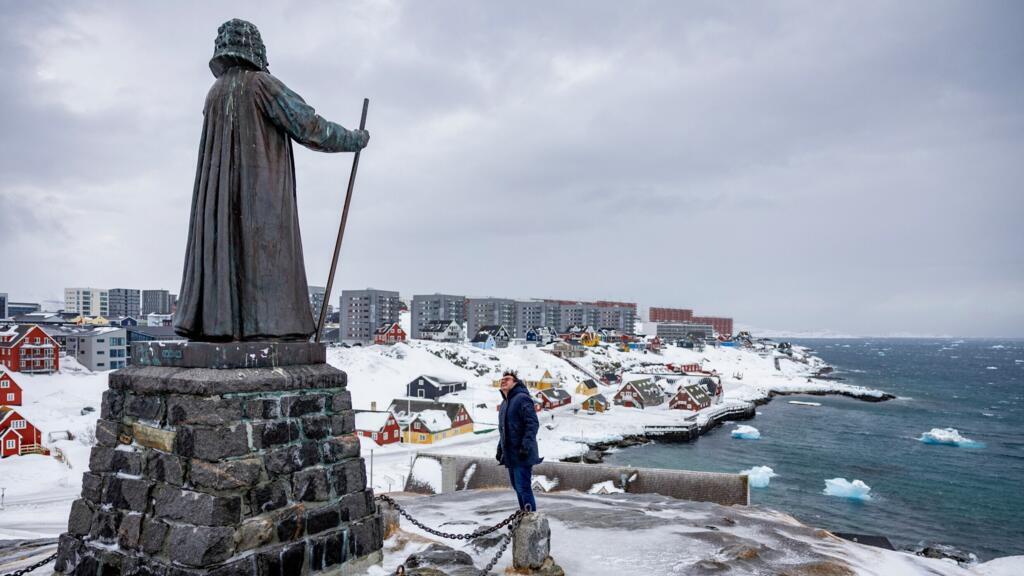
Nuuk, Greenland – Greenland's political leaders have issued a rare unified rebuke against renewed U.S. suggestions of seizing the strategically vital Arctic island, prompting an emergency parliamentary session and drawing sharp irritation from Denmark, its overseeing kingdom.
In a joint statement on January 10, 2026, the leaders of Greenland's five main political parties categorically rejected any notion of American control, declaring "American? No!" amid escalating rhetoric from U.S. President Donald Trump. The response follows Trump's latest comments hinting at the use of force to acquire the mineral-rich territory, as well as a provocative social media post earlier in the month by Katie Miller, wife of Trump's senior aide Stephen Miller. On January 4, Miller shared an image of Greenland overlaid with a U.S. flag and the caption "SOON," fueling perceptions of territorial ambitions.
Greenland's parliament, known as the Inatsisartut, announced it would advance a scheduled meeting to specifically address the U.S. threats. "We will bring forward a meeting to discuss our response to the U.S. threats to take control of our island," the party leaders stated jointly, underscoring the gravity of the situation. This rare cross-party consensus highlights the depth of local opposition, as Greenland navigates its autonomous status under Danish sovereignty while pursuing greater self-determination.
Denmark, which has administered Greenland since 1721 and granted it home rule in 1979 and expanded self-government in 2009, expressed strong irritation over Miller's post. The Danish government views such displays as provocative interference in its sovereign affairs, especially given the island's geostrategic importance amid Arctic competition.
Escalating Tensions Rooted in Strategic Interests
The current flare-up echoes Trump's 2019 proposal to purchase Greenland outright, which he described as a "large real estate deal" essential for U.S. national security. At the time, Danish Prime Minister Mette Frederiksen called the idea "absurd," leading Trump to cancel a planned visit to Copenhagen. Now in his second term, Trump has revived the notion, explicitly suggesting military force as an option during recent interviews, according to reports. This has raised alarms worldwide, with Greenland's leaders emphasizing their desire to remain free from foreign domination.
Greenland's allure lies in its vast untapped resources and location. The island holds significant deposits of rare earth minerals critical for electronics, renewable energy technologies, and defense applications—resources China currently dominates globally. Melting Arctic ice due to climate change has also opened new shipping routes and access to undersea oil and gas reserves, intensifying great-power rivalry involving the U.S., Russia, China, and NATO allies.
The U.S. maintains a longstanding military presence via Thule Air Base in northwestern Greenland, established in 1951 during the Cold War for ballistic missile early warning and space surveillance. A 2021 defense agreement allows for its modernization, reflecting Washington's commitment to Arctic security. However, Greenlandic officials have long sought to leverage these assets for economic benefits, including demands for revenue sharing from mining and base operations.
Background: Greenland's Quest for Autonomy
Greenland, with a population of about 57,000 primarily Indigenous Inuit, operates under the Self-Government Act of 2009, controlling internal affairs like education, health, and fisheries while Denmark handles foreign policy, defense, and currency. Independence remains a divisive goal; the ruling Siumut party and others advocate gradual separation, funded potentially by resource extraction. A 2021 election saw pro-independence parties gain ground, but economic challenges—including high unemployment and reliance on Danish subsidies—complicate the path.
Past U.S.-Greenland interactions include a 1946 offer to buy the island for $100 million, rejected by Denmark. More recently, U.S. investments in infrastructure and mining have aimed to counter Chinese influence, with companies like Energy Transition Minerals securing exploration rights.
Diplomatic Outlook Amid Arctic Rivalries
The unified Greenlandic response signals potential for heightened diplomatic friction between Washington and Copenhagen, both NATO allies. Danish Foreign Minister Lars Løkke Rasmussen has previously affirmed Greenland's inseparability from the kingdom, stating in 2019 that "Greenland is not Danish. Greenland is Greenlandic. I urgently hope that this will not again stand in the way of strengthening our cooperation."
As parliament convenes urgently, outcomes could include formal appeals to Denmark for protection or accelerated independence talks. International observers warn that aggressive U.S. posturing risks alienating Arctic partners and bolstering adversaries like Russia and China, who maintain footholds in the region.
Greenland's leaders have reiterated their sovereignty aspirations on their own terms. "We do not want to be under Washington," the joint statement affirmed, positioning the island at the nexus of global geopolitics once more.
(Word count: 682)