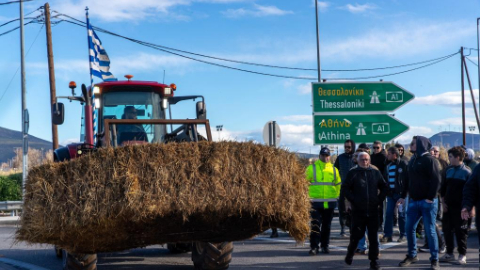

Greek Farmers Escalate Protests with 48-Hour Highway Shutdown Plan Amid Calls for Dialogue
Athens, Greece – Greek farmers, locked in ongoing nationwide protests over economic grievances, have announced plans for a major escalation: a 48-hour shutdown of key highways beginning January 8, 2026. The action threatens widespread disruptions to major transit routes as demonstrators signal openness to government dialogue while maintaining pressure tactics.
The protests, which began intensifying around January 4, 2026, stem from farmers' demands for relief from soaring production costs, low crop prices, and stringent EU agricultural policies. Categorized as medium-severity civil unrest, the movement has already seen road blockades and tractor convoys across rural regions. The planned highway shutdown, set to commence on Thursday, January 8, aims to amplify visibility and economic impact, potentially halting freight transport, commuter traffic, and supply chains nationwide.
According to reports from Xinhua on January 9, 2026, the farmers remain open to dialogue even as demonstrations persist. "Greek farmers open to dialogue as nationwide protests continue," the article states, highlighting a dual strategy of confrontation and negotiation. Protesters have established blockades at strategic points, including entryways to highways and ports, but leaders have expressed willingness to meet with government officials to discuss subsidies, tax relief, and support for sectors hit hard by inflation and global market shifts.
Mounting Pressures on Greek Agriculture
Greece's agricultural sector, a cornerstone of the economy contributing around 4% to GDP and employing over 10% of the workforce, has faced chronic challenges. Farmers, primarily in regions like Thessaly, Crete, and the Peloponnese, cultivate olives, cotton, grains, and fruits—staples vulnerable to weather extremes, import competition, and regulatory burdens from the European Union's Common Agricultural Policy (CAP). Recent floods in Thessaly in 2023 devastated farmlands, exacerbating recovery costs, while energy prices spiked by the energy crisis have inflated fertilizer and fuel expenses.
Historical precedent underscores the potency of such actions. In 2024, Greek farmers staged similar tractor blockades, securing concessions including diesel subsidies and debt relief after weeks of disruptions. The current wave echoes those events but arrives amid Greece's post-pandemic economic rebound, with GDP growth projected at 2.1% for 2026 by the European Commission, tempered by inflation hovering near 3%.
Government response has been measured. Prime Minister Kyriakos Mitsotakis' New Democracy administration has offered preliminary aid packages, including 50 million euros in compensatory payments announced in late 2025. However, farmers deem these insufficient, demanding comprehensive measures like reduced social security contributions and exemptions from green transition levies under the EU's Farm to Fork strategy.
Details of the Planned Shutdown and Ongoing Disruptions
The 48-hour blockade, announced mid-week, targets major arteries such as the E75 (Athens-Thessaloniki) and E65 (Patras-Athens), critical for logistics. Organizers from the Panhellenic Farmers' Coordination Committee estimate participation from thousands of tractors, with rotating shifts to sustain interruptions without permanent closures. "We will not back down until our voices are heard," a protester representative told local media, as echoed in broader coverage.
By January 9, protests had entered their sixth day, with blockades reported at over 20 locations. Xinhua noted that while disruptions have slowed traffic—causing hours-long delays for trucks and passengers—authorities have avoided mass arrests, prioritizing de-escalation. Police presence has increased along highways, and contingency plans include rerouting and digital traffic apps.
Farmers' leaders have conditioned escalation on negotiation outcomes. "We are ready for dialogue, but the government must come to the table with real proposals," one coordinator stated, per the Xinhua report. Talks mediated by Agricultural Minister Kostas Tsiaras were slated for January 10, potentially averting the full shutdown.
Broader Context and Economic Implications
This unrest unfolds against a backdrop of European-wide farmer discontent. Parallel protests in France, Poland, Romania, and Spain have seen similar tactics, protesting EU policies perceived as favoring environmental goals over viability. In Greece, the sector's woes are acute: olive oil prices plummeted 30% in 2025 due to oversupply, while cotton farmers grapple with pesticide bans.
Economically, a prolonged shutdown could cost millions daily in lost productivity. The Hellenic Federation of Enterprises (SEV) warned of supply chain ripple effects, particularly for food exports valued at 5 billion euros annually. Tourism, gearing up for the summer season, faces indirect hits if rural access clogs.
Internationally, the events draw scrutiny as Greece chairs informal EU agriculture discussions in early 2026. Brussels has urged member states to balance CAP reforms with farmer support, allocating 1.2 billion euros in crisis aid last year.
Outlook: Dialogue or Deadlock?
As the January 8 deadline looms—though reports suggest flexibility—the standoff tests Greece's social compact. With farmers signaling dialogue, a breakthrough remains possible, potentially mirroring past resolutions. Failure could extend unrest into peak winter harvest preparations, amplifying medium-severity disruptions.
Government sources express optimism, citing prior successes, while protesters vow sustained action. The coming days will determine if highways reopen or become symbols of deeper agrarian strife in modern Greece.
(Word count: 712)






