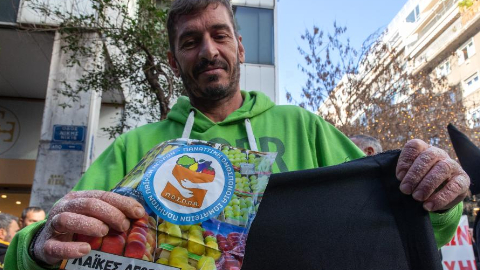

Greek Farmers and Market Vendors Mount Protests Amid Economic Pressures
Athens, Greece – In a sign of mounting frustration over economic policies, Greek farmers are preparing a 48-hour nationwide highway shutdown starting January 8, while open-air market vendors have launched a parallel nationwide strike protesting heavy tax burdens. These actions, announced amid ongoing cost-of-living challenges, threaten significant disruptions to transportation and commerce across the country.
The farmers' planned blockade, first reported on January 4, targets major transit routes and is expected to severely hamper the movement of goods and passengers. Categorized as medium severity civil unrest, the action underscores long-standing grievances in Greece's agricultural sector, where producers have repeatedly mobilized against high production costs, low commodity prices, and fiscal policies perceived as unfavorable.
Simultaneously, open-air market vendors – a key segment of Greece's informal economy – initiated their strike on January 8, halting operations at street markets nationwide. According to reports from Xinhua, the vendors are protesting what they describe as an excessive tax burden that threatens their livelihoods. These markets, which sell fresh produce, clothing, and household goods, are vital to local communities, particularly in rural and suburban areas.
Details of the Protests
Farmers' representatives have coordinated the highway shutdown to last 48 hours, beginning early on January 8. Major arteries such as the E75 national highway, connecting northern Greece to Athens and beyond, are likely to be affected, based on patterns from previous blockades. The action follows initial announcements on January 4, reflecting a rapid escalation in mobilization. While specific demands have not been detailed in initial reports, historical precedents suggest calls for subsidies, debt relief, and tax reductions on fuel and fertilizers.
The vendors' strike, as covered by Xinhua, involves traders who operate in Greece's ubiquitous open-air markets, known locally as "laïkes." These weekly gatherings generate significant economic activity but have faced increased scrutiny under recent tax enforcement measures. Vendors argue that flat-rate taxes and value-added tax (VAT) hikes fail to account for fluctuating incomes, pushing many toward financial ruin. The nationwide scope indicates broad coordination, potentially involving thousands of stalls.
No major clashes with authorities have been reported as of January 8, but police presence is anticipated along protest routes. Greek media outlets have begun covering the dual actions, framing them within a broader wave of labor unrest.
Economic Context and Historical Background
Greece's economy, still recovering from the sovereign debt crisis of the 2010s, remains vulnerable to inflationary pressures and energy costs exacerbated by global events. Agricultural output constitutes about 4% of GDP, employing roughly 10% of the workforce, according to Eurostat data. Farmers have a tradition of highway blockades; notable actions occurred in 2023 and 2024 over similar issues, including EU Common Agricultural Policy reforms and soaring input costs post-Russia-Ukraine war.
Open-air market vendors, often self-employed or family-run operations, operate in a sector hit hard by the COVID-19 pandemic and subsequent regulatory changes. Tax compliance drives, part of Greece's efforts to meet EU fiscal targets, have intensified since 2022, with digital invoicing mandates adding administrative burdens.
These protests coincide with Greece's projected 2.1% GDP growth for 2026, per IMF forecasts, but persistent inflation above 3% and wage stagnation fuel discontent. The center-right New Democracy government, led by Prime Minister Kyriakos Mitsotakis, faces criticism for prioritizing fiscal austerity over targeted relief. Union leaders have hinted at solidarity actions, potentially broadening the unrest.
Government Response and Potential Impact
The Greek government has not yet issued an official statement on the farmers' shutdown, but Transportation Minister Christos Staikouras indicated on state broadcaster ERT that contingency plans are in place, including rerouting and toll exemptions. On the vendors' strike, Finance Ministry officials reiterated commitments to "fair taxation" while urging dialogue.
Disruptions could ripple through supply chains: fresh produce delays from farmer blockades may spike prices in supermarkets, while empty markets affect low-income consumers. Tourism, a pillar of the economy, might see indirect effects if blockades impede access to key sites.
Outlook
As the 48-hour shutdown unfolds, observers watch for escalation or negotiations. Past protests have yielded concessions, such as emergency aid packages in 2024. With European Parliament elections looming in 2029, these events could test public support for the government. Labor unions have expressed sympathy, signaling potential for wider mobilization if core demands remain unmet.
The World Now will continue monitoring developments in this story.
(Word count: 612)






