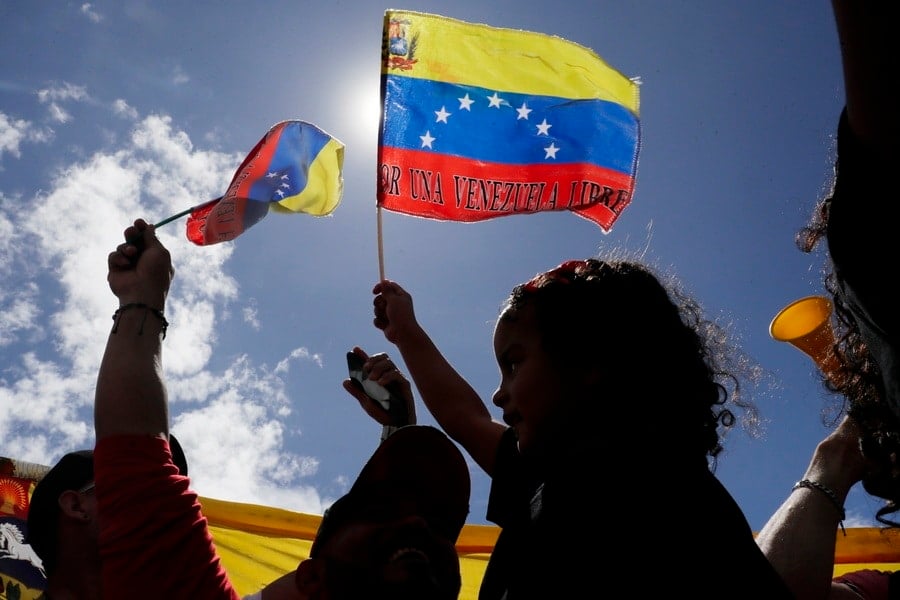
Greece Faces Diplomatic Dilemma Over U.S. Capture of Maduro

Latest from X
Greece Faces Diplomatic Dilemma Over U.S. Capture of Maduro
Athens, Greece - The capture of Venezuelan President Nicolás Maduro by U.S. forces on January 3, 2026, has ignited a complex diplomatic crisis for Greece, a nation caught between its strategic alliance with the United States and its commitment to international law. As global reactions to the unprecedented U.S. military intervention in Latin America continue to unfold, Greece finds itself navigating a delicate balance, with Prime Minister Kyriakos Mitsotakis facing pressure to articulate a clear stance on the controversial operation.
The operation, described by Reuters as "Washington's most direct intervention in Latin America in decades," saw U.S. forces apprehend Maduro and his wife, Cilia Flores, in a series of airstrikes across northern Venezuela. The move has sparked widespread international debate, with some nations condemning it as a violation of sovereignty and others offering cautious support. For Greece, a NATO member with deep historical ties to the U.S., the situation poses unique challenges.
According to a report by Greek Reporter, Athens is grappling with the implications of the U.S. action. While Greece has long prioritized its alliance with Washington, it also maintains a strong adherence to international legal norms, often advocating for diplomacy and multilateral solutions in global conflicts. The capture of a sitting head of state by a foreign power raises questions about sovereignty and the legality of such interventions—issues that resonate deeply in a country with a history of foreign interference in its own affairs.
Prime Minister Mitsotakis has yet to issue a definitive statement on the matter, but early indications suggest a cautious approach. Greek officials are reportedly weighing the need to maintain strong bilateral relations with the U.S. against the risk of alienating other international partners who have criticized the operation. The Greek government is also mindful of domestic public opinion, which often leans toward skepticism of unilateral military actions.
Background on Greece's Geopolitical Position
Greece's current dilemma must be understood within the context of its broader geopolitical role. As a member of both NATO and the European Union, Greece often serves as a bridge between Western interests and the broader Mediterranean and Balkan regions. Its strategic location has made it a key partner for the U.S., particularly in matters of regional security and energy cooperation. However, Greece has also been a vocal proponent of international law, frequently aligning itself with EU positions that emphasize dialogue over force.
In recent years, Greece has faced its own diplomatic challenges, including tensions with Turkey over maritime boundaries and migration issues. These experiences have reinforced Athens' preference for legal frameworks and multilateral negotiations, a stance that may influence its response to the Maduro situation. Additionally, Greece has historically maintained a neutral position on Latin American affairs, with limited direct involvement in Venezuelan politics, though it previously recognized opposition leader Juan Guaidó as interim president in 2019 under a conservative government shift.
Global and Regional Implications
The U.S. capture of Maduro has drawn a spectrum of reactions worldwide, further complicating Greece's position. While some allies of the U.S. have expressed support for the intervention, others, including China and several Latin American nations, have condemned it as a violation of international norms. Within the EU, divisions are emerging, with some member states calling for a unified response while others remain noncommittal. Greece, as a frontline state in European geopolitics, may play a pivotal role in shaping the bloc's stance.
Posts on X reflect the polarized nature of the debate, with some users praising Greece for reportedly expressing support for the capture, while others highlight comments suggesting Athens views the U.S. action as potentially illegal. These varied sentiments underscore the tightrope Greece must walk in crafting its official response.
Outlook for Greek Diplomacy
As the situation develops, analysts expect Greece to push for a resolution through international bodies like the United Nations or the EU, advocating for dialogue and a legal assessment of the U.S. operation. Prime Minister Mitsotakis is likely to face increasing pressure to clarify Greece's position, both from domestic constituents and international partners. The coming days will be critical in determining whether Athens can maintain its balancing act or if it will be forced to take a more definitive side in this geopolitical controversy.
For now, Greece remains a key observer in a crisis that could redefine international norms around sovereignty and intervention. As the world watches the fallout from Maduro's capture, Athens' response may serve as a litmus test for how smaller powers navigate the competing demands of alliance loyalty and legal principle in an increasingly polarized global landscape.
Track this story live
Live World Map
Monitor global events in real time with a live activity map and hotspot summaries.
Markets
Connect live events to Catalyst market signals across crypto, commodities, indices, and forex.
Geopolitical Risk
Live geopolitical risk index tracking conflict zones, sanctions, and global threat levels.
Original Sources
- •
- •
Editorial process: This article was synthesized from the original sources cited above using The World Now's AI editorial system, with byline accountability from our editorial team. We grade every story for source grounding, factual coherence, and on-topic match before publication. Read more about our editorial standards and contributors. Spot something inaccurate? Let us know.
Last updated: January 17, 2026






