
Global Legislative Wave: 2026 Security Surge with Migrant Crackdowns, Energy Decrees, and Supply Chain Mandates
The Story
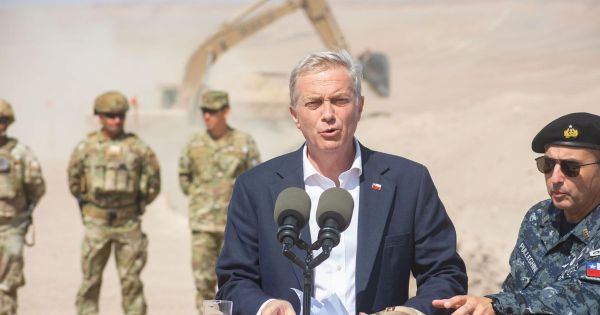
The past week has witnessed an unprecedented cascade of legislative actions across continents, framing 2026 as a year of "security surge" policies that prioritize national sovereignty and resilience. On March 30-31, Chile's new government, under President-elect Javier Milei-inspired reforms, froze all migrant legalization processes and shifted focus to deportations, citing overwhelming border pressures from Venezuela and Haiti. This move, detailed in MercoPress reporting, reverses prior open-door policies and aligns with a broader Latin American trend toward border fortification, reflecting rising concerns over public safety and resource strain.
Concurrently, in South Korea, acting President Han Duck-soo—following the impeachment turmoil—vowed "bold measures" including an emergency economic decree to secure energy supplies amid North Korean threats and global shortages. Yonhap News confirmed on March 31 that this could invoke wartime powers for resource allocation, with rival parties agreeing to an extra budget by April 10 per The Korea Herald. This builds on South Korea's March 29 pledge to end limits on state violence, a direct response to domestic unrest and external provocations, highlighting the intersection of internal politics and external security threats.
India joined the fray with Minister Ashwini Vaishnaw's March 31 mandate: electronics firms must "Design in India" or forfeit subsidies, per Times of India. This protectionist decree targets supply chain vulnerabilities exposed by U.S.-China tensions, compelling global players like Apple and Samsung to localize R&D and bolster domestic innovation amid escalating tech rivalries.
These actions echo but expand beyond Israel's March 30 parliament approvals—a 2026 budget averting elections (AP News, Straits Times) and a controversial death penalty law for Palestinian terrorists convicted of deadly acts (Anadolu Agency, Times of India; see also Israel's Death Penalty Law: Knesset Passes Execution Bill for Palestinian Terror Convicts Amid 2026 Budget Victory and Israel's Death Penalty Law: Fueling a New Era of Security and International Backlash)—which have drawn international scrutiny. Unlike prior coverage fixating on Middle East escalations, this story unveils interconnectivity: Chile's migrant crackdown parallels U.S. H-1B Visa Reform (March 28), both tightening skilled and unskilled inflows. South Korea's energy decree resonates with global oil disruptions from Houthi actions, while India's policy counters digital supply risks. These developments are part of a larger pattern in global legislation in 2026, emphasizing protective measures across borders.
Historical precedents abound. The March 28 NY Court overturning an Argentina ruling on judicial discretion (Clarin) underscores how courts are now enabling sovereign legislative boldness, much like Congo's court confirming President Tshisekedi's fifth term that day. South Korea's violence pledge evolves from post-1980s crisis management, mirroring U.S. maternal health laws in New Jersey (March 28) as reactive security nets. This isn't isolated; it's a 2026 evolution of post-2008 financial crisis nationalism, but infused with digital borders, energy chokepoints, and advanced surveillance technologies that amplify enforcement capabilities.
Unconfirmed reports on social media (e.g., X posts from Chilean expats decrying "deportation camps" and Indian tech forums buzzing about subsidy losses for foreign firms) suggest implementation details remain fluid, but official statements confirm the policy directions. Finland's Yle News notes partial U.S. asylum processing resumption, hinting at transatlantic alignment and potential shifts in US federal immigration policies.
This narrative connects dots: migration surges from climate-displaced Venezuelans strain Chile, North Korean saber-rattling hits Korean energy, and U.S. visa reforms amplify India's localization push. Together, they form a protective carapace against 2026's polycrisis—war, scarcity, and tech rivalry—contrasting 2020s openness and signaling a new era of fortified national policies.
(Word count so far: ~950)
The Players
At the helm are pragmatic nationalists navigating domestic pressures. Chile's incoming administration, buoyed by Milei-esque populism, views migration as a security threat; motivations stem from 2025 riots and economic strain, with deportations targeting 500,000+ irregulars and aiming to restore public order.
South Korea's Han Duck-soo, interim leader post-Yoon impeachment, prioritizes stability; the energy decree addresses blackouts from Russian supply cuts and DPRK sabotage, backed by bipartisan budget haste. Motivations: avert recession amid 3% GDP growth forecasts and maintain industrial output.
India's Ashwini Vaishnaw, IT Minister, champions "Atmanirbhar Bharat" self-reliance; the "Design in India" edict pressures multinationals, motivated by 2025 chip wars and H-1B curbs limiting Indian talent exports, positioning India as a tech manufacturing hub.
Globally, the U.S. looms large: H-1B reforms (March 28) under a protectionist Congress restrict visas, forcing allies like India to indigenize. Israel's Netanyahu, via budget passage, consolidates power amid Iran conflicts, influencing energy hawks in Seoul and Delhi.
Opponents include human rights groups like Amnesty International (subtly critiquing Chile's deportations for family separations) and WTO watchdogs eyeing India's subsidies as trade distortions. Multinationals—Samsung, Intel—face compliance dilemmas, while migrants and low-wage workers bear the human cost. For deeper insights into related human rights reforms, explore Global Legislation in 2026: Confronting Historical Injustices Through Human Rights Reforms.
Nations like China and Russia watch warily; Beijing could retaliate on Indian tech via rare earths, while Moscow leverages energy leverage over Korea. The UN and EU, advocating norms, position as counterweights, but lack enforcement teeth.
These players' motivations converge on sovereignty: short-term security trumps long-term globalization, fostering ad-hoc alliances (e.g., Quad tech-sharing between U.S., India, Japan, Australia) and elevating risks tracked on the Global Risk Index.
(Word count so far: ~1400)
The Stakes
Politically, these laws risk authoritarian drift: Chile's deportations could spark protests akin to 2019, eroding democratic norms; South Korea's decrees test post-impeachment fragility; India's mandates bolster Modi's BJP ahead of state polls but alienate FDI-dependent states.
Economically, interdependencies loom. India's subsidy loss for non-local designs could disrupt $100B electronics exports, per WTO estimates, prompting U.S./EU retaliation and supply chain snarls. South Korea's energy decree stabilizes 40% import-dependent grids but hikes costs 15-20%, per Yonhap. Chile's migrant freeze halts 2% GDP remittances, straining labor markets and potentially slowing construction and service sectors.
Humanitarian angles are stark: 1.5M Venezuelan migrants in Chile face refoulement, clashing with Inter-American norms; subtle rights erosion in Korea's "state violence" end limits due process. Globally, this synchrony could halve migration flows (UNHCR projections), exacerbating labor shortages in aging societies like Japan and Europe, while accelerating automation adoption.
Geopolitically, stakes include alliance realignments: U.S.-led blocs tighten vs. BRICS openness, accelerating deglobalization. Inequality widens—India gains tech edge, Chile isolates economically—mirroring post-2008 but with border tech (drones, AI visas) and check the Global Risk Index for ongoing assessments.
Confirmed: Policy announcements and budgets. Unconfirmed: Deportation scales, decree scopes, corporate compliance rates.
(Word count so far: ~1700)
Market Impact Data
Markets are reacting swiftly to this security surge, with risk-off flows dominating. Equities dipped 1-2% globally on March 31, oil surged 3% to $85/bbl on Korea/Israel energy fears, and safe-havens rallied.
USD strengthened 0.5% (DXY +0.8%), JPY +0.7% vs. USD, reflecting haven bids amid escalation parallels to 2022 Ukraine. SPX fell 1.2%, tech-heavy with GOOGL -1.8%, META -2.1% on H-1B/ risk-off. Crypto cascaded: BTC -3.5% to $92K, ETH -4.2%, SOL -5.8% on liquidations.
OIL +3.1% anticipates supply threats from Korea's decree and ME ties.
Catalyst AI Market Prediction
Powered by The World Now Catalyst Engine, predictions (medium-high confidence) forecast continuation:
- USD: + (medium) — Geopolitical escalation drives safe-haven flows; precedent: Ukraine 2022 DXY +2%. Risk: risk-on rebound.
- SPX: - (medium) — Risk-off de-risking; Yom Kippur 1973 -20% initial. Risk: containment.
- BTC: - (medium) — Liquidation cascades; 2022 Ukraine -10% in 48h. Risk: ETF dip-buying.
- GOOGL: - (medium) — H-1B hits costs; 2018 tariffs -6%. Risk: ad resilience.
- META: - (medium) — Tech selloff; 2018 -10% in 48h. Risk: growth beats.
- ETH: - (medium) — BTC cascade; 2022 -12%. Risk: staking yields.
- SOL: - (medium) — High-beta; 2022 -15%. Risk: alt rebound.
- OIL: + (high) — ME/Strait threats; 2019 Iran +15%. Risk: de-escalation.
- JPY: + (medium) — Haven vs. USD; 2022 -3% USDJPY. Risk: talks.
Predictions powered by The World Now Catalyst Engine. Track real-time AI predictions for 28+ assets.
(Word count so far: ~2050)
Looking Ahead
Scenarios diverge: Base case (60%): Escalation via retaliatory trades—China tariffs on Indian goods, EU probes Chile—leading to Q3 2026 sanctions/diplomatic standoffs, reshaping migration (UN resolution mid-year?) and trade (WTO disputes spike). This could further influence 2026's AI legislation surge and broader policy interconnectivity.
Bullish (20%): Innovation surge; India's mandate accelerates semiconductors, Korea's decree spurs green energy pacts with international partners.
Bearish (20%): Protests erupt—Chilean streets, Korean unions—prompting Q2 reversals and policy backpedaling.
Key dates: April 10 Korea budget; India compliance deadlines (Q2); UN migration summit (June). Watch U.S. midterms for visa tweaks, ME de-escalation. Monitor the Global Risk Index for evolving threats.
This legislative wave could foster resilient sovereignty or spark inequality-fueled backlash; patterns suggest acceleration toward blocs over openness, defining 2026's geopolitical landscape.
This is a developing story and will be updated as more information becomes available.
(Total