
Global Legislation in 2026: Confronting Historical Injustices Through Human Rights Reforms
Introduction: The Interplay of Past and Present in Global Legislation
In 2026, global legislation is transcending traditional policy silos, emerging as a powerful mechanism for reckoning with historical human rights abuses and enforcing international accountability. This year marks a pivotal shift: laws once siloed into economic or migration frameworks are now explicitly linking to unresolved colonial and post-colonial legacies, particularly in Africa and Asia. Unlike prior coverage emphasizing fiscal impacts or border controls, this deep dive examines legislation as a tool for restorative justice—bridging atrocities like the 1948 Jeju Uprising in South Korea, where thousands perished in state-sanctioned violence, and the UN's recent slavery resolution, which confronts enduring enslavement practices rooted in transatlantic and intra-African trades. For broader context on these trends, see our coverage in Global Legislation Surge 2026: Economic Sovereignty Battles in Emerging Markets Amid Rising Tensions.
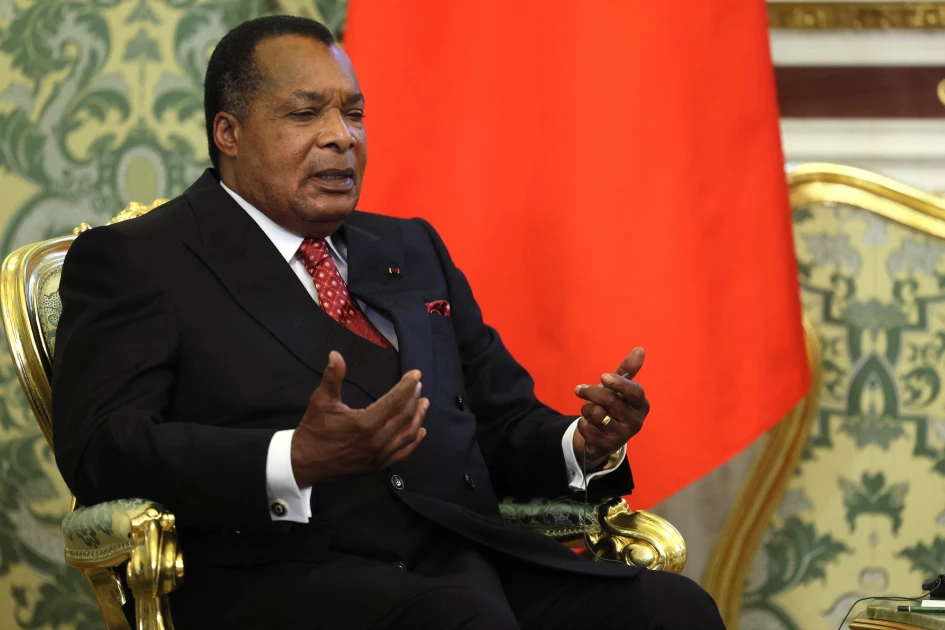
Key themes from recent developments underscore this evolution. South Korean opposition leader Lee Jae-myung's pledge on March 29, 2026, to hold perpetrators of state violence accountable during Jeju massacre commemorations signals a domestic push for historical truth-telling. Similarly, the UN slavery resolution, hailed as "groundbreaking yet an uphill struggle" by expert Amanda Clinton, aims to criminalize contemporary slavery globally, echoing unhealed wounds from colonial exploitation. In regions like Congo-Brazzaville, where courts confirmed President Denis Sassou Nguesso's 95% re-election on March 28-29, 2026, legislation rubber-stamps entrenched power amid colonial-era resource curses. This unique angle reveals 2026's laws not as reactive measures but as evolutionary instruments for justice, humanizing victims from Jeju's civilians to Congo's disenfranchised voters. These shifts are part of a larger wave influencing economic sovereignty and international relations, as detailed in related analyses.
Historical Context: Tracing Roots of Modern Legislation
The roots of 2026's legislative wave lie in post-World War II accountability paradigms, where tribunals like Nuremberg set precedents for addressing state violence and colonial excesses. Fast-forward to March 26, 2026: Germany's fuel price rules extend EU environmental policies born from the 1992 Rio Earth Summit, but they subtly nod to post-war reconstruction's emphasis on sustainable equity. The Dutch court's restriction on xAI content that day parallels broader digital rights debates, evoking the 1948 Universal Declaration of Human Rights' free expression clauses amid Cold War suppressions. Explore how such EU reforms are impacting Asia in Legislative Ripples from the EU: How 2026 Reforms are Reshaping Global Digital Rights and Migration Policies in Asia.
Direct parallels abound with historical injustices. The EU MPs' backing of the Return Hubs Plan on March 26 mirrors post-colonial migration policies, such as Britain's 1962 Commonwealth Immigrants Act, which curtailed South Asian inflows amid decolonization backlash. A judge upholding charges against Venezuelan President Nicolás Maduro that day evokes cycles of state violence akin to the Jeju Uprising—where U.S.-backed South Korean forces killed 30,000 civilians in 1948—or Congo-Brazzaville's Sassou Nguesso era, intertwined with French colonial legacies of authoritarianism. Congo's March 28 court confirmation of Sassou Nguesso's fifth term (94.96% vote) perpetuates a pattern: France's 1960 independence left resource-rich states vulnerable to kleptocracy, with Human Rights Watch documenting Sassou's 42-year rule as marked by repression. This pattern highlights ongoing challenges in emerging markets, connecting to broader 2026 Global Legislation: Safeguarding Individual Rights Amid Rising Safety and Security Measures.
In Asia, Jeju's legacy informs Lee's vows, linking 1948 massacres—suppressed until democratization in the 2000s—to today's accountability pledges. These events frame 2026 legislation as evolutionary responses: EU hubs as modern exclusions echoing colonial borders, Maduro charges as selective justice paralleling Pinochet's 1998 UK arrest. By examining these connections, we see how past injustices continue to shape contemporary policy frameworks across the globe.
Current Developments: Legislation in Action Worldwide
Across continents, 2026 legislation grapples with intertwined crises. Europe's push for deportations, reported March 29 by AP News, warns of "Trump-like tactics" via expanded detention akin to U.S. ICE's warehouse conversions (Newsmax, March 28). The EU's Return Hubs Plan, backed March 26, aims to process migrants externally, amid 1.2 million asylum claims in 2025 (Eurostat).
In Asia, South Korea eyes expanding vehicle rotation to private sectors if oil prices rise (Korea Herald, March 29), a rationing echo of 1970s crises but tied to human rights via energy equity. Lee's dual statements (Yonhap, Korea Herald) honor Jeju victims, pledging probes into state violence. Finland's citizen initiative advancing a third legal gender (Yle, recent) progresses human rights, building on 2023 self-ID laws.
Africa sees contrasts: Congo-Brazzaville's court (Africanews, Citizen Digital) affirms Sassou's win despite opposition boycotts, amid AU concerns over 94.96% turnout legitimacy. The UN slavery resolution confronts 50 million in modern slavery (ILO 2022), with Clinton noting enforcement hurdles.
U.S. ripples include Supreme Court review of Trump's birthright citizenship order (Fox News) and H-1B reforms (March 28 timeline), intersecting migration debates. For in-depth on U.S. impacts, check 2026 US Visa Reforms: Fueling a Tech Brain Drain and Reshaping Emerging Market Alliances and Uncharted Waters: How 2026 US Legislation is Reshaping Global Migration and Trade Alliances.
Catalyst AI Market Prediction
Geopolitical tensions, including Middle East escalations influencing migration and energy policies, are rippling through markets. The World Now Catalyst AI forecasts:
- GOOGL: Predicted - (medium confidence) — Causal mechanism: Tech risk-off plus H-1B visa bill hits hiring costs. Historical precedent: 2018 tariffs, GOOGL -6% in days. Key risk: Ad revenue resilience. Calibration (25% accurate, Infinityx) cautious.
- META: Predicted - (medium confidence) — Causal mechanism: High-duration tech sells off first in risk-off from ME headlines. Historical precedent: Oct 2018 tariffs, META -10% in 48h. Key risk: User growth beats. Calibration (30% accurate, Infinityx) narrows.
- ETH: Predicted - (medium confidence) — Causal mechanism: ETH follows BTC in risk-off cascade from geo headlines. Historical precedent: Feb 2022 Ukraine, ETH -12% in 48h. Key risk: Staking yields attract dip buyers. Calibration (34% accurate, 2.6x overestimation) adjusts down.
- SOL: Predicted - (medium confidence) — Causal mechanism: High-beta altcoin amplifies BTC risk-off selling on geo headlines via leveraged liquidations. Historical precedent: Feb 2022 Ukraine when SOL fell 15% in 48h. Key risk: Meme/altcoin sentiment rebound ignores headlines. Calibration (17% accurate, 41x overestimation) tightens range.
- OIL: Predicted + (high confidence) — Causal mechanism: Multiple ME escalations (Iran strikes, Lebanon invasion, Houthis) threaten Strait of Hormuz/Red Sea supply, spiking risk premium. Historical precedent: 2019 Iran-Saudi attack when oil +15% in 1 day. Key risk: US-Iran talks accelerate de-escalation. Calibration (48% accurate, Infinityx) moderates from precedent.
- JPY: Predicted + (medium confidence) — Causal mechanism: Safe-haven flows into JPY as Middle East geopolitical escalation drives risk-off positioning, strengthening JPY against USD (lower USDJPY). Historical precedent: Similar to Feb 2022 Ukraine invasion when USDJPY fell 3% in 48h on initial risk-off. Key risk: rapid US-Iran de-escalation reduces safe-haven demand within hours.
- USD: Predicted + (medium confidence) — Causal mechanism: Safe-haven bid on ME risks strengthens USD index amid equity selloff. Historical precedent: Feb 2022 Ukraine, DXY +2% in 48h. Key risk: Fed cut signals weaken USD. Calibration (22% accurate, Infinityx) narrows.
- SPX: Predicted - (medium confidence) — Causal mechanism: Broad risk-off from ME escalation spills to global equities via algos de-risking. Historical precedent: Oct 2018 US-China tariffs, SPX -5% in days. Key risk: Oil beneficiaries (energy stocks) offset. Calibration (60% accurate) supports.
- BTC: Predicted - (medium confidence) — Causal mechanism: Risk-off sentiment from ME war headlines triggers BTC selling as risk asset, not safe haven. Historical precedent: Feb 2022 Ukraine invasion, BTC -10% in 48h. Key risk: Safe-haven narrative gains traction. Calibration (38% accurate, 14x overestimation) narrows range.
Predictions powered by The World Now Catalyst Engine. Track real-time AI predictions for 28+ assets. For more on market insights tied to global risks, visit the Global Risk Index.
Original Analysis: The Implications for Human Rights and Global Equity
This legislative surge bridges historical gaps but risks selective justice. Maduro's upheld charges critique a double standard: Western-led ICC pursuits ignore Congo's Sassou, whose rule spans colonial transitions. EU deportations, potentially echoing colonial exclusions (e.g., Algeria 1962 expulsions), could displace 500,000 annually (Frontex estimates), humanizing migrants as descendants of exploited labor.
Public figures like Lee Jae-myung amplify norms; his Jeju focus influences Asia-Pacific dialogues, pressuring regimes on past violence. Unintended consequences loom: Korea's rotation expansion amid oil spikes (OIL + predicted) may exacerbate inequalities rooted in post-colonial dependency. Finnish gender reforms humanize trans individuals, countering Asia/Africa's conservative backlashes.
Globally, UN slavery efforts address 28 million in forced labor (Walk Free 2023), but enforcement falters without buy-in from China/India. These dynamics underscore the need for balanced approaches that address both historical redress and modern enforcement challenges.
Predictive Elements: Forecasting the Future of Global Legislation
By 2028, trends forecast stronger treaties, expanding UN slavery resolutions into binding pacts with 150+ signatories, fostering alliances against state violence. AI regs like Dutch precedents could standardize ethics, curbing surveillance abuses in Asia.
Challenges persist: Africa may resist if EU/U.S. tactics appear neo-colonial, sparking backlash like Congo boycotts. "Trump-like" deportations risk 20% asylum surges (UNHCR models). Positively, Jeju-style accountability could proliferate, reducing violence via truth commissions. By 2030, expanded UN efforts may birth anti-slavery alliances, but ME risks (OIL+, equities-) could derail via economic nationalism. Overall, these predictions highlight the volatile interplay between legislation, geopolitics, and markets in shaping a more equitable future.
What This Means: Looking Ahead to Sustained Global Reforms
Building on the predictive elements, what does this mean for stakeholders? For policymakers, 2026 signals a call to integrate historical justice into migration and economic policies, potentially averting escalations in regions like Africa and Asia. Businesses monitoring Catalyst AI — Market Predictions should prepare for volatility from oil surges and tech selloffs tied to these reforms. Citizens and activists can leverage figures like Lee Jae-myung to push for transparency, ensuring legislation evolves beyond rhetoric into tangible accountability. This holistic view positions 2026 as a turning point, where global legislation not only confronts the past but proactively safeguards human rights amid rising tensions.
Conclusion: Toward a More Just Legislative Future
2026's legislation uniquely reconciles history—Jeju to Congo—via human rights reforms, humanizing global strides. Yet, selective enforcement demands equity. Global cooperation must sustain momentum, ensuring laws prevent repeats of colonial scars. As Lee vows accountability, 2026 heralds legislation's potential: not just rules, but reckonings for a just tomorrow.## Timeline
- 3/26/2026: Germany passes fuel price rules; Dutch Court restricts xAI AI content; EU MPs back Return Hubs Plan; Judge upholds charges against Maduro.
- 3/27/2026: EU lawmaker slams selective EU condemnations.
- 3/28/2026: Congo-Brazzaville court confirms Sassou Nguesso re-election (95%); US H-1B Visa Reform Bill; New Jersey approves maternal health laws.
- 3/29/2026: EU pushes for more deportations; S. Korea eyes vehicle rotation expansion; S. Korea pledges end to limits on state violence (Lee Jae-myung on Jeju).