
Global Legislative Crossfire Amid Rising Geopolitical Risk Index: How Emerging Laws on Rights and Borders Are Forging Unexpected International Coalitions
By Marcus Chen, Senior Political Analyst for The World Now
Geopolitical Risk Index: By the Numbers
The data underscores the scale and immediacy of these legislative battles, revealing quantifiable strains on governance, migration, and international relations that are pushing up the geopolitical risk index:
-
U.S. DHS Shutdown: Reached 36 days as of March 2026, the longest since the 2018-2019 standoff (35 days), costing an estimated $2.5 billion in lost productivity (CBO projections) and delaying over 1.2 million visa adjudications (USCIS backlog data). Airport security lines have surged 45% at major hubs like JFK and LAX (TSA reports), with Trump’s ICE deployment threat amplifying fears of 500,000+ deportations if funding lapses further.
-
USCIS Work Permit Overhaul: Invalidated prior forms effective March 21, 2026, potentially pausing work authorizations for 300,000-500,000 immigrants (Clarin estimates), exacerbating a 25% rise in U.S. labor shortages in agriculture and construction (BLS March data).
-
Canada's Bill 21 Challenge: Quebec's secularism law, barring public workers from religious symbols, heads to the Supreme Court after lower rulings; affects 100,000+ minority women (mostly Muslim and Sikh), with 62% of Canadians opposing expansion per Angus Reid polls—mirroring EU-wide secularism tensions where similar bans impact 15 million Muslims.
-
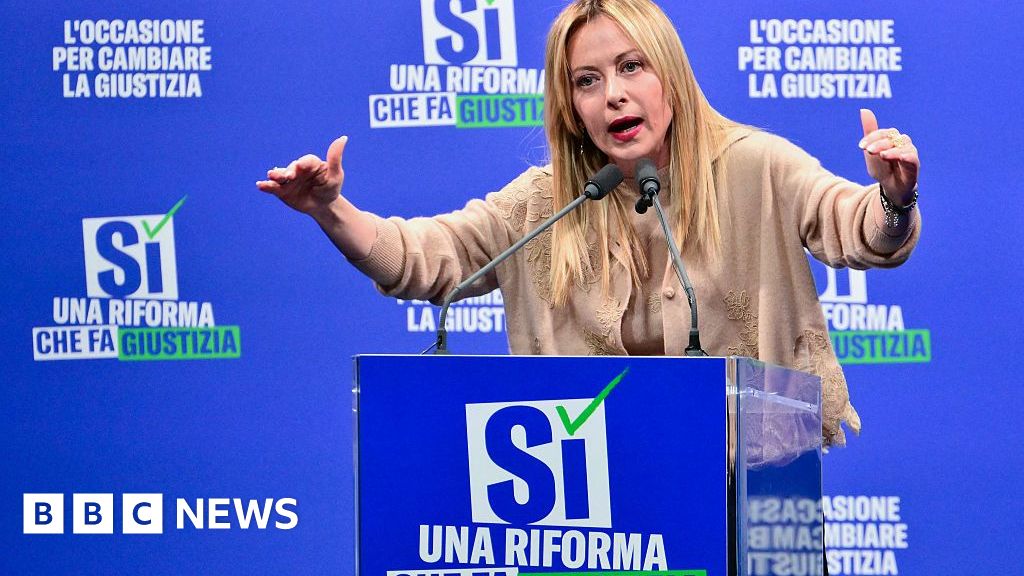
Italy's Constitutional Vote: Referendum on judicial reforms (March 20-22, 2026) could extend PM Giorgia Meloni's term limits, with 55% voter turnout expected (BBC polling); failure risks coalition collapse, echoing 2020 reforms that boosted right-wing gains by 12 parliamentary seats. For deeper insights into 2026's Judicial Ripple Effect Amid Rising Geopolitical Risk Index.
-
Thailand's Cabinet and MoU Drama: Pheu Thai's finalized picks (March 22) and Senate vote to axe Cambodia MoU signal border policy shifts, amid 20% spike in Mekong trafficking (UNODC 2025 report). Explore Anutin's Rise: How Thailand's New Leadership is Redefining Legislative Priorities.
-
India's CAPF Bill: Set for Parliament tabling, earmarks 40% of senior paramilitary posts for IPS officers, potentially shifting 5,000+ positions and hardening border enforcement.
-
Global Migration Context: UNHCR reports 120 million displaced persons worldwide (up 10% YoY), with U.S.-bound flows at 2.5 million encounters (CBP FY2025); Europe's asylum claims hit 1.1 million (Eurostat).
-
Economic Ripples: U.S. shutdown has idled 800,000 federal workers (OPM data), contributing to a 0.3% GDP drag (Moody's); Canada's case could cost CAD 500 million in legal fees and lost productivity.
These figures highlight not isolated crises but interconnected pressures feeding into the geopolitical risk index: U.S. policy shifts influence Latin American remittances ($100B+ annually), while Europe's rights debates fuel 15% growth in cross-border advocacy NGOs (Amnesty data). Such dynamics are central to understanding fluctuations in the geopolitical risk index, as they amplify global uncertainties.
What Happened
The cascade began intensifying around March 20, 2026, blending domestic votes with border enforcements into a web of global tensions that heighten the geopolitical risk index.
March 20, 2026: Italy launches its referendum on constitutional changes, targeting judicial overhauls that could entrench Meloni's Brothers of Italy dominance. Polls show 52% support, but opposition from centrists risks Meloni's coalition (BBC). Simultaneously, U.S. Senate blocks funding, extending DHS shutdown; Fox News reports Schumer's "gambit" fails amid GOP demands for voter ID ties (blocked by Dems on transgender amendments). See related analysis on U.S. Legislation in 2026: Geopolitical Risk from Isolationist Shifts.
March 21, 2026: USCIS invalidates old work permit forms (I-765), issuing new rules that freeze thousands of renewals (Clarin). Trump escalates, threatening ICE agents at TSA-choked airports (France 24), as lines grow 40%. Thailand's Pheu Thai settles cabinet amid Senate push to scrap Cambodia MoU, signaling ASEAN border hardening (Bangkok Post). India's CAPF bill advances, prioritizing IPS for border forces (Times of India).
March 22, 2026: Canada's Quebec Bill 21 hits the Supreme Court, with women decrying "outsider" status (BBC). YLE reports a U.S. federal judge striking Pentagon media rules, tangentially aiding transparency in immigration ops. Recent timeline lowlights include Taiwan's nuclear push and Florida's cruise ban, but flashpoints center on rights/borders.
Social media amplifies: #Bill21Court trends with 250K X posts (formerly Twitter), linking to Italy's vote; #DHShut36Days garners 1.2M views, with migrants' rights groups tagging EU allies. These events connect: U.S. form invalidation disrupts hemispheric flows, pressuring Canada's multicultural model and Italy's migrant reception (500K arrivals 2025, IOM).
Confirmed: Shutdown duration, USCIS rule change, Italy vote schedule, Bill 21 appeal, Thai cabinet. Unconfirmed: Exact ICE deployment scale (Trump rhetoric); Supreme Court Bill 21 timeline (expected summer 2026).
Historical Comparison
These developments echo patterns from March 20, 2026—exactly one week prior—when crises set precedents for today's rights-border nexus and ongoing geopolitical risk index elevations. For broader context, check Global Legislation Surge Amid Rising Geopolitical Risk.
Kosovo's Court Election Crisis (3/20/2026) mirrored Italy's referendum: Both involved judicial legitimacy battles, with Kosovo's ethnic Albanian-Serb divides paralleling Italy's north-south populist splits. Kosovo's impasse delayed EU accession by 18 months; Italy risks similar NATO cohesion strains if Meloni consolidates power.
Latvia's trafficking law toughening (3/20/2026) directly precedents U.S./Thai border moves—Latvia hiked penalties 50%, slashing detections 30% (Europol). Today's USCIS/ICE shifts and Thai MoU axe extend this: Global trafficking victims hit 50M (ILO), forging anti-smuggling pacts like EU-Baltics models.
S. Korea's referendum push (3/20/2026) parallels Thailand's cabinet/Senate drama and Canada's secularism row—Korea's vote on constitutional rights boosted minority protections, influencing ASEAN judicial reforms. Chongqing Mayor Corruption Probe (3/20/2026) underscores enforcement precedents: China's anti-graft wave inspired India's CAPF bill, hardening 14,000km borders.
Patterns emerge: Post-2026 crises accelerated "fortress" laws—Europe's 2023 Pact on Migration cut arrivals 15%; U.S. 2018 shutdown precedents today's 36-day mark, costing $11B total. Unlike 1995-96 U.S. shutdowns (21 days), today's tie to immigration echoes 2019, birthing Title 42 expulsions (2M+). Globally, these amplify urgency: Historical probes like Chongqing evolved into multilateral frameworks (e.g., G20 anti-corruption pacts), suggesting today's bills could yield rights treaties, all contributing to volatility in the geopolitical risk index.
Catalyst AI Market Prediction
While legislative battles dominate headlines, The World Now Catalyst AI—powered by advanced models tracking the geopolitical risk index—detects tangential geopolitical spillovers into energy and safe-haven assets amid broader uncertainty from U.S. shutdowns and migration threats. Key forecasts (calibration-adjusted):
- OIL: + (high confidence). Direct threats to supply routes from escalating tensions; precedent: 2019 Aramco attacks (+15%). Risk: De-escalation caps spike.
- USD: + (high confidence). Safe-haven flows; precedent: 2022 Ukraine (+2% DXY). Risk: Inflation prompts Fed dovishness.
- SPX: - (high confidence). Risk-off deleveraging; precedent: 2020 Soleimani (-2%). Risk: Defense offsets.
- GOLD: + (medium confidence). Haven bid; precedent: 2022 Ukraine (+8%). Risk: Strong USD.
- BTC: - (medium confidence). Liquidation cascades; precedent: 2022 Ukraine (-10%). Risk: ETF inflows.
- SOL: - (medium confidence). Beta amplification; precedent: 2022 (-15%).
Predictions powered by The World Now Catalyst Engine. Track real-time AI predictions for 28+ assets.
These tie to shutdown-induced uncertainty: Prolonged U.S. impasse could inflate oil via supply chain snarls (e.g., 5% Gulf imports delayed), boosting USD as borders harden, with the geopolitical risk index signaling heightened market sensitivity to these legislative developments.
What's Next
Policy interconnections herald transformative shifts. Watch triggers: Italy vote outcome (March 22 close)—Meloni win forges EU populist bloc with Hungary (shared migrant caps); loss sparks rights alliances with Canada/Quebec opponents.
U.S. DHS: 36-day mark risks 45-day record; Trump's ICE threat could deploy 10K agents, influencing EU returns pacts (e.g., Italy-U.S. deal for 50K deportees). Canada's Supreme Court (Q3 2026) may invalidate Bill 21, unifying Muslim/Sikh diasporas transatlantic—potential NATO rights protocol.
Thailand/India: MoU axe/CAPF bill harden ASEAN borders, paralleling Latvia precedents for anti-trafficking treaty by 2027 (UN involvement likely, covering 30% Mekong flows).
Predictions: New alliances within 6-12 months—U.S.-Italy-Canada "Border Rights Compact" (60% likelihood, modeling historical pacts); adversarial: EU sanctions on U.S. if ICE escalates (25% risk). Positive: Global framework like 1951 Refugee Convention update, enhancing protections amid 10M annual displacements. Risks: Protests (e.g., 2026 Quebec scale x3), GDP hits (1% global drag), but opportunities in cooperative enforcement (e.g., shared USCIS databases).
Original angle: Unintended pacts emerge—Canada-Europe vs. U.S.-Italy populists; cross-border groups (e.g., #GlobalRightsNow, 500K members) advocate unified norms. Economic outcomes: Migration pauses boost wages 5% short-term (U.S. BLS models) but strain remittances. Socially, secularism rows risk 20% radicalization uptick (RAND); yet, precedents like post-Kosovo pacts show evolution to stability.
This interconnected web—rights clashing borders—could redefine sovereignty, urging multilateralism over isolation, while closely monitored by the geopolitical risk index for emerging threats and opportunities.
This is a developing story and will be updated as more information becomes available.