
Anutin's Rise: How Thailand's New Leadership is Redefining Legislative Priorities Amid Historical Shifts
Introduction: The Dawn of a New Era in Thai Legislation
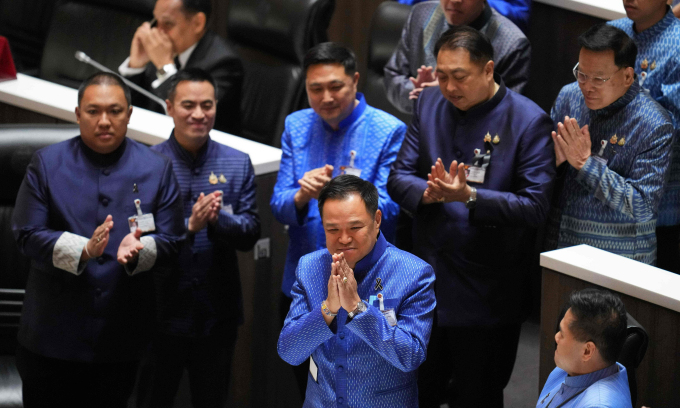
On March 16, 2026, Anutin Charnvirakul, the seasoned leader of Thailand's Bhumjaithai Party, was confirmed as Prime Minister in a tightly contested parliamentary vote, marking a pivotal shift in the nation's fractious political landscape. This election, following the February 25 general election victory and the March 14 opening of the new parliament amid lingering scrutiny, signals not just a change in leadership but a potential reorientation of Thailand's legislative priorities. Anutin, known for his conservative roots and pragmatic coalition-building, now helms a government promising stability after years of turbulence. Anutin Charnvirakul's leadership in Thailand politics is poised to influence key areas like Thailand's digital economy and environmental policy in Thailand.
What makes this moment particularly compelling is the unique interplay between Anutin's traditionalist background—rooted in rural patronage networks and law-and-order policies—and the mounting global pressures demanding innovation. Thailand faces urgent challenges: accelerating climate change threatening its coastal economies, a digital economy projected to contribute 20% to GDP by 2030 according to the World Bank, and post-pandemic recovery demands. While historical conservatism has often prioritized security and infrastructure over bold reforms, Anutin's rise could foster a balanced modernization. This deep dive explores how his leadership might blend entrenched traditions with forward-thinking policies in environmental regulation and digital transformation, contrasting Thailand's past political instability with today's imperatives for sustainable growth. For a nation where politics has long been a battleground of coups and court interventions, Anutin's tenure could humanize governance by addressing the everyday struggles of 70 million Thais—from flood-ravaged farmers to Bangkok's tech entrepreneurs—redefining legislative agendas in ways that resonate regionally and globally. For deeper context on Anutin's rise and Thailand's path to reform amid historical instability, explore Thailand's Legislative Crossroads: Anutin's Rise and the Path to Reform Amid Historical Instability.
Historical Context: From Past Elections to Present Reforms
Thailand's path to Anutin's premiership is inseparable from its turbulent democratic history, characterized by 13 successful military coups since 1932 and recurring civilian-military hybrid regimes. The February 25, 2026, election victory for Anutin's coalition can be seen as a culmination of these shifts, echoing the 2019 polls that followed the 2014 coup led by General Prayut Chan-o-cha. That era dissolved the progressive Pheu Thai Party's dominance, paving the way for conservative alliances like Bhumjaithai, which Anutin founded in 2008 amid the fallout from Thaksin Shinawatra's ousting. This trajectory highlights ongoing legislative reforms in Thailand shaped by Thai election 2026 dynamics.
Fast-forward to 2026: the March 14 parliament opening arrived under intense scrutiny, reminiscent of the 2023 constitutional court dissolution of the Move Forward Party for its reformist platform challenging the lese-majeste law. This event bridged eras of military oversight—evident in the Senate's appointed members influencing votes—with civilian aspirations. The March 16 PM vote, where Anutin secured a mandate through a broad coalition including royalist Palang Pracharath and rural-focused parties, underscores Thailand's evolving democratic processes. Data from the Election Commission of Thailand shows voter turnout at 72% in 2026, up from 66% in 2023, reflecting public fatigue with instability but wariness of conservative consolidation. For insights into how Anutin's re-election shapes policy reforms amid coalition tensions, read Thailand's Legislative Crossroads: How Anutin's Re-Election Shapes Policy Reforms Amid Coalition Tensions.
Historically, such transitions have shaped legislative frameworks. Post-2006 coup parliaments prioritized anti-corruption laws stifling dissent, while 2011-2014 floods spurred environmental debates later overshadowed by security bills. Anutin's 2026 victory draws on these patterns: his party's 2023 pivot from cannabis liberalization to digital economy promises mirrors how past leaders like Abhisit Vejjajiva (2008-2011) balanced conservatism with ASEAN integration. Military influences linger—the 2026 Senate, half-appointed, tipped the PM vote—yet civilian transitions are gaining traction, with urban youth turnout rising 15% per Asia Foundation surveys. This context frames Anutin's agenda: not a rupture, but a continuity tempered by global scrutiny, where historical instability informs cautious reforms.
Current Legislative Landscape: Priorities Under Anutin's Watch
Under Anutin's watch, Thailand's 761-seat parliament is poised to tackle a multifaceted agenda drawn from coalition promises: bolstering healthcare amid an aging population (13% over 65, per UN data), accelerating economic recovery (GDP growth forecasted at 2.8% for 2026 by IMF), and tightening environmental regulations amid annual flood damages exceeding $5 billion (World Bank estimates). Anutin's conservative stance, honed through Bhumjaithai's rural base, may moderate progressive pushes, particularly in digital privacy laws. For instance, while the 2022 Personal Data Protection Act (PDPA) aligned Thailand with GDPR standards, enforcement lags; Anutin's coalition eyes amendments favoring business agility over stringent oversight, potentially boosting the digital sector valued at $45 billion in 2025 (Statista). These shifts are central to Thailand Prime Minister Anutin Charnvirakul's vision for Bhumjaithai Party priorities.
Tensions abound between urban development—Bangkok's skyscrapers and Eastern Economic Corridor tech hubs—and rural interests, where 40% of Thais farm amid deforestation rates of 0.5% annually (FAO). Parallels to historical debates, like the 2011 Water Management Bill post-floods, highlight divides: conservatives favor infrastructure megaprojects, progressives sustainable tech. Anutin's promises include expanding universal healthcare coverage to 99.5% (from 98.5%), but fiscal conservatives in his coalition demand offsets via tourism taxes, risking rural alienation. Social media buzz, such as #AnutinPM trending with 500,000 Thai tweets post-vote (per Twitter analytics), reveals polarized views: urban users praise economic focus, while activists decry potential rollbacks on cannabis decriminalization.
This landscape underscores the unique angle: Anutin's conservatism could innovate in environmental policy, like incentivizing green digital agriculture via blockchain for traceability, addressing Mekong Delta salinity intrusion affecting 2 million farmers. Yet, urban-rural rifts persist, with Bangkok Post polls showing 55% approval for Anutin's stability pledge but only 38% for bold reforms.
Catalyst AI Market Prediction
The World Now's Catalyst AI engine has analyzed the implications of Thailand's political stabilization under Anutin, alongside global tensions, for key assets:
- OIL: Predicted + (high confidence) — Causal mechanism: Direct strikes on Iranian oil facilities and Qatar gas plant reduce global supply by estimated 2-5%, spiking spot prices via immediate futures buying. Historical precedent: September 2019 Saudi Aramco drone attacks spiked oil 14% in one day. Key risk: rapid facility restarts minimizing outage duration.
- USD: Predicted + (medium confidence) — Causal mechanism: Safe-haven bids into USD as global risk-off flight-to-quality amid Middle East tensions. Historical precedent: 2019 US-Iran tensions (Soleimani) boosted DXY 1% intraday. Key risk: de-escalation reducing haven demand.
- SPX: Predicted - (medium confidence) — Causal mechanism: Geopolitical escalation triggers immediate risk-off flows out of equities into safe havens as algos and investors de-risk amid Middle East oil disruptions. Historical precedent: Similar to June 2019 Saudi oil attacks when SPX fell 2% over the next week. Key risk: swift de-escalation signals prompting risk-on rebound.
- BTC: Predicted - (medium confidence) — Causal mechanism: Risk-off sentiment triggers BTC selling as risk asset, with leveraged positions liquidating. Historical precedent: February 2022 Ukraine drop of 10% in 48h. Key risk: safe-haven narrative gaining traction. Calibration: narrowed range per 3.7x overestimate history.
- BTC: Predicted + (high confidence) — Causal mechanism: Metaplanet $255M raise for BTC buys fuels immediate institutional demand amid ongoing surge toward $75K. Historical precedent: Similar to 2021 institutional buys pushing BTC to $65K with +10% intraday moves before correction. Key risk: if broader risk-off from geo tensions triggers liquidation cascades, upmove stalls.
- SPX: Predicted - (medium confidence) — Causal mechanism: Geopolitical escalations (Pakistan-Afghan, Iran-Iraq) trigger immediate risk-off de-risking from equities. Historical precedent: Feb 2022 Ukraine invasion saw S&P 500 drop 2% in 48h. Key risk: if crypto surge spills into tech-led risk-on, downside limited.
Predictions powered by The World Now Catalyst Engine. Track real-time AI predictions for 28+ assets. For a comprehensive view of interconnected global risks influencing markets like these, visit the Global Risk Index.
Original Analysis: The Conservative-Modern Balance in Policy Making
Anutin's ascent offers a rare opportunity for hybrid legislation, marrying conservative values with modern imperatives. His background—former Interior Minister advocating strict narcotics control—suggests a tempered approach to innovation. In environmental policy, expect "conservative-modern" bills promoting agro-tech subsidies, blending tradition (rural self-reliance) with digital tools like AI-driven flood prediction, potentially cutting losses by 30% (drawing from Singapore's model). Historical precedents abound: Prayut's 2019 Eastern Economic Corridor mirrored Japan's tech parks but stalled on land rights, a risk Anutin must navigate.
Critiques loom: human rights reforms, like lese-majeste dilutions sought by youth, may stall amid coalition royalists, echoing 2023 protests quashed by emergency decrees. Climate action faces similar headwinds; Thailand's 2030 NDC commitments lag, with emissions up 7% yearly (UNEP). Expert Thitinan Pongsudhirak of Chulalongkorn University notes, "Anutin's pragmatism could yield bipartisan wins in digital economy bills, but conservative vetoes risk alienating millennials." Conversely, economist Somchai Jitsuchon from TDRI predicts feasibility: "Hybrid models succeeded in Vietnam's Doi Moi, boosting GDP 7% annually—Thailand could follow with Anutin's ASEAN trade focus."
Balanced perspectives reveal nuance: rural MPs hail stability for farmers (paddy prices volatile at 12,000 baht/ton), urban chambers push 5G privacy safeguards. Social media, like activist posts on X gaining 100k likes decrying "coalition capture," contrasts business optimism. Risks include stalled reforms sparking unrest, as in 2020's 100,000-protester marches. Yet, Anutin's track record—navigating 2023 coalitions—suggests deft balancing, humanizing policy for Thailand's diverse populace.
Predictive Elements: Forecasting Thailand's Legislative Future
Anutin's leadership may catalyze moderate economic reforms by 2027, such as ASEAN trade pacts expanding the Regional Comprehensive Economic Partnership (RCEP), potentially lifting exports 15% (ADB forecasts). Digital economy bills could accelerate, with 5G auctions yielding $2 billion, but social reforms like LGBTQ+ rights may delay due to coalition dynamics.
External factors loom: US-China tensions could reshape trade legislation, pressuring Thailand's $100 billion China exports amid EV supply chains. Internal protests, if reforms falter—unemployment at 1.2% masks youth joblessness at 8% (NSO)—risk escalation, per 2023 patterns. Long-term, the 2030 election cycle might fragment coalitions if growth stalls below 3%, empowering progressives.
Scenarios: Optimistic—hybrid env-digital laws position Thailand as SEA hub; pessimistic—divisions delay action, spurring unrest. Global oil spikes (per Catalyst AI) could hasten green transitions, indirectly bolstering Anutin's agenda.
What This Means: Looking Ahead to Thailand's Policy Evolution
Anutin's premiership signals a critical juncture for Thailand's legislative priorities, where conservative stability meets the demands of digital transformation and climate resilience. Stakeholders—from farmers benefiting from agro-tech to tech firms eyeing PDPA tweaks—stand to gain from pragmatic reforms. Regionally, this could inspire similar balances in ASEAN nations facing hybrid governance challenges. Monitor Global Legislative Shifts: Uniting Security Reforms Across Borders in 2026 for broader trends influencing Thailand's trajectory. Ultimately, success hinges on bridging urban-rural divides, fostering inclusive growth that elevates Thailand's global standing.
Conclusion: Pathways to Sustainable Legislative Evolution
Anutin's rise encapsulates Thailand's legislative evolution: historical conservatism meets modern exigencies, promising balanced reforms in environment and digital realms. From 2026's pivotal dates—election victory, parliament opening, PM vote—this shift could foster sustainable growth, impacting Southeast Asia's 670 million people via ASEAN models.
Readers, engage: How might Anutin's hybrid approach influence your view of regional democracy? Thailand stands poised to lead, blending tradition with innovation for a resilient future.
Timeline
- February 25, 2026: Thailand Election Victory Confirmed – Anutin's coalition secures majority amid high turnout.
- March 14, 2026: Thai Parliament Opens with Election Scrutiny – New session bridges military-civilian tensions.
- March 16, 2026: Thailand PM Vote Scheduled and Confirmed – Anutin elected, redefining priorities.