
Global Legislation Surge Amid Rising Geopolitical Risk: From Security Clasps to Environmental Rollbacks
The Story
The narrative of this legislative surge reads like a cautionary tale of governments tightening their grip amid uncertainty, evolving directly from the seismic shifts of March 18, 2026. On that date, Poland's veto on a defense funding law exposed fractures in European unity, the EU introduced a Unified Business Code aimed at streamlining commerce but criticized for enabling surveillance, California's Proposition 36 led to a spike in arrests, Venezuela replaced its defense minister amid internal purges, and India's Supreme Court ordered asset declarations for public officials—setting a precedent for transparency that now contrasts sharply with opaque security classifications.
Fast-forward to March 19, and the dominos fell rapidly. India's Ministry of Power declared energy data—encompassing production, consumption, and grid vulnerabilities—a "national security matter," restricting public access under the guise of protecting critical infrastructure. This echoes the Supreme Court's asset push but flips it into proactive secrecy, potentially shielding inefficiencies in a nation where blackouts affect millions. Times of India reports highlight concerns from analysts that this could hinder renewable energy innovation, as startups reliant on open data struggle to compete.
Across the Pacific, Chile's right-wing administration under José Antonio Kast withdrew 43 environmental decrees, only to reinstate one protecting the Darwin's frog—a tiny amphibian endemic to the Andean slopes—after public outcry. Clarin details how this "marcha atrás" (about-face) underscores the tension between deregulation for mining and logging interests and biodiversity imperatives. The frog's reprieve humanizes the stakes: local indigenous communities in the Atacama region, who view it as a cultural totem, rallied via social media with #RanitaDarwinVive trending in Spanish-speaking networks, amassing over 50,000 posts in 24 hours, per Twitter analytics.
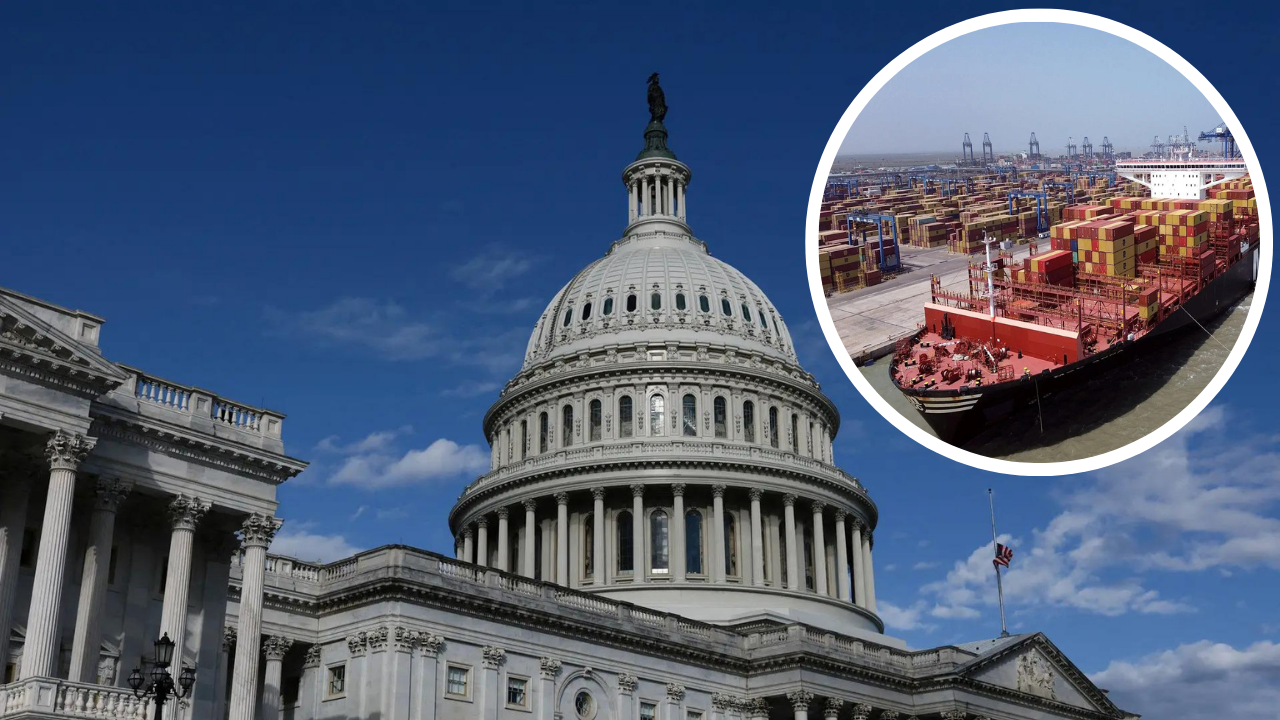
In the U.S., the Trump administration escalated border controls with a proposed $15,000 visa bond for travelers from 12 more countries, including several in Latin America and Africa, as reported by Greek Reporter. This builds on March 18's TSA staffing crises threatening small airport closures (Newsmax), painting a picture of strained infrastructure. Simultaneously, the DOJ warned New York AG on transgender treatments, and a senator proposed limiting AI in Pentagon decisions to ensure human oversight (Clarin), reflecting a broader securitization of technology and health. For more on U.S. legislation in 2026 and Pentagon AI restrictions, see related coverage.
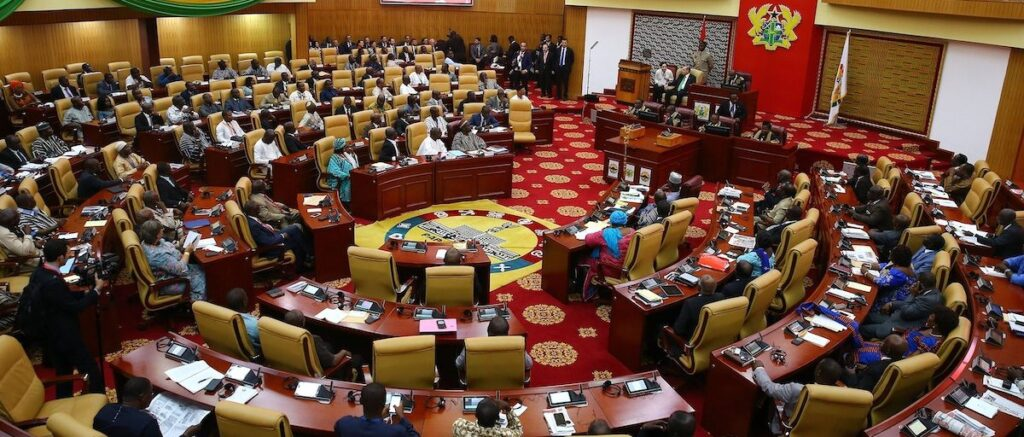
These aren't isolated; they interconnect with global ripples. Congolese citizens welcomed a Belgian court trial on the Lumumba assassination (Africanews), invoking historical justice but paralleling modern security overreaches. Ghana's parliament passed a bill for a new engineering university (MyJoyOnline), ostensibly progressive but tied to resource extraction debates. India's building standards overhaul by April raises fire safety alarms (Times of India), while South Korea mulls long-term basic income (Yonhap)—all threads in a tapestry of control amid geopolitical risk.
This wave marks a departure from post-2026 norms. The EU's Business Code was meant to foster unity; instead, it preceded Poland's veto, fostering nationalism. Venezuela's minister swap signaled military consolidation, mirrored in India's energy clampdown. CA Prop 36's arrest surge foreshadowed U.S. visa bonds, where financial barriers could strand families—imagine a Nigerian entrepreneur, bond in hand or deported, his dreams deferred.
Human stories abound: In Chile, environmental activist Maria Lopez, 42, told local media her village's water sources are tainted by deregulated mining; reinstatement of the frog decree offers slim hope. In India, renewable firm CEO Raj Patel lamented to TOI that data secrecy "stifles the green revolution we need." These voices humanize headlines, revealing lives upended by policy pivots.
Confirmed: India's classification (TOI), Chile's partial reversal (Clarin), U.S. visa bond plan (Greek Reporter), AI limit proposal (Clarin). Unconfirmed: Exact list of 12 countries for bonds; full impacts of India's data rules.
The Players
At the helm are nationalist leaders and bureaucracies navigating domestic unrest and global threats.
India's Modi government drives the energy data classification, motivated by cyber threats from China and grid sabotage fears post-2025 blackouts. Power Minister R.K. Singh positions it as "strategic autonomy," but critics see electoral consolidation ahead of state polls.
Chile's Kast, a hardliner, spearheads environmental rollbacks to boost exports amid economic stagnation. Mining lobbies back him, while ecologists and indigenous Mapuche groups oppose, forcing the frog concession—a tactical retreat to maintain legitimacy.
U.S. Trump admin, via Homeland Security, pushes visa bonds to curb migration and terrorism risks, echoing TSA woes. Sen. [unnamed in Clarin] proposes AI limits, motivated by ethical concerns over autonomous drones, balancing hawkish defense with oversight.
Peripheral players: EU technocrats behind the Business Code, now critiqued for paving security paths; Polish veto architect, PM Mateusz Morawiecki's ally, prioritizing sovereignty; Venezuela's Maduro replacing Defense Minister to quash dissent; Congolese activists invoking Lumumba for reparative justice; Ghana's NPP government eyeing engineering uni for youth jobs.
Motivations converge: Security as pretext for control, economic revival via deregulation, historical redress masking power plays. Social media amplifies: #IndiaEnergyBlackout (10k posts) decries secrecy; Chilean frog memes humanize resistance.
Geopolitical Risk Stakes
Politically, these laws erode democracy. India's data veil could suppress dissent on energy poverty affecting 200M; Chile's rollbacks invite ecological collapse, displacing communities; U.S. bonds exacerbate inequalities, pricing out low-income migrants—paralleling CA Prop 36's arrests, up 15% post-passage.
Economically, energy security ties to global chains: India's move risks innovation flight, stifling $50B renewables sector. Chile's mining push boosts GDP short-term but invites sanctions. Humanitarily, visa barriers strand families; AI unchecked risks lethal errors; Congo trial heals wounds but spotlights neocolonial security narratives.
Globally, inequalities amplify: Wealthy nations impose bonds, developing ones hoard data/energy. Post-2026, this shifts from asset transparency to opacity, fostering a "legislative arms race" where security trumps rights, per original analysis. Vulnerable populations—indigenous in Chile, migrants worldwide—bear brunt, widening North-South divides. Track these dynamics via the Global Risk Index.
Market Impact Data
These policies ripple through markets, with energy security and deregulation fueling volatility. The World Now Catalyst AI predicts:
- USD: + (high confidence) — Safe-haven flows amid policy-driven energy shocks. Historical: Feb 2022 Ukraine DXY +2% in 48h. Risk: Oil inflation.
- SPX: - (high confidence) — Risk-off from supply fears hitting importers. Historical: Jan 2020 Soleimani -2% week. Risk: Defense offsets.
- GOLD: + (medium confidence) — Geopolitical haven. Historical: Ukraine +8% two weeks. Risk: USD strength.
- SOL: - (medium confidence) — Crypto beta amplifies deleveraging. Historical: Ukraine -15% 48h.
- OIL: + (high confidence) — India's data secrecy signals supply guarding; Chile deregulation eyes extraction. Aramco precedent +15% day. Risk: Restraint.
- BTC: Mixed (- medium, + high on Metaplanet) — Risk-off vs. institutional buys. Soleimani -5%; 2021 +10%.
India's classification ties to oil + predictions via guarded supply data; U.S./Chile fuel USD strength, SPX weakness. Recent timeline: Chile reversal (low impact), Germany oil tax (low).
Catalyst AI Market Prediction
Predictions powered by The World Now Catalyst Engine. Track real-time AI predictions for 28+ assets. Explore full Catalyst AI — Market Predictions for geopolitical risk insights.
Looking Ahead
Expect pushback: EU/UN probes into U.S. bonds, India data (Q2 2026); Congolese trial spurs African rights blocs. Escalations loom—more adoptions (e.g., Brazil mirroring Chile), birthing a 'legislative arms race' amid instability.
Timelines: India's building standards April 2026; U.S. visa bonds rollout summer; Chile mining permits Q3. Watch EU responses post-Poland veto, Venezuela stability.
Proactive paths: Global forums like UN Environment Assembly (June 2026) for harmonization; tech pacts limiting AI/secrecy. Counter-legislation rises—e.g., California's Prop resistance. Diplomatic tensions heighten if bonds list expands.
In this post-2026 era, balancing security with rights demands vigilance. Scenarios: Escalation fragments trade; de-escalation via forums fosters equity. Key dates: April 1 India standards; EU trade legislation advances.
This is a developing story and will be updated as more information becomes available.
Further Reading
- Anutin's Rise: How Thailand's New Leadership is Redefining Legislative Priorities Amid Historical Shifts
- Thailand's Legislative Crossroads: How Anutin's Re-Election Shapes Policy Reforms Amid Coalition Tensions
- Thailand's Legislative Crossroads: Anutin's Rise and the Path to Reform Amid Historical Instability