
Global Geopolitics Disrupted as Strait of Hormuz Sees No Ship Traffic Amid US-Iran Clashes
US and Iran clashes have halted shipping in the Strait of Hormuz, a critical global energy transit route, following attacks on 28 February.[2][3] In this landscape of global geopolitics, no ships have passed through the strait in the last 48 hours due to heightened security risks stemming from mutual accusations between the two nations over assaults on vessels and naval assets.[3] Iran has effectively seized control of the waterway amid hopes for a potential US-Iran deal, significantly impacting global energy supplies.[2] Meanwhile, ASEAN leaders including Thailand's Anutin and Indonesia's President Prabowo Subianto are calling for unity to address such global volatility and uphold international law.[1][4] Separately, a Hong Kong-based mediation body has successfully resolved an international maritime dispute between parties from mainland China and Singapore, offering a counterpoint of diplomatic progress.[5]
Overview of Strait of Hormuz Disruptions
The Strait of Hormuz, a vital chokepoint for global energy transit, has seen a complete standstill in shipping activity, with no vessels passing through over the past 48 hours.[3] This disruption follows heightened security risks triggered by ongoing clashes between the United States and Iran, which have escalated tensions in the region.[3] Ships remain stranded in the area as the immediate events unfold, directly tied to accusations traded between Iran and the US over attacks on commercial vessels and naval assets within this key corridor.[2][3] The dearth of passages underscores the fragility of this route, where Iran has effectively taken control following strikes attributed to the United States and Israel on 28 February.[2] Such developments have left maritime traffic at a halt, amplifying concerns over the reliability of this essential pathway that facilitates a substantial portion of the world's oil and gas shipments. The security risks have prompted shipping operators to pause operations, creating a ripple effect on supply chains dependent on uninterrupted access.[3] This situation highlights how localized military exchanges can swiftly paralyze a globally significant artery, with vessels idled amid the uncertainty.[2]
ASEAN Leaders' Calls for Unity
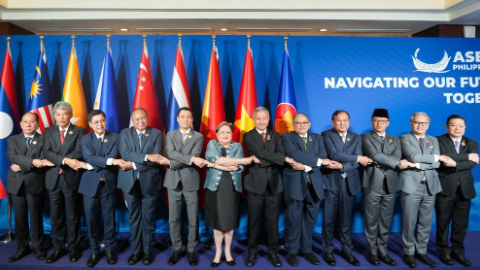
ASEAN leaders are emphasizing the need for regional solidarity in the face of escalating global volatility, with prominent voices urging a unified approach.[1] Thailand's Anutin has called on ASEAN to foster unity as leaders confront these international challenges, stressing collective action to navigate the turbulent geopolitical environment.[1] Similarly, Indonesia's President Prabowo Subianto has advocated for a unified ASEAN stance in upholding international law, asserting that the bloc must speak with one voice to effectively convey its position on global matters.[4] These statements come at a time when tensions, such as those in the Strait of Hormuz, exemplify the broader instability affecting international relations.[1][4] Prabowo's remarks underscore the importance of cohesion within ASEAN to maintain influence and promote adherence to established legal frameworks amid such disruptions.[4] Anutin's urging reflects a shared recognition among Southeast Asian leaders that fragmented responses could weaken the region's leverage in addressing worldwide crises.[1] Together, these calls position ASEAN as a stabilizing force, advocating for diplomatic unity to counter the volatility seen in distant flashpoints like the Hormuz strait.[1][4]
Recent International Maritime Resolutions
In a notable instance of successful diplomacy, a Hong Kong-based intergovernmental mediation body has resolved an international maritime dispute involving parties from mainland China and Singapore.[5] The International Organisation for Mediation (IOMed), headquartered in Hong Kong, achieved this breakthrough this month, demonstrating the efficacy of neutral arbitration in contentious maritime matters.[5] Teresa Cheng Yeuk-wah, the secretary general of IOMed, revealed the resolution on Friday at a summit, where senior officials reaffirmed Hong Kong's commitment to serving as a global mediation center.[5] This organization, launched last year, has seen more states join since its inception, bolstering its role amid rising global volatility.[5] The dispute's settlement highlights how specialized bodies can facilitate resolutions between major players, providing a model for de-escalating tensions in international waters.[5] By addressing the specifics of the China-Singapore disagreement through mediation, IOMed has contributed to stability in a separate but relevant sphere of maritime affairs, contrasting with ongoing disruptions elsewhere.[5] This achievement reinforces Hong Kong's pledge to host such initiatives, potentially offering pathways for similar successes in more volatile contexts.[5]
Context of US-Iran Accusations
The current impasse in the Strait of Hormuz is deeply rooted in accusations exchanged between Iran and the United States over attacks targeting vessels and naval assets.[3] These clashes, which intensified following strikes on 28 February, have led to Iran effectively seizing control of the strait, leaving ships stranded.[2][3] The US and Israel are reported to have initiated attacks on Iran, prompting Tehran's response and the subsequent trade of blame.[2] Security risks have surged as a result, with no ships navigating the corridor in the last 48 hours due to fears of further incidents.[3] This backdrop of mutual recriminations has paralyzed what is a critical global energy transit route, with implications extending far beyond the immediate zone.[2][3] The accusations center on assaults within the strait, escalating a cycle of retaliation that has halted all maritime movement.[3] Iran's assertion of control comes amid these exchanges, complicating hopes for de-escalation while underscoring the high stakes involved in this strategically vital waterway.[2]
Broader Global Implications
The events in the Strait of Hormuz exemplify the interconnected nature of global geopolitics, where disruptions in one chokepoint reverberate across energy markets and international stability.[2][3] ASEAN leaders' appeals for unity, as voiced by Anutin and President Prabowo Subianto, frame these incidents within a larger pattern of volatility that demands collective responses and adherence to international law.[1][4] The successful mediation by the Hong Kong-based IOMed in the China-Singapore dispute offers a glimmer of progress, showing how diplomatic mechanisms can mitigate maritime conflicts even as others intensify.[5] Iran's control of the strait following the 28 February attacks, coupled with stalled shipping, heightens risks to global energy supplies and prompts calls for resolution.[2] US-Iran accusations over vessel and naval asset strikes further fuel this instability, raising security concerns that have idled traffic for 48 hours.[3] In the realm of global geopolitics, these developments underscore the need for unified stances, as ASEAN advocates, and effective mediation, as demonstrated in Hong Kong.[1][4][5] The stranded ships and seized waterway not only disrupt trade but also test international frameworks, with leaders confronting volatility through calls for law-based unity.[1][2][3][4] This convergence of tensions and resolutions paints a picture of a world navigating heightened risks, where regional blocs and mediation bodies play pivotal roles in seeking balance.[5]
What to watch next: Hopes persist for a US-Iran deal to ease the Hormuz standoff and resume shipping,[2] while ASEAN's push for unity may shape responses to ongoing volatility,[1][4] and Hong Kong's mediation successes could inspire further maritime resolutions.[5]