
Geopolitics global highlights ASEAN unity amid Strait of Hormuz shipping halt
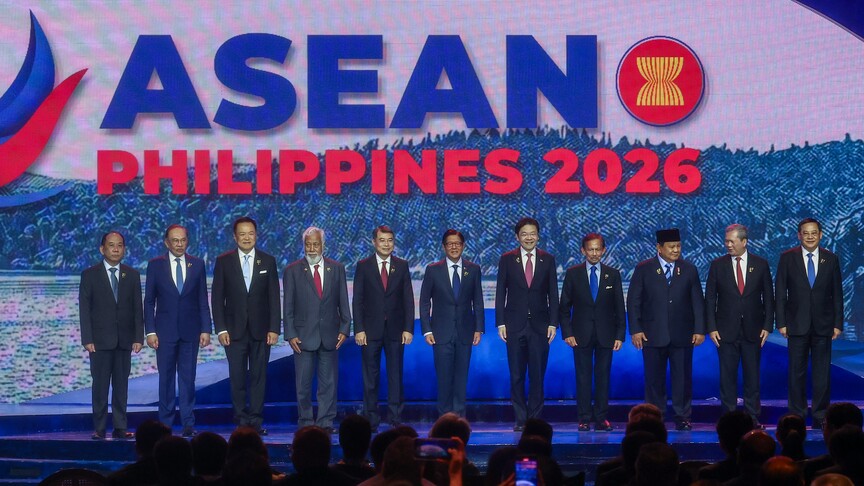
ASEAN leaders are urging unity amid global volatility, particularly in response to tensions in the Strait of Hormuz where ships are stranded due to US-Iran clashes.[1][2][3] In the realm of geopolitics global, these developments underscore the precarious balance of international relations, as regional powers like those in Southeast Asia seek collective responses to disruptions that ripple across energy supplies and maritime security.[1][4]
Global Geopolitical Context
The current landscape of geopolitics global is marked by heightened volatility, prompting ASEAN leaders to emphasize unity as they navigate a series of interconnected challenges.[1] Anutin from Thailand has been vocal in this regard, calling for ASEAN unity as leaders address these global challenges head-on.[1] This push comes at a time when international tensions are testing the cohesion of regional blocs, with Southeast Asian nations positioning themselves to maintain stability amid broader uncertainties.[1]
Such calls reflect a broader recognition of the need for collective action in an era where geopolitical shifts can rapidly escalate.[1] Anutin's urging highlights the strategic importance of ASEAN's role, as the bloc confronts issues that extend beyond its borders, including disruptions in critical global chokepoints like the Strait of Hormuz.[1][2] This context is further illuminated by statements from other leaders, such as Indonesia's Prabowo Subianto, who stresses the necessity of a unified ASEAN stance to uphold international law.[4] Prabowo's emphasis on speaking with one voice underscores how ASEAN aims to project strength and consistency on the world stage, ensuring that its positions on global matters are not fragmented.[4]
In this volatile environment, ASEAN's approach serves as a counterbalance to unilateral actions elsewhere, fostering dialogue and adherence to established norms.[1][4] The repetition of unity as a theme in leadership rhetoric points to a deliberate strategy: by aligning collectively, ASEAN can amplify its influence in geopolitics global, particularly when addressing flashpoints that threaten trade routes and energy flows.[1][4] This overarching theme sets the stage for specific regional responses to immediate crises, demonstrating how Southeast Asia is adapting to the pressures of a multipolar world.[1][4]
Disruptions in the Strait of Hormuz
Ships in the Strait of Hormuz remain stranded following actions by Iran after attacks involving the United States and Israel on 28 February.[2] This critical waterway, a vital artery for global energy transit, has seen no passages in the last 48 hours amid escalating US-Iran security risks and mutual accusations.[3] Iran's effective seizure of control has paralyzed maritime traffic, leaving vessels unable to proceed as tensions simmer.[2][3]
The dearth of ship movements stems directly from clashes that have raised profound security concerns, with Iran and the US trading blame over assaults on vessels and naval assets in this key corridor.[3] Reports indicate that these incidents have created a standoff, halting all transit and stranding ships in a waterway that handles a significant portion of the world's oil supply—though the exact volume impacted remains tied to the ongoing impasse.[2][3] Hopes for a US-Iran deal linger, but the current reality is one of stagnation, with no vessels passing through amid the heightened risks.[2][3]
This disruption exemplifies how localized conflicts can cascade into global concerns, particularly given the Strait's role as a linchpin for energy security.[2][3] The 48-hour halt without any passages amplifies the urgency, as accusations fly between the parties involved, further entrenching the deadlock.[3] Iran's response to the 28 February attacks by the US and Israel has effectively choked the route, stranding ships and prompting international scrutiny.[2] Such events not only affect immediate shipping but also signal potential long-term vulnerabilities in geopolitics global supply chains.[2][3]
ASEAN's Calls for Unity
Anutin from Thailand is calling for ASEAN unity as leaders address global challenges, a sentiment echoed by Prabowo Subianto of Indonesia, who emphasizes a unified ASEAN stance to uphold international law.[1][4] These statements highlight specific efforts by ASEAN leaders to maintain a collective front amid international challenges.[1][4]
Prabowo's call is particularly pointed, with the Indonesian president stressing that ASEAN must speak in unity to convey its collective stance on global issues.[4] This unified approach is positioned as essential for defending international law, ensuring that the bloc's voice carries weight in diplomatic arenas.[4] Anutin's parallel urging reinforces this narrative, framing ASEAN unity as a direct response to the volatility confronting leaders across the region.[1]
Together, these pronouncements from key figures illustrate a concerted push within ASEAN to solidify internal cohesion.[1][4] By advocating for unity, leaders like Anutin and Prabowo aim to equip the association with the resilience needed to tackle external pressures, from maritime disruptions to broader geopolitical shifts.[1][4] This collective stance is not merely rhetorical; it represents a strategic imperative for ASEAN to navigate the complexities of global affairs while safeguarding regional interests.[1][4]
Recent International Dispute Resolutions
A Hong Kong-based mediation body has resolved a maritime dispute between parties from mainland China and Singapore.[5] This achievement by the International Organisation for Mediation (IOMed), headquartered in Hong Kong, marks a significant step in addressing international maritime tensions.[5]
Teresa Cheng Yeuk-wah, secretary general of IOMed, revealed the resolution on Friday at a summit, noting that it involved parties from mainland China and Singapore this month.[5] The organization's success comes as more states have joined since its launch last year, bolstering its capacity to handle such cases.[5] Senior officials at the summit reaffirmed Hong Kong’s pledge to serve as a mediation center amid increasing volatility in global affairs.[5]
This resolution exemplifies ongoing global efforts to manage disputes through neutral arbitration, particularly in maritime domains where conflicts can escalate quickly.[5] IOMed's role highlights the growing reliance on specialized bodies to de-escalate tensions between major players, providing a model for constructive outcomes.[5] By resolving the dispute efficiently, the organization demonstrates its effectiveness in fostering dialogue and compliance with international frameworks.[5]
Broader Implications
These events collectively reflect interconnected global risks, with ASEAN's calls for unity intersecting with disruptions like those in the Strait of Hormuz.[1][2][3][4] Anutin's and Prabowo's statements underscore the need for regional solidarity in the face of such volatility.[1][4] The stranding of ships and 48-hour halt in passages amplify security risks from US-Iran clashes, trading of accusations, and Iran's post-28 February actions.[2][3]
Simultaneously, positive developments like the Hong Kong mediation body's resolution of the China-Singapore maritime dispute offer glimpses of resolution amid chaos.[5] This interplay—from ASEAN unity pleas[1][4] to Hormuz standstill[2][3] and mediated successes[5]—illustrates how geopolitics global volatility demands multifaceted responses. ASEAN's emphasis on upholding international law positions it as a stabilizing force,[4] while Hormuz tensions reveal vulnerabilities in energy transit.[2][3] The mediation example signals potential pathways forward through institutions like IOMed.[5]
Overall, these threads weave a tapestry of caution and opportunity, where unity and arbitration counterbalance conflict and disruption.[1][2][3][4][5]
What to watch next: Observers should monitor potential US-Iran deal progress amid stranded Hormuz ships[2] and ASEAN leaders' follow-through on unity commitments to uphold international law,[1][4] alongside IOMed's handling of further disputes as global volatility persists.[5]