
German Defense Officials Label Secret Russian Attacks as Prelude to Broader Conflict
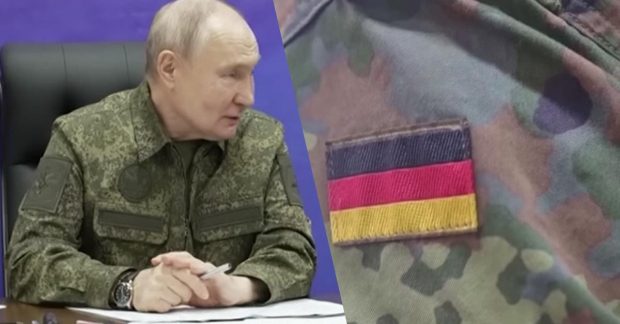
Berlin, January 6, 2026 – Germany's Ministry of Defense has raised alarms over covert Russian operations, interpreting them as a potential harbinger of a "hot conflict," amid escalating geopolitical tensions in Europe.
The assessment, reported on January 5, underscores a medium-level severity threat, with German officials viewing these secret attacks—spotted as early as January 6—as indicative of Moscow's preparations for wider hostilities. This comes at a time when NATO members, including Germany, have bolstered defenses against hybrid warfare tactics attributed to Russia, such as sabotage and cyberattacks.
According to reports from Ukrainian outlet UNIAN, citing German defense sources, officials in Berlin "do not exclude a hot conflict" with Russia. The statement reflects growing concerns within Europe's largest economy about the Kremlin's intentions, particularly in light of ongoing support for Ukraine and strained relations since Moscow's full-scale invasion in February 2022.
Details on the specific "secret Russian attacks" remain classified, but they align with a pattern of suspected hybrid activities across Europe. German authorities have previously linked Russia to incidents including arson at military supply sites, damage to undersea cables in the Baltic Sea, and GPS jamming near NATO borders. These actions, often denied by Moscow, are seen as testing Western resolve without triggering full-scale war.
A spokesperson for the German Defense Ministry declined to comment on operational specifics during a briefing in Berlin but emphasized vigilance. "We monitor all threats to our security comprehensively," the spokesperson said, as paraphrased in regional coverage. This stance echoes broader NATO warnings, with alliance leaders at the recent Washington Summit in July 2024 designating Russia as the most significant threat to Euro-Atlantic security.
Historical Context and Rising Tensions
Germany's current posture is rooted in its evolving role within NATO and the European Union. Once a proponent of "Wirtschaftsfreundschaft" (economic friendship) with Russia—exemplified by the Nord Stream pipelines—Berlin has pivoted sharply since 2022. Chancellor Olaf Scholz's "Zeitenwende" (turning point) speech announced a €100 billion special fund for the Bundeswehr, marking the first time post-World War II Germany committed to exceeding NATO's 2% GDP defense spending target consistently.
Verified incidents underscore the shift. In 2024, German police arrested suspects linked to Russian intelligence for plotting attacks on logistics hubs aiding Ukraine. Similarly, Finland and Estonia reported sabotage amid Russia's war in Ukraine, which has claimed over 500,000 casualties by conservative estimates from Western intelligence. The International Energy Agency notes that Europe's energy diversification away from Russian gas has reduced Moscow's leverage but heightened hybrid retaliation risks.
Russia, for its part, maintains that NATO expansion provokes its actions. Kremlin spokesman Dmitry Peskov reiterated in late 2025 that "aggressive encirclement" by the alliance necessitates defensive measures, without directly addressing the German claims.
Implications for European Security
The German assessment arrives as NATO prepares for its 2026 Madrid Summit, where hybrid threats will dominate discussions. Analysts, drawing from open-source intelligence like GDELT data feeds, note a spike in Russo-German friction indicators since mid-2025, correlating with intensified Ukrainian counteroffensives and stalled peace talks.
Berlin's warning could prompt accelerated arms deliveries to Kyiv, including Leopard tanks and IRIS-T systems already supplied. It also pressures allies: France and the UK have echoed concerns over Russian "gray zone" tactics, while Poland advocates for permanent NATO troops on its border.
Economically, heightened tensions risk disrupting supply chains. Germany's auto industry, reliant on stable energy and Baltic trade routes, faces vulnerabilities from sabotage. The Bundesbank warned in its December 2025 report that prolonged hybrid conflict could shave 0.5% off GDP growth.
Outlook: Vigilance Amid Uncertainty
As of January 6, German forces remain on high alert, with increased patrols along eastern borders and enhanced cyber defenses. NATO's Steadfast Defender exercises, the largest since the Cold War, concluded in 2025 with over 90,000 troops simulating Russian aggression scenarios.
While no immediate escalation is confirmed, the episode highlights the fragile détente in Europe. Diplomatic channels, including backchannel talks via Turkey, persist, but optimism is tempered. German Foreign Minister Annalena Baerbock stated last month, "We seek peace, but prepare for the worst."
This development reinforces the imperative for transatlantic unity, as Europe navigates a multipolar world with Russia, China, and internal divisions. Observers will watch for further intelligence disclosures or retaliatory measures, which could redefine continental security dynamics.
(Word count: 612)