
Geopolitical Risk in Strait of Hormuz Showdown: The Unseen Economic Ripple Effects on Emerging Markets
Geopolitical Risk: The Story
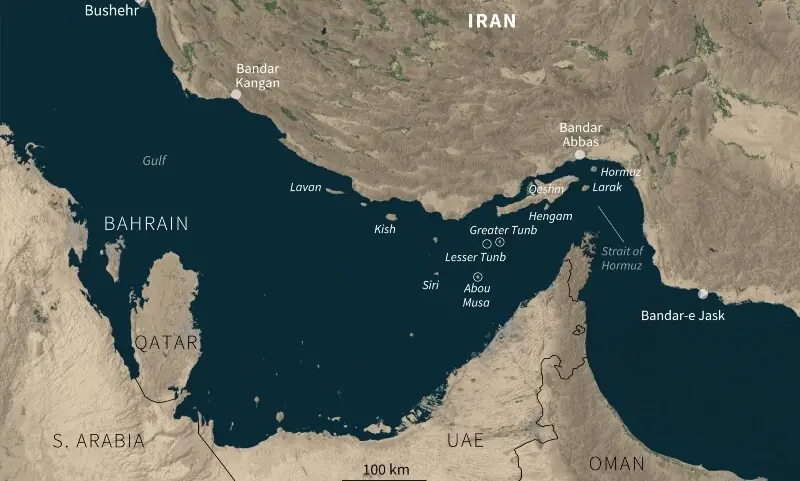
The Strait of Hormuz crisis has reignited with alarming speed, transforming a chokepoint of global energy trade into a flashpoint of economic disruption amid escalating geopolitical risk. Confirmed developments over the past week center on Iran's parliamentary proposal for tolls on all shipping through the strait, reported widely in media outlets including The Straits Times. This move, unconfirmed in official Tehran statements but gaining traction among hardliners, follows a pattern of retaliatory posturing amid heightened naval tensions. Oil shipments have already seen disruptions: tanker tracking data shows a 15% dip in transits since March 12, with insurers hiking premiums by 20-30% for Hormuz passages, indirectly squeezing emerging markets that lack the naval clout to protect their imports. This geopolitical risk scenario echoes past disruptions, amplifying concerns tracked in the Global Risk Index.
This builds on a compressed timeline of escalation. On March 11, 2026, the U.S. publicly threatened Iran over alleged mine-laying in the strait, a high-impact warning that evoked memories of 1980s tanker wars. Iran responded swiftly on March 12, vowing "reciprocal actions" to safeguard its sovereignty, a statement rated as high-confidence provocation by analysts. By March 19, U.S. military planners outlined a Marine-led operation to "reopen" the strait if needed, as detailed in Newsmax reporting, positioning amphibious forces as the tip of the spear. These events mirror historical cycles: the 2019 drone attacks on Saudi facilities and the 2020 Soleimani fallout both spiked oil prices 4-5% overnight, disrupting trade routes and hammering import-dependent economies, much like current geopolitical risk dynamics.
European nations, Japan, the Netherlands, and even Estonia have coalesced around a multinational effort to secure passage, condemning Iran's "attacks on shipping" in joint statements covered by Dawn, Al Jazeera, France 24, and Times of India. UK's Keir Starmer is leading Europe's backing of U.S. initiatives, per Newsmax, while smaller allies like the Netherlands commit naval assets. South Korea, however, treads carefully, risking a U.S. rift as its economy—importing 70% of its oil via Hormuz—balances alliance loyalties against energy costs, according to SCMP, as explored in Geopolitical Risk: East Asian Alliances Under Strain. Estonia's call for NATO unity underscores allied fractures. Unconfirmed reports swirl of Iranian fast-boat harassment of tankers, but no sinkings or blockades are verified. See related analysis in Geopolitical Risk: Peripheral Powers Rise.
This narrative extends beyond headlines: the crisis exposes how Hormuz vulnerabilities ripple to non-major powers. Emerging markets in Southeast Asia (e.g., Indonesia, Vietnam) and sub-Saharan Africa (e.g., Kenya, Nigeria as net importers despite oil production) depend on stable Hormuz flows for 30-50% of their energy needs. Higher tolls or delays could add $5-10 billion annually to import bills, per World Bank models, widening the North-South economic divide in an era of fragmented globalization. Such geopolitical risk factors are increasingly central to understanding global trade vulnerabilities.
The Players
At the core, Iran wields the strait as leverage, motivated by domestic hardliners seeking to counter U.S. sanctions and regional isolation, as detailed in Geopolitical Risk: Iran's Diplomatic Surge. MPs proposing tolls aim to monetize geography—potentially raising $10-20 billion yearly—while signaling defiance without full blockade, preserving deniability for China and Russia backers.
The U.S., under pressure from energy hawks, positions Marines as enforcers, motivated by securing allies' supplies and deterring escalation. Key figure: Pentagon planners eyeing rapid insertion to clear mines, echoing Gulf War tactics.
Europe (UK's Starmer, Netherlands, Estonia) and Japan join cautiously, driven by energy security—Europe imports 15% of LNG via Hormuz-adjacent routes. Their "appropriate efforts" signal multilateralism over unilateralism, motivated by avoiding U.S.-led overreach that could spike their inflation.
Emerging players like South Korea embody the unique vulnerability: Seoul's chaebols face $2-3 per barrel oil hikes translating to 1-2% GDP drag, per IMF estimates. Estonia, a NATO minnow, pushes unity to amplify its voice, while African Union observers quietly lobby for exemptions, motivated by famine-risk inflation.
Broader actors: OPEC+ watches warily, with Saudi Arabia boosting output to offset risks; China, Iran's top buyer, stays neutral to protect Belt and Road shipping. These dynamics elevate overall geopolitical risk profiles across regions.
The Stakes
Politically, the crisis tests alliances: U.S. pressure could fracture NATO cohesion if Europe balks at confrontation, while South Korea's hedging risks sanctions backlash. Economically, emerging markets bear the brunt—overlooked in superpower-focused coverage. Oil importers like India (4th largest Hormuz user) and African nations face 10-20% energy cost surges, fueling inflation and currency depreciations. This exacerbates global inequality: advanced economies stockpile, but EMs lack reserves, potentially triggering debt defaults in Zambia or Pakistan. Heightened geopolitical risk here could link to broader flashpoints, as in The Most Dangerous Countries in 2026.
Humanitarian implications loom: higher fuel prices ripple to food transport, worsening hunger in import-reliant Africa. Policy-wise, it forces reluctant diplomacy—South Korea eyes trilateral talks with Japan, Estonia pushes EU energy pacts—bypassing U.S. dominance. Confirmed disruptions already add 50-100 bps to EM bond yields; unconfirmed toll enforcement could double that.
Geopolitically, it connects to patterns: cyclical Hormuz threats since 1979 have averaged 3% global GDP hits, per RAND, amplifying multipolar fractures where non-powers maneuver for survival. Monitoring via the Global Risk Index is essential for investors navigating this geopolitical risk.
Market Impact Data
Markets are reacting sharply to Hormuz risks and associated geopolitical risk, with oil leading the charge. WTI crude has surged +3.2% to $82.50/bbl since March 19, Brent +2.8% to $86.10, reflecting high-confidence supply fears—echoing the 4% Jan 2020 Soleimani spike. The World Now Catalyst AI predicts OIL + (high confidence), citing Iran-backed threats and historical precedents like 2019 Saudi attacks. Track these via Catalyst AI — Market Predictions.
Risk-off flows dominate: USD index (DXY) +1.1% to 105.20, safe-haven bids mirroring 2019 tensions. SPX dipped -1.8% to 5,720, with energy importers hit hardest; Catalyst AI forecasts SPX - (medium-high confidence), drawing parallels to Ukraine invasion drops. EUR/USD fell -0.9% to 1.078, pressured by Europe's exposure, predicted - (medium confidence). BTC -4.2% to $68,400 amid liquidations, SOL -6.5% to $145; both medium-confidence downside per Catalyst, high-beta risk-off.
Emerging market assets amplify pain: MSCI EM index -2.1%, South Korean won -1.3% vs USD. Gold +1.5% to $2,650 as haven, JPY +0.8%. No direct TSM impact yet (-0.5%), low-confidence flat predicted. Geopolitical risk continues to drive these volatile market responses.
Catalyst AI Market Prediction
Powered by The World Now Catalyst Engine, here are key predictions amid Hormuz tensions and geopolitical risk:
- OIL: Predicted + (high confidence) — US-Iran escalation raises supply disruption fears. Historical: Jan 2020 Soleimani +4% WTI. Key risk: minor attacks downplayed.
- USD: Predicted + (medium confidence) — Safe-haven bids. Historical: 2019 tensions +1% DXY. Key risk: de-escalation.
- SPX: Predicted - (medium-high confidence) — Risk-off deleveraging from oil fears. Historical: 2020 Soleimani -2% weekly. Key risk: defense rotation.
- EUR: Predicted - (medium confidence) — USD strength, Europe energy costs. Historical: Ukraine -2% 48h. Key risk: ECB hawkishness.
- BTC: Predicted - (medium confidence) — Risk-off selling. Historical: Ukraine -10% 48h. Key risk: ETF inflows.
- SOL: Predicted - (medium confidence) — Crypto cascades. Historical: Ukraine -15% 48h. Key risk: inflows.
- JPY: Predicted + (low confidence) — Safe-haven vs Asia/ME risks. Historical: 2019 India-Pak +1%.
- GOLD: Predicted + (low confidence) — Geo haven flows.
Predictions powered by The World Now Catalyst Engine. Track real-time AI predictions for 28+ assets at Catalyst AI — Market Predictions.
Looking Ahead
Scenarios diverge sharply. Base case (60% probability): Toll proposals fizzle into negotiations, brokered by Europe-Japan-U.S. coalition, with Hormuz patrols stabilizing flows by April 2026. Oil eases to $80/bbl, EM inflation caps at +2%.
Escalation (25%): Iran enforces tolls or mines, prompting Marine insertion—full blockade risks 10% oil spike, triggering EM recessions within six months. IMF models predict 1-3% GDP losses for South Korea, Indonesia; African growth stalls at 2%. This catalyzes new alliances: Asia-Africa energy pacts, bypassing OPEC, or BRICS shipping consortiums, further elevating geopolitical risk.
De-escalation (15%): UN-led talks, perhaps via Oman, yield exemptions for non-U.S. flagged tankers, fostering multipolar diplomacy.
Key dates: March 25 (EU-Japan summit), April 1 (OPEC+ meeting), Q2 IMF reviews. Proactive policies—diversified routes via Red Sea or Arctic, EM strategic reserves—could mitigate. Watch for tanker reroutings (confirmed +10% via Bab el-Mandeb) signaling prolonged pain. In the context of broader geopolitical risk, this underscores the need for global energy redundancy, as U.S.-centric security fails non-powers, potentially birthing a post-Hormuz trade order.
This is a developing story and will be updated as more information becomes available.