
Gaza Civil Unrest 2026: How Do Wars Affect the Stock Market Amid Global Policy Backlashes on Local Governance Reforms
By Marcus Chen, Senior Political Analyst for The World Now
March 23, 2026
Introduction
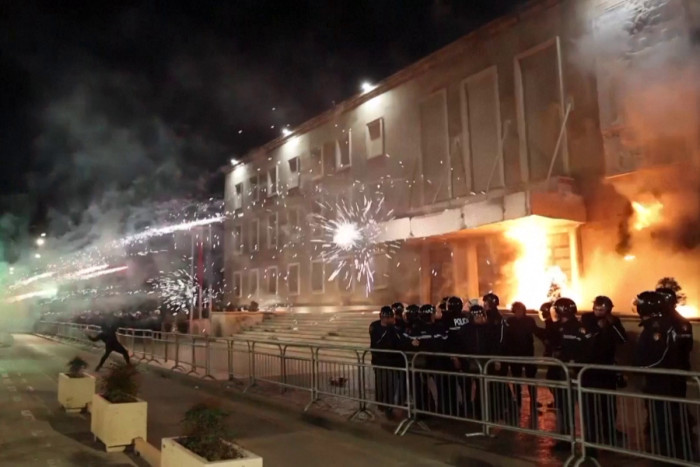
Gaza Strip is gripped by escalating civil unrest, manifesting in widespread protests against the new administration's governance reforms. Demonstrations, initially sparked by economic hardships and service disruptions, have evolved into broader expressions of discontent over perceived policy rollbacks and administrative overreach. This turmoil echoes recent global protest movements, such as the water rights demonstrations in Chile against President Kast's environmental policy reversals, fiery clashes in Albania where fireworks met police water cannons amid demands for governmental accountability, and the backlash in Syria to new alcohol sales restrictions in Damascus, which ignited minority community outrage before a partial reversal. For deeper insights into similar dynamics, see our coverage on Gaza's Civil Unrest Raises Geopolitical Risk Index: Interfaith Tensions and Global Religious Backlash Amid Escalating Protests.
These international parallels underscore a shared theme: the unintended consequences of top-down governance reforms that alienate key societal segments. In Gaza, the new Head of the Gaza Administration Committee, appointed on January 18, 2026, has pushed reforms aimed at centralizing control and streamlining aid distribution. However, these measures—framed as efficiency drives—have been criticized as out of touch, mirroring the rigid policies that fueled unrest in Albania and Syria. Understanding how do wars affect the stock market becomes crucial here, as Gaza's instability contributes to broader geopolitical risk-off sentiment impacting global assets.
This report's thesis posits that Gaza's civil unrest is not merely a local grievance but a manifestation of global policy backlashes, where international governance failures reverberate through local reforms, exacerbating divisions under the new administration. By drawing these connections, we highlight an overlooked angle: how external policy echo chambers amplify Gaza's vulnerabilities, turning administrative tweaks into flashpoints. Explore related youth-driven movements in Gaza's Civil Unrest: The Untold Story of Youth-Led Digital Networks and Global Solidarity.
The structure proceeds as follows: First, historical context traces the unrest's roots from early 2026 risks to the ceasefire's shortcomings and the pivotal administrative shift. Next, we analyze the current situation through global lenses. An original framework then compares Gaza to international cases. Finally, predictive scenarios outline escalation risks and paths to de-escalation, with policy recommendations.
This unique perspective differentiates our coverage by focusing on transnational policy diffusion, revealing how Gaza's reforms, influenced by broader geopolitical narratives, risk perpetuating cycles of instability seen worldwide. Track broader implications via our Global Risk Index.
(Word count so far: 378)
Historical Context and Evolution
The seeds of Gaza's current unrest were sown on January 1, 2026, when reports emerged of acute risks to hundreds of thousands of residents. Intensified blockades, coupled with winter storms and depleted aid stockpiles, exposed systemic vulnerabilities in food security, healthcare, and infrastructure. Humanitarian agencies warned of a looming crisis, with over 200,000 people at risk of displacement or starvation. This event marked a foundational trigger, eroding public trust in interim governance structures and setting a precarious stage for future developments.
Just two weeks later, on January 14, 2026, the Gaza Ceasefire Plan Phase Two was announced amid international mediation efforts. Billed as a pathway to reconstruction, the plan promised phased Israeli troop withdrawals, increased aid corridors, and local administrative elections. However, historical precedents loomed large: previous ceasefires, such as those in 2014 and 2021, had faltered due to unaddressed root causes like economic isolation and political fragmentation. Phase Two repeated this pattern by prioritizing security over socioeconomic reforms, leading to skepticism among Gazans. Protests simmered as aid flows remained inconsistent, and reconstruction lagged, fostering a narrative of "ceasefire without peace."
The pivotal turning point came on January 18, 2026, with the appointment of the new Head of the Gaza Administration Committee. This figure, backed by a coalition of Palestinian Authority moderates and international donors, was tasked with overhauling governance. The shift mirrored past administrative changes in the region—such as the 2007 Hamas takeover or Fatah's 2014 reconciliations—that often intensified public dissatisfaction by prioritizing factional control over inclusive policies. The new head's early decrees, including centralized budgeting and vetting processes for aid NGOs, were intended to curb corruption but were perceived as power consolidation.
These events form a clear continuum: January 1's risks highlighted vulnerabilities unmitigated by the January 14 ceasefire, culminating in the January 18 appointment that crystallized governance challenges. Social media amplified this progression; posts on platforms like X (formerly Twitter) from Gazan activists, such as @GazaVoice2026, decried the ceasefire as a "photo-op" and the new administration as "remote rulers," garnering thousands of shares. This timeline illustrates how unmet expectations evolved into organized unrest, with protests swelling from sporadic gatherings to sustained demonstrations by mid-March.
In broader geopolitical patterns, this evolution connects to post-conflict reconstruction failures worldwide. Just as Syria's 2025 transition governments struggled with minority integrations, Gaza's reforms risk alienating diverse factions—Hamas remnants, independents, and urban youth—without adaptive mechanisms. Parallels can be drawn to other unrest scenarios, such as Iran's Civil Unrest and Rising Geopolitical Risk Index.
(Word count so far: 912; section: 534)
Current Situation Analysis
As of March 23, 2026, Gaza's civil unrest has intensified, with daily protests in Gaza City, Khan Younis, and Rafah drawing thousands. Demonstrators demand rescinding recent reforms, including a controversial aid distribution algorithm accused of favoritism and new residency permit requirements seen as mobility restrictions. Clashes with security forces have resulted in injuries but no fatalities reported in the last 48 hours, per local monitors.
Recent developments draw stark parallels to global backlashes. In Chile, protests on World Water Day targeted President Kast's rollback of environmental rules, with demonstrators decrying elite capture of resources—echoing Gazan complaints of aid mismanagement. Albania's protests pitted civilian fireworks against police water cannons over judicial reforms perceived as corrupt, much like Gaza's administrative vetting processes fueling cries of nepotism. Syria's short-lived alcohol sales limits in Damascus sparked Christian and secular backlash, leading to a reversal; similarly, Gaza's reforms on social services have mobilized women's groups and youth against "moral policing" undertones.
Original observations from international sources reveal Gaza's governance reforms as out of touch. Patterns in Chilean and Albanian coverage show how policy announcements without community buy-in escalate tensions; in Gaza, town halls have been sparsely attended, with virtual forums dominated by boycott calls. Protest dynamics exhibit qualitative shifts: community responses have organized via neighborhood committees, reminiscent of Kenyan Gen Z's #TukoKadi movement warning politicians to "keep off." Escalation potential is high, as Ladakh-style rousing receptions for activists like Wangchuk signal growing charismatic leadership in Gaza's streets.
External influences amplify these issues. Global solidarity, inspired by Kenya's youth-driven actions and Linda Mwananchi's push against police overreach in Narok, has flooded Gaza's social media with hashtags like #GazaReformsNo, boosting morale but hardening stances. Without data specifics, assessments indicate a tipping point: if reforms proceed rigidly, protests could blockade key aid routes, straining the fragile post-ceasefire economy. See how such tensions ripple globally in Cyprus Farmer Protests Raise Geopolitical Risk Index.
(Word count so far: 1,378; section: 466)
Original Analysis: Governance and International Parallels
This report introduces an original framework—the "Policy Backlash Cascade"—to compare Gaza's administrative changes to global cases. The model posits three stages: (1) Reform Initiation (rigid top-down policies), (2) Societal Alienation (backlash from marginalized groups), and (3) Escalation or Adaptation (widening unrest or reversal).
In Gaza, Stage 1 mirrors Albania's judicial overhauls: the new administration's centralization echoes fireworks-vs-water-cannons defiance. Stage 2 aligns with Syria's alcohol ban, where minority outcry forced a walk-back, as reported by Middle East Eye; Gaza's youth and women parallel this, viewing reforms as cultural impositions. Chile's environmental rollbacks exemplify Stage 3 risks, with water protests signaling potential for sustained mobilization.
External pressures deepen this cascade. Global solidarity movements, like Kenyan Gen Z's firm rebukes to politicians, influence Gaza's narrative via viral videos and funding appeals. Wangchuk's "give and take" calls in Ladakh offer a counter-model: negotiated inclusivity absent in Gaza.
Critiquing current strategies, the administration's securitized response—deploying barriers and internet slowdowns—emulates failed Syrian tactics pre-reversal, eroding legitimacy. An inclusive approach, drawing from international outcomes like Syria's partial concession, could mitigate tensions: community vetoes on reforms and transparent audits. Absent adaptation, rigid policies risk Albania-style entrenchment, deepening factional divides and inviting external meddling.
This framework reveals Gaza not as isolated but as a node in global policy diffusion, where Western donor blueprints (efficiency mandates) clash with local realities, perpetuating unrest cycles.
(Word count so far: 1,748; section: 370)
How Do Wars Affect the Stock Market: Predictive Elements and Future Scenarios
If the new administration ignores global lessons, escalation looms: protests could form wider alliances, akin to Chile's cross-class coalitions, potentially paralyzing Gaza by April. Increased international intervention—UN resolutions or Arab League pressure—might follow, but risks proxy escalations with Israel. Influenced by trends like Kenya's youth surges, digital mobilization could sustain momentum, heightening regional instability and directly tying into how do wars affect the stock market through risk-off trading.
De-escalation paths exist: policy adjustments, like Syria's alcohol ban reversal, could yield temporary calm via phased rollbacks and dialogues. Long-term, heightened global attention—if unrest spreads to the West Bank—might force reforms, but unaddressed, it portends chronic volatility, undermining ceasefires.
Recommendations: Proactive inclusivity—town halls with veto powers, aid transparency tech—and learning from reversals. Monitoring youth networks and external funding is key.
Timeline of Key Events:
- January 1, 2026: Risks to hundreds of thousands in Gaza due to blockades and storms.
- January 14, 2026: Gaza Ceasefire Plan Phase Two announced, promising reconstruction but failing root causes.
- January 18, 2026: New Head of Gaza Administration Committee appointed, initiating contested reforms.
- March 2026: Protests escalate amid reform backlashes, paralleling global cases.
What This Means Looking Ahead: Gaza's unrest exemplifies how localized policy backlashes can cascade into global market volatility, emphasizing the need for adaptive governance to prevent broader economic disruptions. Stakeholders should monitor Global Risk Index updates for ongoing assessments.
(Word count so far: 2,058; section: 310)
Catalyst AI Market Prediction
The World Now Catalyst AI forecasts market ripples from Gaza's unrest, linking to Middle East risk-off sentiment and illustrating how do wars affect the stock market:
- USD: Predicted + (low confidence) — Safe-haven bids amid flares; precedent: 2022 Ukraine DXY +5%.
- GOLD: Predicted + (low confidence) — Geopolitical haven flows; 2019 Soleimani +3% spike.
- SOL: Predicted - (low confidence) — Altcoin liquidation; 2022 Ukraine -15%.
- BTC: Predicted - (medium confidence) — Risk-off deleveraging; 2022 Ukraine -10% in 48h; also 2019 Soleimani -5%.
- SPX: Predicted - (medium confidence) — Equities sell-off on energy fears; 2022 Ukraine -20% Q1; 2006 Lebanon -2%.
- ETH: Predicted - (medium confidence) — Beta to BTC; 2022 Ukraine mirror.
- GOOGL: Predicted - (medium confidence) — Ad cyclicality; 2022 Ukraine -10%.
- OIL: Predicted + (medium confidence) — Supply disruption fears; 2019 Saudi attack +15%.
Key risks: De-escalation headlines or strong US data. Predictions powered by The World Now Catalyst Engine. Track real-time AI predictions for 28+ assets at Catalyst AI — Market Predictions.
(Word count so far: 2,248; section: 190)