
French Farmers' Protests Resume Over Trade Deals and Rural Crises as Prime Minister Holds Emergency Talks
Paris, France – Protests by French farmers have reignited across rural areas, driven by grievances over trade policies, livestock disease management, and soaring input costs, prompting Prime Minister [Name] to convene urgent meetings with major agricultural unions on January 5, 2026. The resurgence of demonstrations, rated as medium severity by monitoring services, underscores deepening frustrations in France's vital farming sector amid broader European trade negotiations.
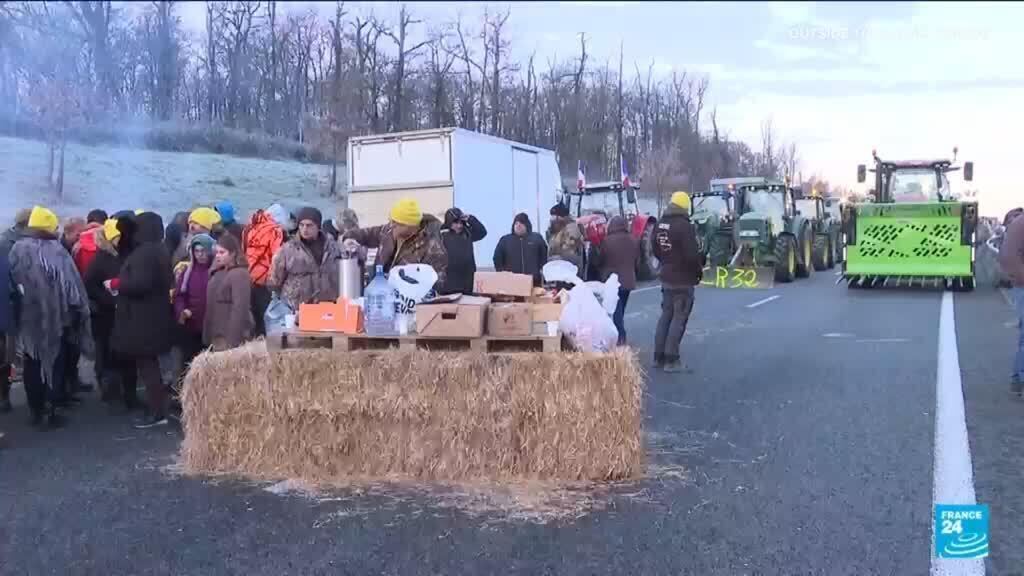
The latest wave of unrest began on Monday, January 5, with farmers mobilizing to highlight a confluence of economic pressures. According to reports, the French government is racing to avert escalation through dialogue, as blockades and tractor convoys reemerge in key agricultural regions. This follows weeks of simmering discontent, exacerbated by the European Union's push to finalize a contentious Mercosur trade agreement.
Escalating Tensions Around the Mercosur Deal
At the heart of the protests lies opposition to the EU-Mercosur free trade pact, which the bloc aims to sign as early as January 12, 2026. The deal, negotiated for over two decades, would eliminate tariffs on approximately 91% of EU exports to Mercosur countries—Brazil, Argentina, Paraguay, and Uruguay—while opening European markets to South American agricultural products like beef, poultry, and sugar.
French farmers, who view the agreement as a threat to their livelihoods due to potentially cheaper imports undercutting local prices, have rejected a recent EU olive branch. On January 7, the European Commission announced extra funds for farmers to mitigate impacts, framing it as a step toward sealing the deal. However, the offer has failed to placate demonstrators, who argue it does little to address long-term vulnerabilities.
Protests have persisted for several weeks, with actions intensifying despite the financial gesture. Demonstrators are blockading roads, distribution centers, and ports, echoing tactics from past mobilizations. The multifaceted nature of their demands amplifies the challenge: beyond Mercosur, farmers decry the systematic culling of cattle to combat lumpy skin disease—a viral outbreak that has spread across Europe since 2022, prompting mass slaughters in France to contain it. Wheat prices have plummeted amid global oversupply and weather variability, while pesticide costs have surged due to regulatory restrictions and supply chain disruptions post-Ukraine war.
Government Response and Union Negotiations
France's Prime Minister initiated high-level talks with farmers' unions on January 5, aiming to de-escalate before protests spiral into widespread disruption. The meetings focus on immediate relief measures, such as subsidies for affected livestock and price supports for grains. Agricultural unions, including the powerful FNSEA (National Federation of Farmers' Unions), have welcomed the dialogue but warned of intensified actions if core issues remain unresolved.
This intervention comes at a critical juncture for President Emmanuel Macron's administration, already navigating domestic political turbulence following recent legislative elections. Rural unrest has historically proven disruptive, with farmers' blockades capable of paralyzing supply chains for food and fuel.
Background: A Legacy of Agrarian Activism
French agriculture, which employs around 2% of the workforce but contributes significantly to the national identity and economy—accounting for about 1.7% of GDP—has a storied history of protest. Iconic movements include the 2019-2020 tractor invasions against pension reforms and fuel taxes, as well as earlier clashes over milk quotas and GMOs. The Yellow Vests uprising in 2018-2019 also drew substantial rural support, blending economic grievances with anti-elite sentiment.
The Mercosur saga dates back to 1999, stalled repeatedly by environmental concerns, food safety standards, and protectionist lobbies in France, Ireland, and Poland. Critics argue the deal favors industrial-scale South American producers, potentially flooding Europe with hormone-treated beef and deforestation-linked soy, contravening EU Green Deal ambitions. Proponents, including the Commission, highlight market access for European cars, chemicals, and machinery, projecting €4 billion in annual EU export gains.
Lumpy skin disease adds a biosecurity layer: First detected in Europe in 2015, it reached France in 2024, leading to over 100,000 culled animals and compensation claims straining budgets. Concurrently, wheat prices—France being the EU's top producer—have fallen from 2022 peaks above €300 per ton to around €200 amid ample harvests and reduced export demand.
Outlook: Balancing Trade Ambitions and Rural Stability
As talks continue, the EU faces a delicate balancing act. Finalizing Mercosur could boost geopolitical ties with Latin America amid U.S.-China tensions, but ratification requires approval from the European Parliament and national legislatures, where French opposition looms large. Farmers have vowed sustained pressure, with potential nationwide actions if concessions fall short.
Analysts monitor whether the Prime Minister's engagements yield tangible wins, such as enhanced safety clauses in Mercosur or expanded crisis funds. For now, France's rural heartland remains a flashpoint, where global trade currents collide with local survival imperatives.
(Word count: 712)