
French Civil Unrest Intensifies: Louvre Staff Strike Persists as Farmers Protest EU-Mercosur Trade Deal
Paris, France – Ongoing labor unrest at the iconic Louvre Museum has converged with widespread farmer demonstrations in the French capital, highlighting deepening tensions over working conditions and trade policies. As of January 9, 2026, the Louvre remains partially operational amid a staff strike that began on January 5, while farmers rallied against a potential EU-Mercosur trade agreement, disrupting parts of Paris.
The Louvre strike, rated as medium severity by event monitors, entered its fifth day on January 9. Museum staff, including attendants, security personnel, and technical workers, have halted full operations to protest deteriorating work conditions. The action has led to partial closures, with many galleries inaccessible and reduced visitor access. The strike commenced at 14:34 GMT on Monday, January 5, 2026, reflecting broader frustrations in France's cultural sector over staffing shortages, low wages, and the pressures of handling record visitor numbers—over 9 million annually pre-pandemic, according to historical data from the French Ministry of Culture.
Union representatives have cited chronic understaffing and burnout as key grievances. "The Louvre is the world's most visited museum, but our workers are treated like cogs in a machine," a spokesperson for the CGT union, which represents many Louvre employees, stated in recent communications. Partial reopening has allowed limited entry, but long queues and curtailed exhibits have frustrated tourists during the winter high season. Museum management has offered negotiations, but no resolution has been announced, with the strike set to continue pending talks.
Simultaneously, French farmers descended on Paris on January 9, protesting the European Union's impending vote on the long-stalled Mercosur trade deal. The agreement, under negotiation since 1999, aims to eliminate tariffs between the EU and the Mercosur bloc—comprising Brazil, Argentina, Paraguay, and Uruguay—potentially flooding European markets with cheaper South American agricultural products like beef, poultry, and sugar. French farmers, a politically influential group, argue it threatens their livelihoods by undercutting local standards on environmental protections, animal welfare, and pesticide use.
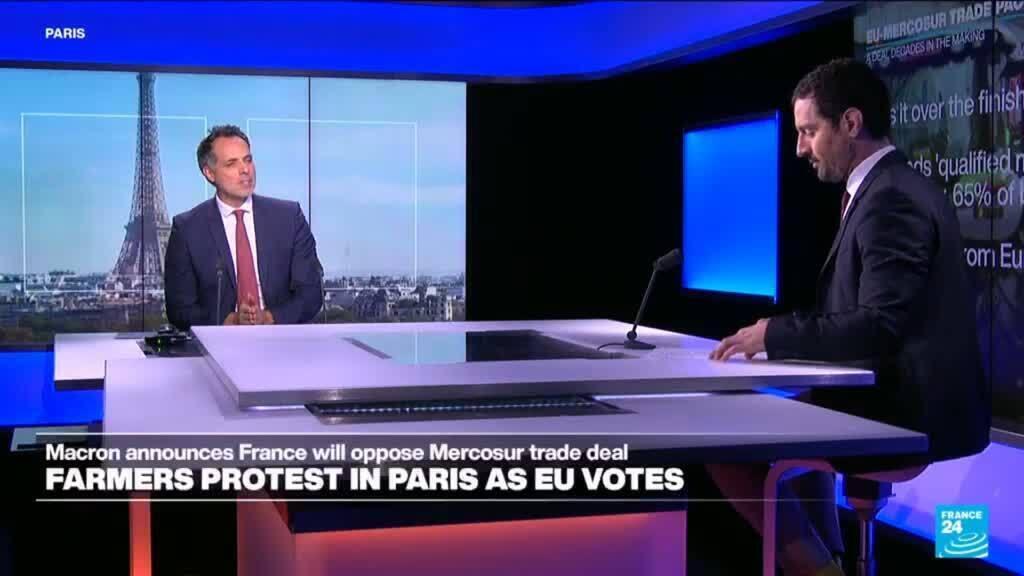
France 24 reported demonstrations organized as EU lawmakers prepared to vote, with tractors and protesters converging on key sites in Paris. "Andrew Hilliar and Liza Kaminov have more," the outlet noted, underscoring live coverage of the unrest. Farmer unions, including the powerful FNSEA, have warned of mass mobilizations if the deal advances, echoing past actions like the 2024 protests that saw highways blocked nationwide. President Emmanuel Macron's government has historically opposed the deal in its current form, vetoing provisional approval in 2019, but recent EU momentum has reignited fears.
Background on French Protests and Trade Tensions
France has a storied tradition of strikes and demonstrations, with civil unrest often amplifying policy debates. The Louvre has faced multiple work stoppages in recent years; a 2023 strike over pay and air conditioning failures closed the museum for a day, while 2022 actions protested privatization threats. These reflect post-COVID recovery challenges in cultural institutions, where visitor surges have outpaced hiring.
Farmer protests are equally emblematic. In 2024, thousands used tractors to besiege Paris over pension reforms, EU green policies, and import competition. The Mercosur pact, valued at potentially €4 billion annually in EU exports but criticized for asymmetry, stalled after French opposition. Recent EU Parliament discussions, coupled with Brazil's push under President Lula da Silva, have accelerated talks. France, the EU's top agricultural producer, exported €60 billion in farm goods in 2024, per Eurostat, making it acutely vulnerable.
Environmental groups have joined farmers, decrying Mercosur's deforestation links in the Amazon, while industry lobbies support it for manufacturing gains.
Outlook Amid Dual Crises
As both the Louvre strike and farmer protests unfold, Paris authorities are monitoring for escalations. The museum's partial operations minimize economic fallout—estimated daily losses exceed €1 million—but sustained action could impact France's €60 billion tourism sector. Farmer rallies risk traffic disruptions during EU votes, potentially influencing the deal's fate.
Government spokespeople have urged dialogue, with Culture Minister Rachida Dati scheduled to meet Louvre unions, and Agriculture Minister addressing farmer leaders. No major clashes have been reported, but the convergence of cultural and agrarian discontent underscores France's polarized social landscape ahead of EU decisions.
With events dated January 5-9, 2026, observers watch for ripple effects, including solidarity actions or policy concessions. France's unrest serves as a microcosm of EU-wide debates on globalization, labor rights, and sustainability.
(Word count: 612)






