French Civil Unrest Escalates: Farmers Blockade Paris Over Mercosur Trade Deal as Louvre Strike Continues

Latest from X
French Civil Unrest Escalates: Farmers Blockade Paris Over Mercosur Trade Deal as Louvre Strike Continues
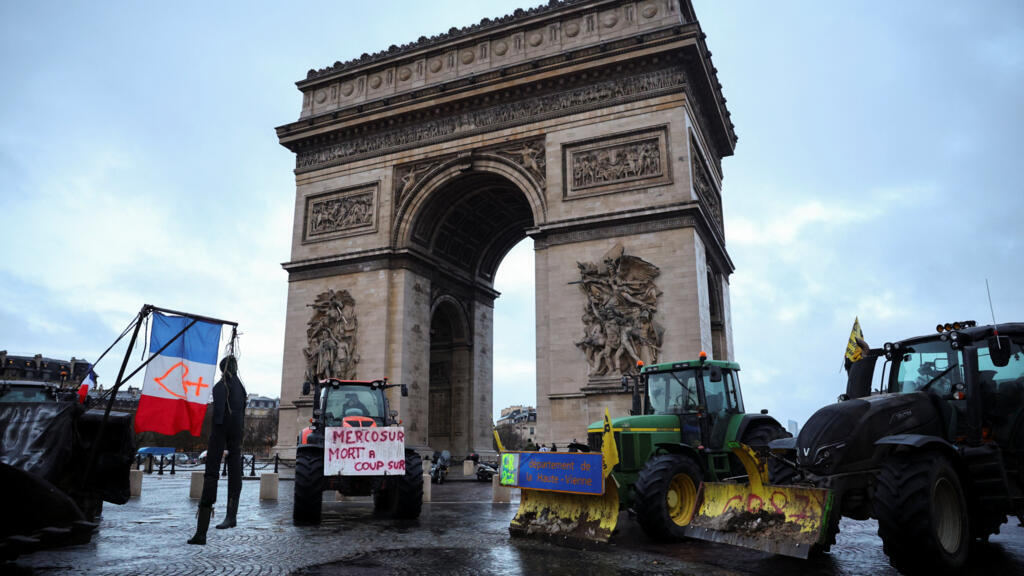
Paris, France – January 8, 2026 – Amid rising tensions in the French capital, angry farmers defied a government ban on Thursday to blockade key roads leading into Paris and surround several city landmarks, protesting the European Union's impending Mercosur trade agreement with South American nations. Concurrently, a strike by Louvre Museum staff over deteriorating work conditions has left the world-renowned institution only partially operational, marking a week of labor unrest that underscores broader frustrations in France.
The farmers' action, which began early Thursday, represents a direct challenge to President Emmanuel Macron's administration and the EU's trade policies. According to reports, hundreds of tractors converged on Paris despite prohibitions from authorities, effectively paralyzing access routes and encircling prominent sites. The protests target the Mercosur deal, provisionally agreed upon in 2019 after two decades of negotiations but facing renewed scrutiny as the EU prepares to formalize it as early as Friday. French agricultural groups argue the pact would flood the European market with low-cost imports from Brazil, Argentina, Paraguay, and Uruguay, threatening local dairy, beef, and poultry sectors with unfair competition due to lax environmental and sanitary standards in the Mercosur bloc.
"This is an existential threat to European agriculture," echoed sentiments circulating on social media platforms like X, where posts described large convoys of farmers heading to the capital and criticized police efforts to halt them. While such online commentary reflects strong public sympathy for the protesters—portrayed as a resilient force against perceived governmental overreach—it remains inconclusive without independent verification.
French authorities mobilized significant police resources in response, but the blockades persisted, disrupting traffic and access to the city center. The action follows a pattern of farmer mobilizations in recent years, including widespread tractor blockades in 2024 against EU pesticide restrictions and unfair trade practices. Those protests saw similar tactics, with demonstrators dumping manure outside government buildings and blocking major highways. Today's events amplify those grievances, coinciding with the Mercosur timeline and highlighting France's pivotal role as the EU's largest agricultural producer.
Louvre Staff Strike Disrupts Iconic Museum
Parallel to the farmers' demonstrations, labor unrest at the Louvre entered its fourth day on Thursday. Staff initiated the strike on Monday, January 5, citing poor working conditions, staffing shortages, and burnout exacerbated by record visitor numbers post-pandemic. The museum, which welcomed over 9 million visitors in 2023 alone, announced partial closures, with many galleries inaccessible and timed entry slots severely limited.
Union representatives have demanded better pay, reduced hours, and improved security amid rising incidents of theft and vandalism. "We cannot continue like this; our conditions are untenable," a spokesperson for the CGT union, which represents many Louvre employees, stated in prior coverage of similar actions. The strike echoes a series of labor disputes at French cultural institutions, including 2023 walkouts at the Pompidou Center and Versailles over budget cuts. With the Louvre operating on a reduced schedule—open from 9 a.m. to 6 p.m. but with significant sections shuttered—tourists and locals alike have faced long queues and incomplete experiences.
The French culture ministry has engaged in talks but reported limited progress, offering minor concessions on overtime pay that unions dismissed as insufficient. This action occurs against a backdrop of chronic underfunding in France's public sector, where inflation and energy costs have strained resources since 2022.
Broader Context of French Discontent
France has a long history of street protests and strikes as mechanisms for social and economic change, from the 1995 public sector walkouts to the 2018-2019 Yellow Vest movement against fuel taxes and inequality. Recent years have seen agriculture and labor sectors particularly vocal: farmers staged nationwide blockades in January 2024 over import pressures and subsidy cuts, while cultural workers have repeatedly halted operations to protest austerity.
The Mercosur deal adds a transnational dimension. Negotiations, launched in 1999, stalled multiple times due to environmental concerns—Brazil's Amazon deforestation drew sharp EU criticism—and agricultural protections. France has been the most vocal opponent within the EU, with Macron vowing in 2023 to veto the agreement unless "mirror clauses" ensure equivalent standards. Yet, with Germany and others favoring ratification for industrial gains, Paris's leverage appears limited. Protests like Thursday's aim to pressure Brussels and the French government ahead of the expected signing.
Posts on X captured the charged atmosphere, with users decrying 25 years of "failed" talks and portraying farmers as defenders of European food sovereignty. Police presence remains heavy, raising fears of clashes, though no major incidents were reported by midday Thursday.
Outlook Amid Mounting Pressures
As Paris grapples with these dual disruptions, the economic toll mounts: farmers' blockades threaten supply chains for fresh produce, while the Louvre strike impacts tourism revenues critical to the city's €16 billion annual sector. Government officials have urged dialogue, with Agriculture Minister Marc Fesneau scheduled for emergency meetings. However, with the Mercosur deadline looming, resolution appears elusive.
The convergence of these events signals deepening societal rifts in France, where economic insecurity, trade globalization, and public service strains fuel unrest. Whether concessions emerge or escalations follow will test Macron's leadership ahead of the 2027 presidential election cycle.
(Word count: 748)
Track this story live
Original Sources
- •
Editorial process: This article was synthesized from the original sources cited above using The World Now's AI editorial system, with byline accountability from our editorial team. We grade every story for source grounding, factual coherence, and on-topic match before publication. Read more about our editorial standards and contributors. Spot something inaccurate? Let us know.
Last updated: March 7, 2026