
France Emerges as Diplomatic Hub Amid Tense Geopolitical Maneuvers
Paris, France – France has solidified its role as a key mediator in global conflicts this week, hosting sensitive talks between Syrian and Israeli delegations while President Emmanuel Macron weighs in on Venezuela's leadership transition and pushes for renewed Ukraine peace negotiations. These developments, unfolding since January 5, 2026, underscore Paris's growing influence in bridging divides among adversaries, even as they spark debates over sovereignty and international norms.
On January 5, a Syrian delegation engaged in meetings with Israeli officials in Paris, a rare direct encounter that has ignited concerns about potential breaches of Syrian sovereignty. The closed-door discussions, described by observers as exploratory, come amid ongoing regional tensions in the Middle East, including Israel's military operations in Syria and the broader instability following the fall of the Assad regime in late 2024. While details remain scarce, the venue in the French capital highlights France's tradition of discreet diplomacy, reminiscent of its hosting of the 2015 Paris Climate Agreement and earlier Middle East shuttle talks. Critics in Damascus and allied circles have raised alarms, labeling the meeting an infringement on Syria's territorial integrity, though no official Syrian government statement has confirmed the delegation's composition or agenda.
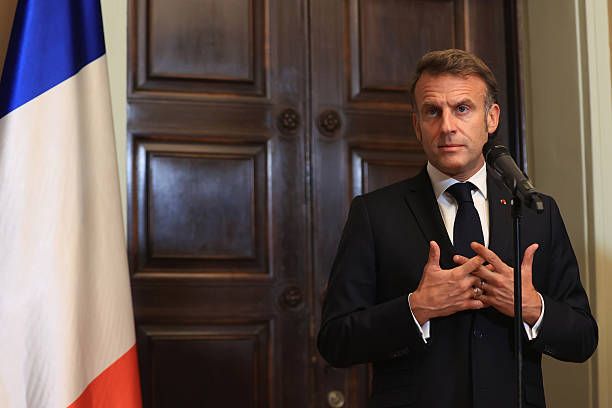
In parallel, President Macron publicly critiqued U.S. tactics in the ouster of Venezuelan President Nicolás Maduro on the same day, calling the methods employed "questionable" while praising Maduro's departure as a "positive step" for Venezuela's future. Speaking at a press event, Macron emphasized the need for democratic transitions without external coercion, aligning with France's longstanding advocacy for multilateralism. This stance reflects Europe's broader unease with unilateral U.S. interventions in Latin America, echoing Macron's previous criticisms of American foreign policy. Venezuela's political crisis, exacerbated by economic collapse and U.S. sanctions since 2017, saw Maduro's exit amid mass protests and military defections, paving the way for interim governance talks.
These events coincide with intensified French involvement in the Ukraine conflict. French President Macron has signaled plans to engage Russian President Vladimir Putin "in the coming weeks" to revive peace efforts, as reported by the Kyiv Independent on January 7. This follows stalled negotiations and renewed battlefield escalations, with Macron positioning France as a neutral broker alongside European allies. Concurrently, Ukrainian President Volodymyr Zelenskyy highlighted progress in Paris peace talks, noting that Ukrainian and U.S. teams are addressing the "most difficult issue" – likely territorial concessions and security guarantees – according to a GDELT-sourced Yahoo News report from January 7. Zelenskyy described the discussions as tackling core sticking points, including Russia's demands for neutrality in Ukraine's NATO aspirations.
Background: France's Diplomatic Tradition
France's centrality in these geopolitical flashpoints draws from its historical role as a convener of international summits. Under Macron, who has pursued "strategic autonomy" for Europe since 2017, Paris has hosted pivotal dialogues on Iran, Libya, and now Syria-Israel. The Élysée Palace's discreet channels have facilitated breakthroughs, such as the 2023 Horn of Africa mediation. On Ukraine, France co-chairs the Normandy Format alongside Germany, though its influence waned after Russia's 2022 invasion. Recent Paris talks revive this framework, bolstered by U.S. involvement post-2024 elections.
The Syrian-Israeli meeting fits into post-Assad realignments. Israel's repeated strikes on Syrian targets since December 2024 aim to neutralize Iranian proxies, while Syria's transitional authorities seek normalization to secure reconstruction aid. Hosting in Paris allows plausible deniability for both sides, avoiding direct bilateral recognition.
Macron's Venezuela remarks align with EU policy, which imposed sanctions on Maduro's regime in 2017 but prioritized dialogue via the Lima Group. Maduro's departure – confirmed after weeks of uncertainty – opens avenues for elections, though risks of instability persist amid hyperinflation and migration crises affecting 7 million Venezuelans.
Outlook: Balancing Act for Paris
As these threads converge, France navigates a delicate balance. Macron's outreach to Putin could yield ceasefires in Ukraine, where over 500,000 casualties have been reported since 2022, per UN estimates. Yet, success hinges on U.S.-European alignment amid transatlantic strains over Venezuela.
The Syrian-Israeli talks risk escalation if perceived as undermining Arab unity, while Macron's U.S. critique may strain NATO ties. Analysts watch Paris closely: its ability to host rivals without fanfare positions it uniquely in a multipolar world. No further meetings are confirmed, but French diplomats signal ongoing "quiet facilitation."
(Word count: 612)