
Floods Destroy Over 200 Acres of Rice Fields in Ghana's Weta Community
Devastation in Ghana's Weta Rice Community
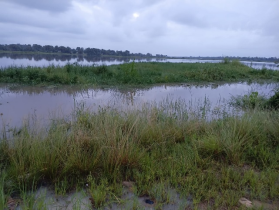
The Weta Rice Farming Community in the Ketu North Municipality of the Volta Region, one of Ghana's largest rice-producing areas, has suffered a devastating disaster following torrential rains that caused widespread flooding across the farming landscape.[1] The community, which cultivates approximately 800 hectares of rice farmland, has experienced severe destruction.[1] More than 200 acres of cultivated rice fields have been submerged and destroyed, resulting in significant losses for hundreds of smallholder farmers who had already invested heavily in land preparation, planting, and crop management.[1] The flooding has also caused extensive damage to critical infrastructure.[1] Roads and access paths leading to the farms have been washed away, making it extremely difficult for farmers to reach their fields or transport agricultural inputs and produce.[1] In addition, warehouses and Sections 2, 4, and 5 of the farming area have been severely damaged, further worsening the situation.[1] The disaster has affected over 1,024 households, with an estimated 5,000 people directly impacted.[1] Many farming families have lost their primary source of income and now face uncertainty regarding their livelihoods, food security, and economic well-being.[1] Speaking on the situation, Yohaness Fiagah, the focal person for the Peasant Farmers Association of Ghana (PFAG), Ketu North Municipality, described the disaster as one of the worst to hit the Weta rice farming community in recent years.[1] "This disaster has left our farmers devastated. Many have invested their life savings into this farming season, only to see their rice fields destroyed within hours. The destruction of our roads, farm access routes, and warehouses has made the situation even more critical."[1] "We urgently appeal to the Government of Ghana, the Ministry of Food and Agriculture, NADMO, development partners, and all well-meaning organisations to come to the aid of the affected farmers. Immediate support is needed to restore livelihoods, rehabilitate damaged infrastructure, and help farmers return to production as quickly as possible," he said.[1]
Calls for Prevention Over Response in Akwa Ibom
As devastating floods expose glaring gaps in preparedness, a youth coalition has called on the Akwa Ibom government to transition from reactive disaster response to a robust, risk-based management framework.[2] The appeal follows widespread concerns over the lack of flood-control measures, despite early warnings and billions of naira allocated in the state budget.[2] As communities across Akwa Ibom State recover from flooding that destroyed homes, businesses, and farmlands, a youth-led disaster management coalition has urged the state government to abandon its largely reactive approach.[2] In its place, the group advocates for an immediate adoption of a comprehensive disaster risk management framework designed to mitigate future emergencies.[2] The coalition’s demand arises from growing scrutiny of the state’s disaster readiness, particularly given early flood warnings from the Nigerian Meteorological Agency (NiMet) and the significant funds budgeted for flood mitigation.[2] In a statement signed on Friday by its Chairperson, Margaret Jameson, and Secretary, Enobong Ekanem, the Akwa Ibom State Youth-Led Disaster Risk Management and Emergency Response Committee stated that the recent flooding highlights the limitations of relying primarily on emergency response after a crisis occurs.[2] “The recurring nature of flooding in Akwa Ibom State demonstrates that disasters can no longer be managed solely through emergency response after they occur,” the committee stated.[2] “There is an urgent need to shift from a reactive approach to a proactive, risk-informed, and resilience-focused disaster management system.”[2] The committee noted that climate change, rapid urbanisation, inadequate drainage infrastructure, indiscriminate waste disposal, and development in flood-prone areas continue to heighten the vulnerability of communities statewide.[2] It called on Governor Umo Eno’s administration to urgently operationalise the Akwa Ibom State Disaster Risk Management Framework, which was developed through a participatory process involving young professionals and disaster risk advocates.[2] The framework, submitted to the Office of the Deputy Governor, Akon Eyakenyi, in August 2025, provides a roadmap for strengthening disaster governance, improving early warning systems, and integrating climate adaptation into development.[2]

Flooding submerges over 200 acres of rice fields in Ghana's Weta community. — Source: premiumtimes
Renewed Flood Threat Along Texas' Guadalupe River
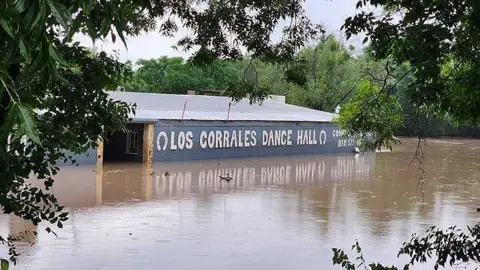
At least one person has died in flooding across central Texas, the same area that saw more than 130 deaths in flash floods last summer.[3] "Large and deadly" flooding from the Guadalupe River is expected to ravage the region, following days of torrential rain, the National Weather Service in San Antonio reported.[3] Last year's flash floods originated from the same river.[3] Early Thursday morning, emergency officials were encouraging residents in the area to evacuate.[3] More than 130 people died in last summer's floods, including 25 children and two counsellors at Camp Mystic, an all-girls camp near Kerrville, Texas, located along the river.[3] In a Thursday afternoon update, Texas Governor Greg Abbott announced at least one person has died in the flooding.[3] "We will be doing everything possible to save human life," Abbott said in an update posted to social media.[3] He added about 80 rescues have been made, and the person who was killed was not a camper in the region.[3] The "rapidly rising rivers" will continue to rise throughout the day, the governor said.[3] The National Weather Service has offered constant updates, noting the urgent threat and urging for people to get to safety.[3] "CATASTROPHIC flooding is occurring. Move to higher ground now! Guadalupe River is rapidly rising and will continue!" the National Weather Service in San Antonio posted on X.[3] The Guadalupe River has already risen 32ft (975cm) in a four-hour span, according to the Texas Tribune.[3] The flooding has impacted several counties in South Texas, including Uvalde, Kerr and Kendall.[3] Floodwaters engulfed the Rodeo Los Corrales Dance Hall in Comfort, Texas.[3] The same area in Texas County Hill experienced deadly flooding over the Fourth of July holiday last year, when more than 130 people lost their lives.[3] At Camp Mystic, a girls' Christian summer camp, tragedy struck as the Guadalupe River rose 26ft in about 45 minutes.[3] A total of 25 campers lost their lives after being swept away by forceful currents.[3] Camp Mystic decided not to reopen this year and filed for bankruptcy earlier this summer.[3]
Nigeria's Nationwide Flood Alerts
Fourteen of Nigeria’s 36 states were put on flood alert on Wednesday as authorities warned of the risk of moderate flooding as the rainy season intensifies.[5] The country’s Hydrological Services Agency urged residents in high risk zones along major river channels to relocate, clear drainage channels and avoid crossing flooded roads.[5] It also called on state governments to strengthen emergency warning systems, activate evacuation plans and increase public awareness.[5] The affected states include Borno, Edo, Niger, Lagos and Plateau.[5] Nigeria’s rainy season usually lasts for about six months, starting in March and intensifying from mid-May, particularly in the country’s north.[5] Flooding happens almost every year but experts say climate change is leading to intense and unpredictable rainfall, overwhelming drainage infrastructure and the land’s capacity to absorb water.[5]
Flooding submerges over 200 acres of rice fields in Ghana's Weta community. — Source: bbc
Humanitarian Risks in Chad
In 2026, Chad is threatened at the same time by risks of flooding and drought.[4] More than 60,000 people have been forced to leave their homes at Lac due to military operations decreed by the government.[4] The results of the harmonised framework analysis of May estimate more than 3.18 million the number of people in food insecurity between June and August.[4]
Broader Patterns and Local Responses
The Weta Rice Farming Community in the Ketu North Municipality of the Volta Region has experienced severe destruction from torrential rains that caused widespread flooding across the farming landscape.[1] More than 200 acres of cultivated rice fields have been submerged and destroyed.[1] The disaster has affected over 1,024 households, with an estimated 5,000 people directly impacted.[1] As communities across Akwa Ibom State recover from flooding that destroyed homes, businesses, and farmlands, a youth-led disaster management coalition has urged the state government to abandon its largely reactive approach.[2] The committee noted that climate change, rapid urbanisation, inadequate drainage infrastructure, indiscriminate waste disposal, and development in flood-prone areas continue to heighten the vulnerability of communities statewide.[2] Fourteen of Nigeria’s 36 states were put on flood alert on Wednesday as authorities warned of the risk of moderate flooding as the rainy season intensifies.[5] The country’s Hydrological Services Agency urged residents in high risk zones along major river channels to relocate, clear drainage channels and avoid crossing flooded roads.[5] Flooding happens almost every year but experts say climate change is leading to intense and unpredictable rainfall, overwhelming drainage infrastructure and the land’s capacity to absorb water.[5]
What to watch next: Authorities in the 14 alerted Nigerian states may activate evacuation plans and strengthen early warning systems while the Akwa Ibom youth coalition continues pressing for operationalisation of the disaster risk management framework submitted in August 2025.