
Finnish Appeals Court Reopens Landmark War Crimes Case Against Russian National Amid Heightened Regional Tensions
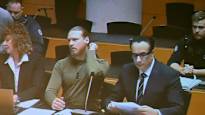
Helsinki, Finland – A Helsinki appeals court has begun proceedings in the case of Voislav Torden, a Russian national previously sentenced to life imprisonment for brutal war crimes committed over 11 years ago, marking a significant moment in Finland's ongoing commitment to international justice.
The retrial, which commenced this week, revisits convictions handed down in a lower court for acts including torture and inhumane treatment of prisoners. Torden, identified as a fighter aligned with Russian forces, was originally sentenced to life in prison following a district court ruling. The case stems from events dating back more than a decade, highlighting Finland's role as one of the few European nations to prosecute such offenses from distant conflicts.
According to reports from Yle, Finland's public broadcaster, the Helsinki Court of Appeal is now examining the evidence anew. This development comes as Finland navigates complex geopolitical dynamics with Russia, its eastern neighbor, exacerbated by Moscow's full-scale invasion of Ukraine in 2022.
Details of the Case
Voislav Torden's conviction centers on atrocities allegedly perpetrated during armed conflicts involving Russian-backed forces. The original trial established that Torden participated in the severe mistreatment of detainees, actions classified under international law as war crimes. Specific details from the proceedings include documented instances of physical abuse and psychological torment, though the appeals process will scrutinize the legal foundations of the guilty verdict.
The case first gained prominence around 2014 when Finnish authorities, acting on international warrants and evidence gathered from victims and witnesses, brought Torden to trial. Finland's decision to pursue the matter was notable, as it involved prosecuting crimes committed outside its borders and predating its recent NATO accession.
Yle's coverage emphasizes the rarity of such long-standing cases resurfacing, underscoring the appeals court's role in ensuring procedural fairness. No specific timeline for a verdict has been announced, but legal experts anticipate a thorough review given the life sentence's severity.
Broader Geopolitical Context
Finland's prosecution of Torden occurs against a backdrop of strained relations with Russia. Since Russia's annexation of Crimea in 2014 and the escalation of hostilities in eastern Ukraine, Finland has bolstered its defense posture. The country, historically neutral, applied for and joined NATO in April 2023 alongside Sweden, prompted by security concerns over Russian aggression.
This NATO membership has transformed Finland's 1,340-kilometer border with Russia into a frontline in the Western alliance's eastern flank. Helsinki has faced hybrid threats, including GPS jamming, cyberattacks, and a migrant surge at the border in late 2023, leading to a full closure of border crossings in December of that year.
In the realm of international justice, Finland has emerged as a leader. It became the first Western nation to convict Russian soldiers of war crimes related to the Ukraine conflict, with sentences issued in 2024 for attacks on civilian infrastructure. The Torden case, though rooted in earlier events—likely tied to the 2008 Russo-Georgian War where Chechen militants fought alongside Russian forces—reinforces this stance. During that five-day war, Russian troops and allied fighters overran Georgian positions, leading to allegations of detainee abuses documented by human rights groups like Human Rights Watch.
Finnish courts have jurisdiction under universal principles for grave international crimes, a framework strengthened by the country's ratification of the Rome Statute of the International Criminal Court in 2000. Prosecutor Jukka Rautio, involved in similar cases, has previously stated that such trials serve as deterrents, though Russia dismisses them as politically motivated.
Finland's Role in War Crimes Accountability
Finland's judicial activism extends beyond Torden. In 2024, a district court in Vaasa sentenced two Russian soldiers to probation for shelling a Ukrainian school, a precedent-setting ruling. These efforts align with European Union initiatives to document and prosecute Russian war crimes, with the EU allocating funds for investigations.
Public sentiment in Finland remains vigilant. Polls from 2025 show over 80% support for NATO membership, with Russia viewed as the primary threat. President Alexander Stubb, elected in 2024, has advocated for robust deterrence, including increased defense spending to meet NATO's 2% GDP target by 2026.
Russia has not commented directly on the Torden appeal, but its embassy in Helsinki has historically criticized Finnish courts for bias. Torden's defense may argue procedural errors or lack of direct evidence, common in appeals of life sentences.
Outlook
The Helsinki appeals court's decision will test Finland's legal resilience amid geopolitical pressures. An upheld conviction would affirm Finland's dedication to accountability, potentially encouraging other nations to pursue aging war crimes dossiers. Conversely, an acquittal or reduced sentence could invite criticism from human rights advocates.
As proceedings unfold, the case symbolizes Finland's evolution from neutral observer to active participant in global security and justice mechanisms. With NATO exercises like Steadfast Defender ongoing in the region, Helsinki's actions underscore its strategic pivot eastward.
(Word count: 612)






