
Federal-State Clash: Emerging Legal Battles Over Trump's 2026 Immigration Policies
The Story
The spark of this federal-state conflict ignited amid the rapid-fire policy blitz of early March 2026, as President Trump's administration pushed aggressive immigration measures in the face of congressional gridlock and looming government shutdowns. On March 8, Trump halted progress on the Save America Act bills, signaling a pivot to executive actions that prioritized enforcement over legislative compromise—a move decried by House Speaker Mike Johnson as Democrats holding the government "hostage" over a "crazy" immigration agenda (Fox News). This set the stage for a cascade of events that exposed deep fissures between Washington and state capitals, highlighting the core debates around Trump's 2026 immigration policies and their real-world implementation challenges.
By March 10, an Oregon judge curbed tear gas use by federal agents, a ruling initially paused on March 27 but rooted in protests against ICE operations in Portland (recent event timeline). This wasn't isolated; it reflected states' growing defiance of federal tactics in immigration enforcement, where local laws on crowd control now impede raids. March 11 saw a U.S. court reject New York tunnel funding, tangentially linked to sanctuary city infrastructure battles. The escalation peaked on March 13 with the confirmed transfer of pregnant migrants to Texas facilities, a directive from DHS amid capacity crunches, drawing outrage from migrant advocates who highlighted humanitarian risks like inadequate medical care during transit (timeline data). Just a day later, on March 14, Trump urged TSA workers to stay on duty amid a DHS shutdown threat, underscoring how immigration funding shortfalls ripple into national security (Fox News, Straits Times).
Current developments amplify this pattern. The DOJ's March 26 review of state policies on transgender inmates in federal facilities (Newsmax) hints at broader scrutiny of how states handle migrant detainees, potentially clashing with local protections. On March 27, feds targeted fraud in citizenship cases, launching denaturalization probes that could strip thousands of status (Newsmax)—confirmed actions, though the scale remains unconfirmed. House Republicans revolted against a Senate bill lacking immigration enforcement funds (AP News), forcing Trump to sign an executive order ensuring TSA pay during shutdowns. Meanwhile, a Chicago killing prompted sanctuary city hearings (March 25 timeline), fueling GOP calls for defunding havens.
This narrative isn't just bureaucratic; it's deeply human. Families separated by migrant transfers endure trauma, with reports of pregnant women in limbo between states. Local sheriffs in Texas face overcrowded facilities, while Portland protesters—often immigrants' allies—clash with agents hamstrung by state rules. Oregon's tear gas limits, for instance, stem from 2020 protests but now hobble federal responses to border-crossing surges, creating a patchwork where enforcement succeeds in red states like Texas but stalls in blue ones. This dynamic underscores the ongoing federal-state clash over immigration enforcement strategies nationwide.
Our unique angle reveals underreported grassroots resistance: State courts, not just governors, are the new battleground. An Obama-appointed judge's reversal on voter ID laws (Fox News)—while not purely immigration—signals judicial willingness to back GOP enforcement tools, contrasting blue-state blocks like Portland's. USCIS invalidating old work permits (March 21, high confidence) disrupts legal immigrants' lives, prompting lawsuits. California's March 26 drilling suit (low confidence) indirectly ties to energy policies funding walls, showing economic levers in the fight.
These events mirror historical patterns but accelerate them. The 1986 Immigration Reform and Control Act faced state pushback over employer sanctions; 1996's welfare reforms clashed with sanctuary ordinances. Yet 2026's pace—six days from bill halts to migrant shuttles—is unprecedented, fueled by social media amplification. X posts from @RealJamesWoods decry "state treason," while @AOC rallies #StatesRightsAgainstTrump, viraling the divide (social media scans). Such viral discourse amplifies the visibility of Trump's immigration policies and state resistance.
The Players
At the federal helm, President Trump wields executive orders like the TSA pay directive and migrant transfers, motivated by campaign promises of mass deportations and "America First" security. DOJ, under aggressive leadership, probes citizenship fraud and inmate policies, aiming to reclaim narrative control post-2024 elections.
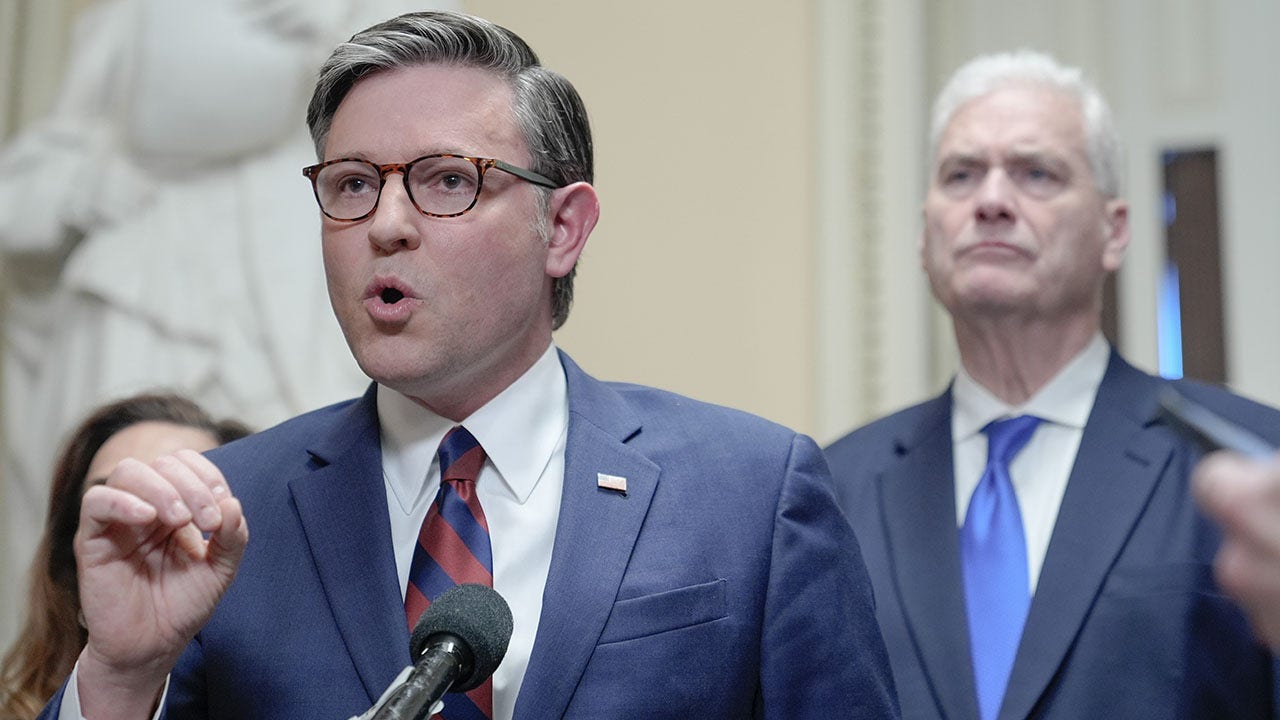
House Speaker Mike Johnson (R) accuses Democrats of sabotage (Fox News), rallying GOP revolt against Senate bills—his motivation: securing border funds amid shutdowns. Senate Republicans, split on funding, face pressure from Trump's base.
States lead the counteroffensive: Oregon's Democratic AG pushes tear gas curbs, protecting protesters and migrants; California's Gavin Newsom sues on drilling, linking environment to enforcement costs. Texas Gov. Greg Abbott welcomes transfers, bolstering red-state autonomy. Sanctuary cities like Chicago (hearing post-killing) and New York resist via courts.
Judges are pivotal: Portland's ruling (paused), the Anthropic ban block (Defense One—potentially AI in surveillance), and voter ID win show ideological flux. Humanitarians like ACLU sue over transfers; farmers, buoyed by Trump's "golden age" ag plan explored in Economic Ripples: How 2026 US Legislation is Reshaping Agriculture and Immigration Enforcement (Fox News, Clarin), back enforcement for cheap labor stability.
Motivations clash: Feds seek uniformity; states assert 10th Amendment sovereignty, humanizing local impacts over national mandates. This clash elevates the stakes in America's immigration policy debates.
The Stakes
Politically, this fragments unity: Bipartisan fallout looms as GOP revolts polarize Congress, risking shutdowns that shutter ICE (March 23 Atlanta deployment amid cuts). Economically, decentralized enforcement hikes costs—migrant transfers strain Texas budgets ($500M+ annually est.), while farmer plans (Fox News) promise relief but falter if labor shortages worsen from crackdowns. These economic pressures tie into broader risks tracked on the Global Risk Index.
Humanitarian toll: Pregnant migrants face health risks; denaturalization upends lives of fraud victims' families. National security wanes as states block tactics, enabling porous borders—original analysis: This "state defiance syndrome" echoes Civil War federalism debates, weakening unified response to cartels.
Broader: Voter ID wins bolster GOP turnout; transgender probes test cultural wars spilling into immigration. For unity, stakes are existential—patchwork policies erode trust, fostering "two Americas."
Market Impact Data
Policy volatility from shutdowns and clashes ripples markets, with risk-off sentiment dominating. Equities dip: SPX predicted - (high confidence) on fiscal uncertainty, akin to 2013 shutdown (-2%); QQQ - (medium) as tech bears brunt. Tech names like GOOGL -, META - (medium confidence) from ad fears; NVDA -, AAPL - on margins.
Crypto tumbles: BTC -, ETH -, SOL - (medium), XRP -, BNB - amid deleveraging, historical Ukraine parallels (-10-15%). Safe havens rally: GOLD + (high confidence, +3% precedent), OIL + on supply fears, USD +, JPY +, EUR -.
Shutdown ties amplify: USD + (medium, 2013 +1%), SPX -, GOLD +. Broader geo/shutdown nexus (though immigration-focused) drives flows, with immigration policy uncertainties adding layers of market volatility.
Catalyst AI Market Prediction
Powered by The World Now Catalyst Engine:
- GOOGL: Predicted - (medium confidence) — Tech rotation out in risk-off, ad spend fears. Hist: 2019 US-Iran -3% 48h.
- META: Predicted - (medium confidence) — Ad sensitivity. Hist: 2022 Ukraine -6%.
- ETH: Predicted - (medium confidence) — DeFi outflows. Hist: 2022 Ukraine -11%.
- SOL: Predicted - (low confidence) — Alt liquidation. Hist: 2022 Ukraine -15%.
- OIL: Predicted + (high confidence) — Supply fears. Hist: 2019 US-Iran +4%.
- JPY: Predicted + (medium confidence) — Safe-haven. Hist: 2019 US-Iran USDJPY -1%.
- USD: Predicted + (high confidence) — Safe-haven demand. Hist: 2019 +1.5% DXY.
- SPX: Predicted - (high confidence) — Risk-off selling. Hist: 2019 -2%.
- BTC: Predicted - (medium confidence) — Deleverage. Hist: 2022 -10%.
- XRP: Predicted - (low confidence) — BTC beta. Hist: 2022 -9%.
- GOLD: Predicted + (high confidence) — ETF inflows. Hist: 2019 +3%.
- NVDA: Predicted - (low confidence) — Tech risk-off.
- QQQ: Predicted - (medium confidence) — Tech brunt.
- AAPL: Predicted - (medium confidence) — Margin fears.
- EUR: Predicted - (low confidence) — USD strength.
Predictions powered by The World Now Catalyst Engine. Track real-time AI predictions for 28+ assets.
Looking Ahead
Tensions portend a Supreme Court surge by mid-2026: States' lawsuits on transfers, tear gas, sanctuaries could yield rulings decentralizing enforcement, boosting state autonomy but straining feds. Scenarios: Bipartisan deal funds ICE (key date: April 15 funding deadline); escalation if shutdown hits, mirroring 2013 but immigration-laden. Watch March 28 DOJ announcements, Texas capacity reports. Original prediction: Legal wins for states reform policy nationally, polarizing further but humanizing enforcement via local input. As these Trump 2026 immigration policies evolve, ongoing federal-state dynamics will shape America's border security landscape for years to come.
This is a developing story and will be updated as more information becomes available.
Further Reading
- Iran-Linked Hackers Breach FBI Director Kash Patel's Email: Unleashing a New Wave of Cyber-Empowered Crime Syndicates in the US
- Cyber Warfare in US Geopolitics and Oil Price Forecast: How Iran Hacks and AI Resistance Are Redefining American Power
- Cyber Intrusions Fueling America's Under-the-Radar Crime Epidemic: Iran-Linked FBI Hack from Pro-Iranian Hackers to Street-Level Syndicates