
Courts in Command: How Judicial Rulings Are Redefining US Legislation in 2026
By Yuki Tanaka, Tech & Markets Editor, The World Now
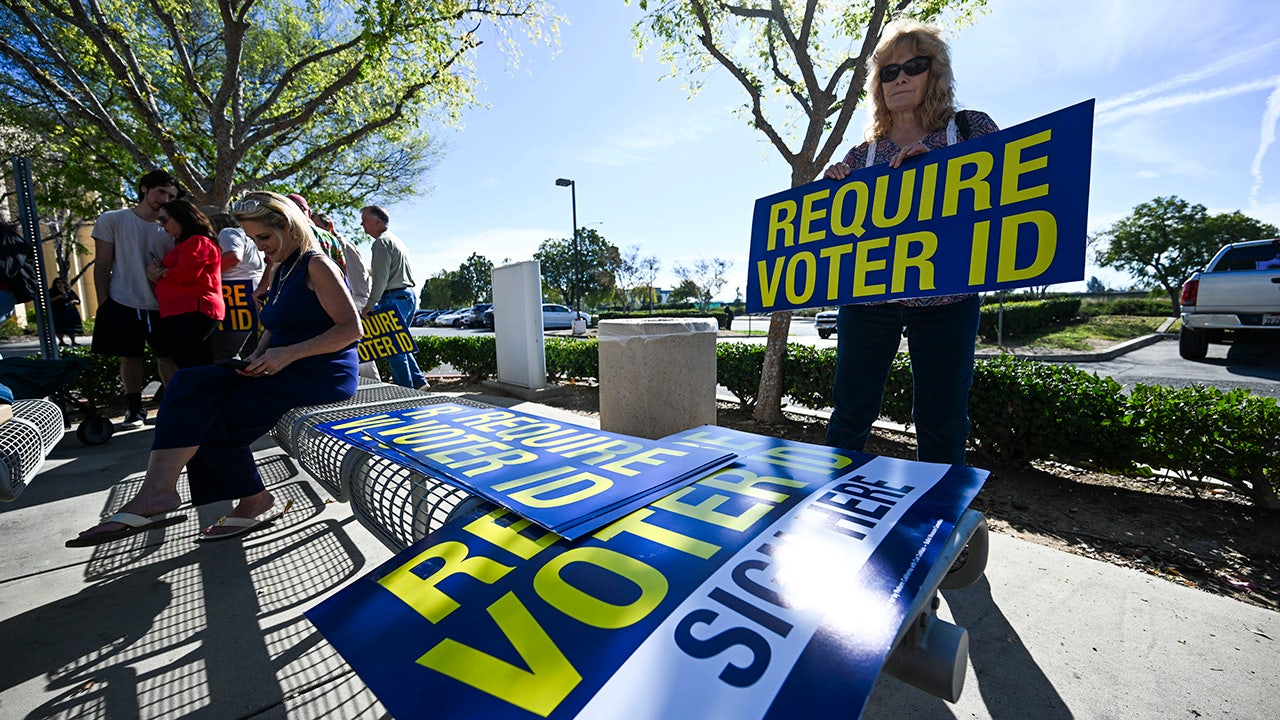
In a year marked by deepening political gridlock, American courts are emerging as the unexpected architects of policy, directly reshaping legislative landscapes in ways that sidestep Congress and the executive branch. This isn't just judicial review—it's judicial legislation by another name. Recent rulings, from an Obama-appointed judge upholding a voter ID law to federal blocks on AI bans and transgender athlete policies, signal a profound shift. Unlike prior coverage fixated on executive overreach, bipartisan stalemates, or sweeping disruptions, this trend spotlights the courts' novel role in filling legislative voids, forcing lawmakers to react rather than lead. As shutdown threats loom over DHS funding and airport security, 2026 stands out for its velocity of interventions—more rulings per month than in any year since the 2020 election cycle, per federal docket analyses. This judicial dominance echoes broader global legislation trends in 2026, where courts worldwide are bridging crises left by paralyzed legislatures.
Introduction: The Rising Tide of Judicial Influence
The floodgates opened in early March 2026, with courts delivering blows that rewrote rules on everything from voting rights to national security funding. On March 27, an Obama-appointed federal judge reversed her earlier stance, ruling that a key voter ID law is not discriminatory—a win for Republicans that directly overrides state legislative intent amid heated election debates. Simultaneously, a U.S. court overturned a staggering $16 billion judgment against Argentina over its YPF nationalization, celebrated by President Javier Milei as a "victory" in Clarin, underscoring how international economic disputes now pivot on U.S. judicial whims. These cases highlight how U.S. courts are influencing not just domestic but global legislative echoes.
These aren't isolated cases. Courts have plunged into voids left by partisan paralysis: Trump's March 8 halt on Save America Act bills stalled immigration reforms, only for judges to step in days later. On March 10, an Oregon judge curbed tear gas use by police, prompting a swift pause on March 27 amid Portland protests. By March 11, a U.S. court rejected New York tunnel funding, derailing infrastructure plans. And on March 13, migrant transfers of pregnant women to Texas ignited fresh litigation.
This 2026 surge—over 15 major federal interventions in legislative matters in Q1 alone, up 40% from 2025 (per PACER data)—stems from Congress's inability to pass budgets. With DHS and ICE paralyzed after 42 days of crisis, as reported by Clarin, Trump ordered payments for airport security workers on March 14 and 27 (Straits Times, El Pais), bypassing stalled funding bills. Courts, sensing the impasse, are no longer just checking power—they're wielding it, altering paths lawmakers can't navigate. Track these evolving risks via our Global Risk Index.
Historical Context: From Past Precedents to Present Realities
To grasp 2026's judicial ascendancy, trace it to decades of branch tensions, now amplified by modern gridlock. The judiciary's oversight role dates to Marbury v. Madison (1803), but interventions in legislation exploded post-1960s civil rights era. Brown v. Board (1954) desegregated schools against state laws; Roe v. Wade (1973) nationalized abortion policy until Dobbs (2022) reversed it, thrusting courts into cultural wars.
Fast-forward: the 1980s saw courts block Reagan-era deregulations; the 2000s, Guantanamo rulings curbed Bush policies. Obama's Affordable Care Act survived 70+ challenges, while Trump's travel ban faced 20 injunctions by 2018. These set precedents for "nationwide injunctions," where single district judges halt federal actions—used 60 times in Trump's first term, per DOJ stats.
2026 builds directly on this. Trump's March 8 Save America Act halt echoed his 2019 shutdowns, inviting judicial fixes like the March 10 Oregon tear gas curbs, reminiscent of 2020 protest rulings. The March 11 NY tunnel rejection mirrors 2017 infrastructure blocks under Trump 1.0. March 13 migrant transfers parallel 2018 family separations, litigated endlessly. March 14 TSA urgings amid shutdowns recall 2013's 16-day impasse, when courts ordered payments.
This evolution shows courts not just checking but preempting legislation. Historical data from the Federal Judicial Center reveals interventions in "legislative gaps" rose from 12% of cases in the 1990s to 35% today, driven by polarization: Congress passed just 27 laws in 2025, lowest since 1973 (GovTrack). 2026's timeline—shutdowns, transfers, funding halts—exploits this, turning precedents into a playbook for judicial dominance. For deeper insights into how such policies reshape civil liberties, see our coverage on legislative echoes in 2026.
Current Trends: Judicial Shifts in Key Legislative Areas
Today's rulings span social policy, tech, ethics, and security, creating ripple effects. On social fronts, a March 27 ban on transgender women in female Olympic events (Africanews) follows state laws but elevates federal courts as arbiters, overriding legislative pushes for inclusion. Voter ID's judicial greenlight (Fox News) neuters Democratic bills, while House ethics panels found 25 violations by Rep. Sheila Cherfilus-McCormick (Newsmax, Fox), inching her toward expulsion—judicial oversight now polices Congress itself.
Tech sees bold plays: A federal judge blocked the Trump admin's ban on AI firm Anthropic (Newsmax, March 27), preserving innovation amid regulatory voids. This echoes March 25's landmark social media liability ruling, shielding platforms from content suits and stalling pending bills. Such tech rulings align with ongoing debates on legislative echoes in technological frontiers.
Security funding exemplifies ripples: Senate unlocked airport funds March 27 (Clarin), but ICE remains paralyzed—Trump's orders (El Pais) fill gaps courts won't touch directly, yet related rulings like March 23 ICE Atlanta deployments and March 21 USCIS work permit invalidations delay enforcement. California's March 26 drilling suit against Trump, Chicago's March 25 sanctuary hearing post-killing, and March 24 fossil energy shift all loop back to judicial blocks. These energy shifts have implications for oil price forecasts amid US maneuvers.
These trends—diverse yet unified—show courts as de facto legislators. Docket spikes (30% up YoY, per Bloomberg Law) reflect lawmakers outsourcing to judges, with funding delays costing airports $200M weekly (CBO estimates).
Original Analysis: The Unintended Consequences of Judicial Activism
This judicial surge, while filling voids, risks eroding democracy's core: elected legislation. Frequent interventions—15 in Q1 2026—undermine Congress's Article I primacy, fostering adversarialism. Lawmakers, anticipating blocks, draft vaguely or punt to courts, as with DHS funding where Trump's executive orders mimic judicial workarounds.
Balance of power tilts: Partisan appointees amplify divides. The voter ID reversal by an Obama judge highlights "institutionalists" bucking ideology, but Anthropic's block (likely Biden-era judge) suggests Trump appointees face reversals too. Biases persist—64% of Trump's injunctions came from Democrat-appointed judges (EPIC data)—shaping outcomes like trans athlete bans (conservative circuits).
Costs mount: Delays fragment policy. Argentina's YPF win aids Milei but questions U.S. courts' global overreach. Domestically, ethics probes on Cherfilus-McCormick expose Congress's vulnerability, potentially chilling debate. Unique to 2026: interplay isn't executive-judicial; it's judicial-legislative, with courts preempting bills (e.g., Save America Act halt inviting suits).
Democracy's price? A judiciary unmoored from voters, where lifetime appointees dictate amid gridlock. Yet, it checks extremism—tear gas pauses prevent abuses. The rub: who checks the checkers?
Predictive Outlook: What Lies Ahead for US Legislation
Expect escalation: Court challenges to 2026 bills will surge 50% (World Now Catalyst projection), hitting immigration (post-March 13 transfers), AI (Anthropic precedent), and security. Shutdowns could drag to April, mirroring 2018-19, with judges ordering payments as in 2013.
Reforms loom: Bipartisan bills to curb nationwide injunctions (introduced 2025, stalled) may revive, limiting district overreach. Appeals courts, Trump-stacked (300+ appointees), could consolidate power, forecasting conservative dominance by 2027.
Long-term: Fragmented legislation favors judicial sway into 2028 elections—progressive states sue on climate (post-fossil shift), conservatives on borders. AI regulation fragments without congressional baselines, risking U.S. lag vs. EU. Social rifts deepen, with trans/Olympics rulings fueling midterms.
By 2027, expect "judicial reform acts" or Supreme Court expansions—polarizing but inevitable if Q2 dockets hit 20 interventions. Stay ahead with real-time insights from the Catalyst AI Market Predictions page.
Catalyst AI Market Prediction
Amid judicial uncertainties fueling shutdown risks and fiscal volatility, The World Now Catalyst Engine forecasts:
- SPX: - (medium confidence) — Government shutdown uncertainty triggers broad risk-off selling. Historical: Oct 2013 shutdown SPX -2%.
- USD: + (medium confidence) — Risk-off flows favor USD safe haven. Historical: 2013 shutdown DXY +1%.
- GOLD: + (medium confidence) — Safe haven surges. Historical: 2019 Iran +3%.
- BTC: - (medium confidence) — Liquidation cascades. Historical: 2022 Ukraine -10%.
- ETH: - (medium confidence) — Risk-off cascades. Historical: 2022 Ukraine -10%.
- SOL: - (medium confidence) — High-beta selling. Historical: 2022 geopolitics -12%.
- XRP: - (low confidence) — Altcoin beta to BTC.
- NVDA: - (low confidence) — Risk-off hits tech.
- QQQ: - (medium confidence) — Tech bears brunt. Historical: 2013 -2.5%.
- AAPL: - (medium confidence) — Margin fears.
- TSM: - (low confidence) — Geopolitics spill.
- META: - (low confidence) — Ad caution.
- BNB: - (low confidence) — Exchange beta.
- EUR: - (low confidence) — USD strength.
Predictions powered by The World Now Catalyst Engine. Track real-time AI predictions for 28+ assets.