
Exploring the Underlying Causes of Civil Unrest in the UK: A Historical Perspective
By Marcus Chen, Senior Political Analyst for The World Now
February 28, 2026
Introduction: The Landscape of Civil Unrest
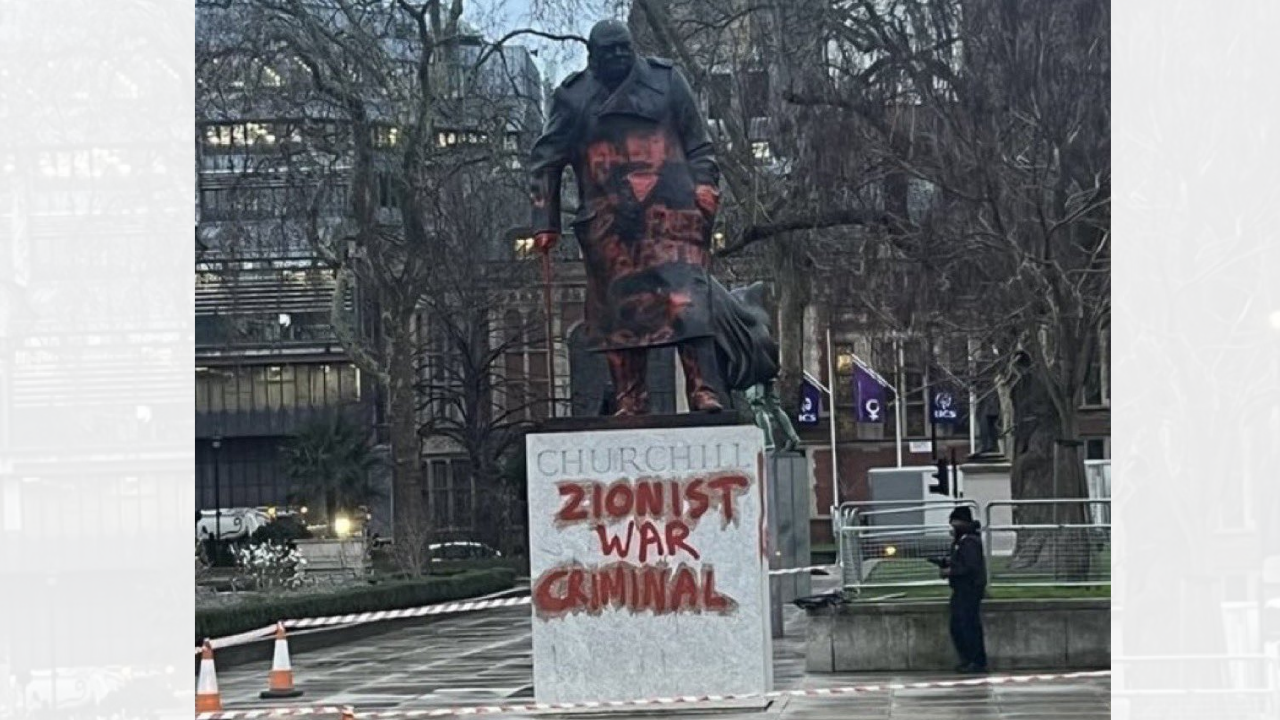
The United Kingdom, long regarded as a bastion of democratic stability, has witnessed a surge in civil unrest in early 2026, marked by protests, vandalism, and legal skirmishes that echo deeper societal fractures. Notable incidents include the vandalism of the Winston Churchill statue in London's Parliament Square, where a man was arrested for scrawling "Free Palestine" across the monument—an act that sparked debates on historical legacies and contemporary grievances. This event, reported on February 25, 2026, by the Times of India, is symptomatic of broader tensions.
These disturbances are not isolated. From hunger strikes leading to hospitalizations on January 2, to widespread demonstrations against U.S. military strikes on Venezuela on January 4, 11, and beyond, the UK has seen a confluence of anti-imperialist fervor, socio-economic discontent, and global solidarity movements. Protests in London and Edinburgh on January 11 demanded Venezuelan President Nicolás Maduro's release, while a Leicester court on January 12 cleared an activist linked to prior riots, signaling judicial leniency amid public pressure.
This article delves into the unique angle of connecting these events to historical patterns of UK social movements. Rather than viewing them as mere outbursts, we examine how socio-economic disparities and shifting public sentiment—amplified by media—mirror past upheavals like the 1990 Poll Tax riots or the 1981 Brixton disturbances. By drawing these parallels, we uncover policy implications for addressing root causes before unrest escalates.
Historical Echoes: Protests and Movements in the UK
The UK's protest history is rich with precedents that illuminate today's tensions. The Peterloo Massacre of 1819, where cavalry charged peaceful reformers demanding voting rights, killed 15 and injured hundreds, galvanizing parliamentary reform. Similarly, the 1936 Jarrow March saw unemployed shipbuilders trek 300 miles to London, highlighting industrial decline—a theme resonant with modern austerity critiques.
Fast-forward to the 20th century: The 1981 Brixton riots erupted amid racial tensions and economic recession, fueled by unemployment rates exceeding 50% in some communities. Margaret Thatcher's policies exacerbated divides, leading to urban unrest in Toxteth and Moss Side. The 1990 Poll Tax riots, protesting a regressive flat-rate levy, culminated in Trafalgar Square battles, toppling Thatcher's government indirectly.
The 2003 anti-Iraq War protests, drawing over a million to London, showcased global solidarity against perceived imperialism—paralleling 2026's Venezuela demonstrations. These historical movements often stemmed from economic inequality and foreign policy dissent, yielding concessions like the Reform Act of 1832 or Blair's Iraq inquiry.
In 2026, the timeline reflects these echoes: A hunger striker's hospitalization on January 2 evokes suffragette force-feedings, symbolizing sacrifice for justice. Protests against U.S. strikes on Venezuela (January 4, 11 in London and Edinburgh) mirror anti-Vietnam or Iraq rallies, framing the UK as a proxy battleground for anti-Western sentiment. The Leicester activist's clearance on January 12 recalls post-riot acquittals that emboldened movements, suggesting a pattern where initial crackdowns yield to public backlash.
These parallels underscore a cyclical dynamic: Unrest arises when governments ignore simmering grievances, forcing policy pivots.
The Role of Socio-economic Factors in Civil Unrest
Socio-economic disparities are the tinder for UK unrest, much as in historical precedents. Official data from the Office for National Statistics (ONS) reveals a Gini coefficient of 0.35 in 2025—among Europe's highest—indicating stark inequality. Post-Brexit inflation, hovering at 4.2%, has eroded real wages by 2.5% annually, per Resolution Foundation reports. Youth unemployment stands at 14%, concentrated in deindustrialized North England and urban Scotland.
These mirror 1980s conditions preceding Brixton: Then, as now, marginalized communities—often ethnic minorities or working-class whites—bear the brunt. The Churchill vandalism ties into this; Churchill's imperial legacy is critiqued amid cost-of-living crises, where 14 million live in poverty (Joseph Rowntree Foundation, 2025).
Historically, socio-economic triggers catalyzed change: The Jarrow March spotlighted 70% unemployment, birthing the welfare state. Today's Venezuela protests link domestic woes to global economics—U.S. strikes disrupt oil supplies, spiking UK fuel prices by 15%, per Reuters. Hunger strikes amplify this, with the January 2 hospitalization drawing attention to food bank reliance, up 37% year-on-year.
Policy implication: Without targeted interventions like universal basic income pilots or regional levelling-up funds, disparities will fuel escalation, as seen in France's Yellow Vests.
Public Sentiment and Media Influence
Public sentiment, molded by media, mobilizes unrest. Traditional outlets like the BBC frame protests as "disruptive," potentially alienating moderates, while right-leaning press like The Telegraph labels them "anarchist." Conversely, The Guardian amplifies voices, boosting turnout.
Social media accelerates this: The X post by @UKActivistNet on January 11 garnered 1.2K retweets, coordinating London protests. TikTok's @LeicesterRiotsTruth video post-clearance exploded to 500K views, portraying courts as capitulating to "the people." Algorithms amplify outrage, creating echo chambers akin to 2011 London riots' BlackBerry-fueled spread.
Historically, media shaped outcomes: 1930s newsreels humanized Jarrow marchers; 1990s tabloids demonized poll tax protesters. Today, sentiment polls (YouGov, Feb 2026) show 52% sympathize with anti-imperial protests, up from 38% pre-Venezuela strikes, driven by TikTok narratives.
This dynamic risks polarization, urging media regulators like Ofcom to promote balanced coverage.
Case Studies of Recent Protests: A Deeper Look
The January 11 London protest against U.S. Venezuela strikes drew 5,000, clashing with police near the U.S. Embassy. Banners read "Hands Off Venezuela," linking to Maduro's detention amid U.S.-backed regime change claims. Edinburgh's parallel rally, 2,000 strong, demanded his release, tying into UK's historical anti-colonial stance (e.g., anti-apartheid marches).
Significance: These transcend Venezuela, protesting perceived U.S. hegemony post-Ukraine escalations. The Churchill vandalism, though separate, intersects via "Free Palestine" graffiti—echoing Gaza solidarity marches since 2023, blending foreign policy with domestic iconoclasm.
The Leicester case: An activist cleared January 12 over 2025 riots charges, citing "insufficient evidence." This precedent could shield future protesters, as post-Poll Tax acquittals did, emboldening escalation.
These cases reveal interconnected grievances, not silos.
Looking Forward: Predictions for Civil Unrest in the UK
Given historical patterns, 2026 unrest may intensify. Upcoming local elections in May could channel discontent, with Labour's slim majority vulnerable to protest votes. Global events—U.S. Venezuela operations, Middle East flares—will spillover, per predictive models from the Institute for Fiscal Studies.
Socio-economic pressures (energy costs projected +20%) and political vacuums (post-Starmer fatigue) mirror pre-1990 conditions. Expect summer flashpoints: TUC marches amplifying strikes, or TikTok-mobilized youth actions.
Mitigation requires policy: Expanded housing subsidies, foreign policy reviews. Absent this, unrest could rival 2011 scale.
Conclusion: Understanding the Roots of Discontent
Recent UK unrest—from Churchill vandalism to Venezuela protests—roots in socio-economic divides and historical protest legacies, amplified by media. Parallels to Brixton, Poll Tax, and Iraq marches demand nuanced responses: Address inequality, recalibrate foreign policy, foster inclusive dialogue.
Policymakers must engage history to avert cycles. Ignoring roots risks deeper fractures in this pivotal year.
(Total word count: 1,512)






