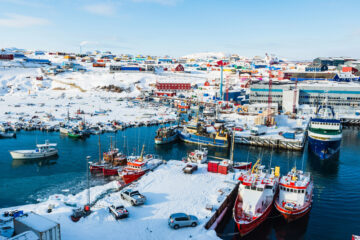

European Allies Close Ranks Around Denmark as Trump Renews Push for U.S. Control of Greenland
Copenhagen, Denmark — European leaders, including Denmark's Prime Minister Mette Frederiksen, issued strong rebukes on Tuesday against U.S. President Donald Trump's renewed calls for America to take control of Greenland, warning that such a move could unravel NATO and undermine Arctic sovereignty. The statements come days after Trump linked the strategic Arctic island's control to U.S. national security interests, amid escalating global tensions.
Trump's comments, made on Sunday, January 4, 2026, emphasized the need for U.S. oversight of Greenland following a recent U.S. military operation in Venezuela. The president framed the island — an autonomous territory of Denmark rich in rare earth minerals and vital for Arctic security — as essential for American defense strategy. This marks a revival of his 2019 proposal to purchase Greenland, which was swiftly rejected by Danish officials at the time as "absurd."
Danish Prime Minister Mette Frederiksen responded forcefully on Monday, January 5, declaring that a U.S. takeover "would amount to the end of the NATO military alliance." Speaking to reporters, Frederiksen underscored Denmark's unwavering commitment to Greenland's self-determination, stating that any change in the island's status must respect its people and international law. Her remarks highlighted the deepening rift between Washington and its NATO partners over Arctic influence.
By Tuesday, solidarity poured in from across Europe. Leaders from major powers released a joint statement affirming that "Greenland belongs to its people," explicitly pushing back against Trump's overtures. The Netherlands reiterated its support for Denmark and Greenland, praising the territory's "key Arctic role" in regional stability and security. Dutch officials emphasized the importance of collective decision-making involving Denmark and Greenland's local government.
NATO has also weighed in, with officials calling the Arctic a top priority amid rising activities by Russia and China in the region. The alliance maintains that Arctic security decisions must align with treaty obligations, implicitly rejecting unilateral actions like a U.S. annexation. European leaders echoed this in their joint communiqué, stressing that Greenland's future lies in the hands of Denmark and its 56,000 inhabitants, not foreign powers.
Strategic Stakes in the Arctic
Greenland's geopolitical significance has intensified in recent years due to climate change opening new shipping routes and exposing vast mineral deposits critical for green energy technologies. The island hosts the U.S.-operated Pituffik Space Base, formerly Thule Air Base, which provides missile warning and space surveillance capabilities — a cornerstone of American defense in the Arctic.
Trump's initial 2019 interest sparked diplomatic friction, with Frederiksen famously retorting that "Greenland is not for sale." That episode strained U.S.-Danish ties temporarily but did not derail NATO cooperation. Today's renewed push arrives against a backdrop of heightened Arctic competition: Russia has militarized its northern frontier, while China eyes mineral resources under its "Polar Silk Road" initiative. The U.S. military operation in Venezuela, referenced by Trump, underscores broader hemispheric security concerns that he ties to Arctic dominance.
European responses reflect broader anxieties about U.S. reliability under Trump's second term. Frederiksen's NATO warning evokes alliance fault lines exposed during Trump's first presidency, when he questioned U.S. commitments to the mutual defense pact. Analysts note that while the U.S. funds much of NATO's capabilities, European nations have ramped up their own Arctic investments, including Denmark's bolstering of Greenland's defenses.
Reactions and Ramifications
Greenlandic leaders have not issued direct statements in the immediate coverage, but past positions affirm their desire for greater autonomy within Denmark, not absorption by another power. The joint European statement, covered widely, signals a unified front that could complicate U.S. diplomacy in the region.
As NATO's upcoming summits loom, the Greenland dispute risks overshadowing collective responses to Russian aggression in Ukraine and Arctic encroachments. Dutch Foreign Ministry spokespeople highlighted Greenland's role in "safeguarding European interests," while Newsmax reports noted bipartisan European backing, from France to Germany.
Looking ahead, diplomats anticipate closed-door talks to defuse tensions. Frederiksen has signaled openness to enhanced U.S.-Greenland cooperation — such as mining partnerships — but firmly ruled out sovereignty transfers. Trump's administration has not elaborated beyond the initial remarks, leaving observers to watch for further signals from the White House.
This episode underscores the fragile balance of transatlantic relations in an era of great-power rivalry. With the Arctic thawing both literally and figuratively, Greenland remains a flashpoint where national security, resource competition, and alliance cohesion intersect.
(Word count: 612)






