
Escalating US-Denmark Tensions Over Greenland as Trump Renews Push for Control
Copenhagen/Washington — Denmark has voiced strong irritation over a social media post featuring a US flag superimposed on Greenland accompanied by the caption "SOON," shared by Katie Miller, wife of senior Trump aide Stephen Miller. The post, dated January 4, 2026, has fueled accusations of US territorial ambitions toward the strategically vital Arctic island, just days before President Donald Trump publicly vowed to secure Greenland "the easy way or the hard way" to counter Russian and Chinese influence.
The controversy erupted amid renewed US interest in Greenland, an autonomous Danish territory with growing geopolitical significance due to its position in the Arctic. Melting polar ice has opened new shipping routes, resource opportunities, and military vantage points, drawing attention from global powers. The US already maintains a key presence through Thule Air Base, a critical missile defense and surveillance outpost operational since the Cold War.
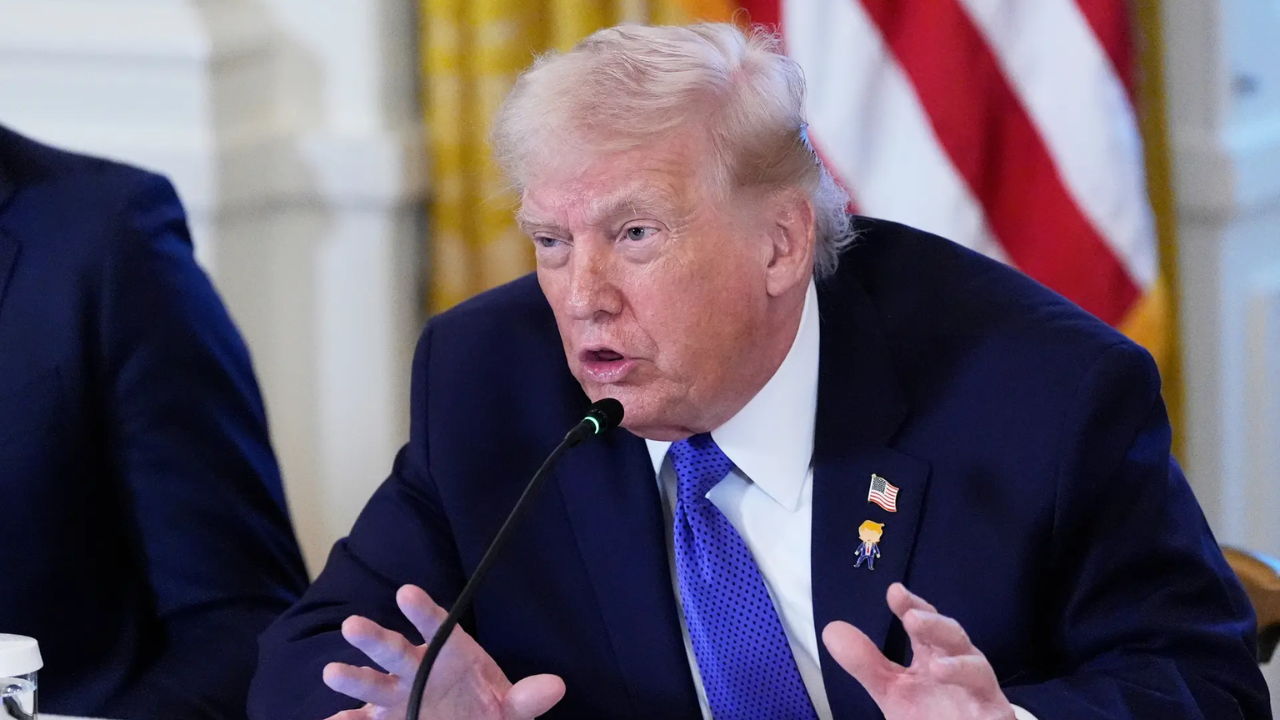
Trump's statements on January 9 amplified the tensions. Speaking to reporters, the president declared the US would pursue control of Greenland "the easy way or the hard way," emphasizing its strategic value for national defense. "We're going to do it the hard way," he reportedly added, underscoring determination to prevent adversarial powers from gaining a foothold. According to reports, Trump warned that without US action, Greenland risks falling under Russian or Chinese influence, framing it as an essential matter of national security.
The Times of India detailed Trump's rationale, citing the island's role in countering Moscow and Beijing's Arctic expansion. Russian naval activity has surged in the region, with nuclear submarines patrolling nearby waters, while China has invested in infrastructure projects across the Arctic, including potential dual-use ports. Trump argued that US ownership would safeguard defense interests, pointing to Greenland's rare earth minerals and position astride North Atlantic shipping lanes.
Administration sources outlined potential strategies, including direct cash payments to Greenlandic residents and a Compact of Free Association — a model used with Pacific nations like the Marshall Islands, granting the US defense responsibilities in exchange for economic aid and autonomy. However, such proposals face steep hurdles. Greenland's government, led by pro-independence parties, has long prioritized full sovereignty from Denmark over foreign annexation. In 2019, then-Premier Kim Kielsen rejected Trump's initial purchase overture, stating Greenland "is not for sale."
Denmark's response to the recent developments has been measured but firm. While no official statement directly addressed Miller's post, Foreign Ministry officials expressed "irritation" over implications of US encroachment on Danish sovereignty. The post, which garnered widespread attention on social media, was deleted shortly after sparking backlash, but screenshots circulated globally, reigniting memories of Trump's 2019 tweetstorm that prompted Denmark's Prime Minister Mette Frederiksen to call the idea "absurd."
Historical Context
US interest in Greenland dates to World War II, when the US protected the island from Nazi occupation and later acquired basing rights. The 1951 Defense of Greenland Agreement formalized US military access, but political control remains Danish. Trump's 2019 bid marked a bold revival of expansionist rhetoric, leading to diplomatic chill and the cancellation of a state visit. Greenlanders, numbering about 56,000 mostly Inuit residents, benefit from Danish subsidies exceeding $500 million annually but chafe under Copenhagen's veto on foreign policy and defense.
China's Arctic ambitions add urgency. Beijing's "Polar Silk Road" initiative seeks influence through investments, including a rejected bid for an airport in Nuuk. Russia, controlling 53% of Arctic coastline, has militarized bases and conducted exercises near Greenland. NATO, including Denmark and the US, has ramped up patrols via exercises like Arctic Edge.
Diplomatic Outlook
As Trump's second term progresses, the Greenland saga tests transatlantic alliances. Denmark insists on sovereignty, with Prime Minister Frederiksen likely to reiterate that stance in upcoming NATO meetings. Greenlandic leaders, including current Premier Múte B. Egede, emphasize self-determination, warning against great-power rivalry turning their homeland into a bargaining chip.
No concrete US actions have been announced beyond rhetoric, but reports suggest internal deliberations on economic incentives. Failure to align with Danish and Greenlandic preferences could strain NATO cohesion at a time of heightened Arctic competition. Observers watch for Copenhagen's formal reply, expected soon, as the "SOON" post and Trump's vows signal a potential flashpoint in US-Denmark relations.
(Word count: 612)