
Escalating Protests Grip Greece: Farmers Plan Highway Shutdown as Market Vendors Strike Over Taxes
Athens, Greece – Greece is bracing for widespread disruptions as farmers prepare a 48-hour nationwide highway shutdown starting January 8, 2026, while open-air market vendors have already launched a nationwide strike protesting heavy tax burdens. These actions, both rated as medium severity civil unrest, signal growing discontent among key economic sectors amid ongoing economic pressures.
The farmers' planned blockade, which began gaining traction as early as January 4, 2026, targets major transit routes across the country. According to event reports, the action is set to commence on January 8 and last 48 hours, potentially halting traffic on key highways and causing significant delays for commuters, logistics, and commercial transport. This move comes as part of broader agrarian grievances, though specific demands have not been detailed in initial reports. The timing coincides with the winter harvest slowdown and heightened scrutiny on agricultural policies.
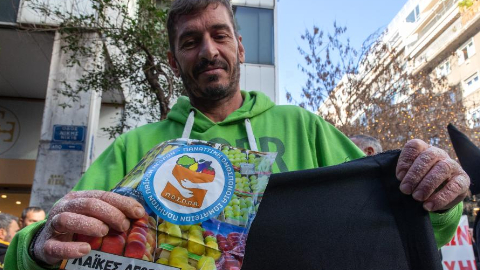
Simultaneously, open-air market vendors – a vital part of Greece's informal economy – initiated their strike on January 8, 2026, as reported by Xinhua. The vendors, who operate street markets selling fresh produce, clothing, and household goods, are protesting what they describe as an unsustainable tax burden. Published details from the strike announcement highlight frustrations over rising fiscal impositions that threaten their livelihoods. These markets, numbering in the thousands nationwide, are expected to shutter entirely during the action, disrupting daily shopping for millions of Greeks who rely on affordable, local vendors.
The dual protests underscore a pattern of labor and sectoral unrest in Greece. Farmers' blockades have a long history in the country, often used to draw attention to issues like low subsidies, high input costs, and natural disasters affecting crops. Recent real-time context reveals that Greek agriculture has faced challenges from climate events, including floods in Thessaly in 2023-2024 that devastated farmlands, leading to repeated demonstrations. The planned highway shutdown evokes similar tactics seen in 2024 protests, where tractors clogged roads near Athens and Thessaloniki, forcing government concessions on compensation.
Meanwhile, market vendors' strikes tap into deeper economic scars from Greece's 2010s debt crisis, when austerity measures spiked taxes and VAT rates on small businesses. Even post-recovery, small traders argue that flat tax schemes and compliance costs erode slim margins. Xinhua's coverage notes the nationwide scope, suggesting coordination through trade associations, which could amplify economic ripple effects including supply chain interruptions for food distribution.
Government response has been muted so far. Prime Minister Kyriakos Mitsotakis' administration, in power since 2019, has prioritized fiscal discipline and EU recovery funds but faces criticism for insufficient support to rural and informal sectors. No official statements on the protests were available at press time, though past patterns indicate negotiations via the Agriculture Ministry.
Background on Greek Civil Unrest
Greece has a storied tradition of public protests, rooted in its democratic heritage and economic volatility. The 2010-2018 debt crisis triggered massive demonstrations, general strikes, and riots, culminating in three successive bailouts totaling €289 billion. Post-crisis, unrest has shifted to sector-specific actions: farmers routinely blockade borders during EU Common Agricultural Policy reviews, while urban and rural traders protest tax hikes.
In 2024-2025, farmer mobilizations intensified due to high energy costs from the Russia-Ukraine war and poor harvests. Verified data from the Hellenic Statistical Authority shows agricultural GDP contribution at around 4% but employing 12% of the workforce, making it politically sensitive. Market vendors, often self-employed, represent a segment vulnerable to inflation, which hovered at 2-3% in late 2025 per Eurostat.
These events occur against a backdrop of stabilizing but fragile growth. Greece's 2025 GDP forecast stands at 2.3% by the IMF, buoyed by tourism and EU NextGenerationEU funds (€36 billion allocated). However, rural discontent persists, with youth unemployment at 25% in agricultural regions.
Outlook
The 48-hour highway shutdown risks exacerbating delays ahead of the Orthodox Epiphany holiday on January 6, potentially stranding travelers. Vendors' strike could lead to price spikes in perishables if prolonged. Authorities may deploy police to key chokepoints, as in prior incidents, while unions call for dialogue.
Analysts monitor for spillover, as coordinated actions could inspire other groups like truckers or pensioners. The government faces a balancing act: concessions might strain the 2026 budget (projected deficit under 3% of GDP), but ignoring protests risks broader instability ahead of local elections.
As of January 8, 2026, both actions remain active, with real-time tracking essential for updates. The World Now will continue monitoring developments.
(Word count: 612)






