
Escalating Geopolitical Frictions: CIA Rejects Putin's Ukrainian Attack Allegations as Russia Accuses US of Maritime Law Violation
Moscow/Washington, January 10, 2026 – In a pair of developments underscoring deepening international tensions involving Russia, the CIA has categorically rejected Russian President Vladimir Putin's claims of a Ukrainian attack on his residence, while Moscow has leveled fresh accusations against the United States over the seizure of a Russian-linked vessel, branding it a breach of international maritime law.
The first incident erupted on January 2, when Putin alleged that Ukrainian forces had targeted his official residence in an audacious assault. Russia quickly followed up by presenting what it described as concrete evidence of the attack, including details on the timing and nature of the incident. However, the U.S. Central Intelligence Agency swiftly dismissed these assertions, stating they lacked credibility and appeared to be part of a broader pattern of unsubstantiated Russian narratives amid the ongoing conflict with Ukraine. This exchange highlights the persistent fog of war and mutual accusations that have defined Russia-Ukraine relations since Moscow's full-scale invasion in February 2022.
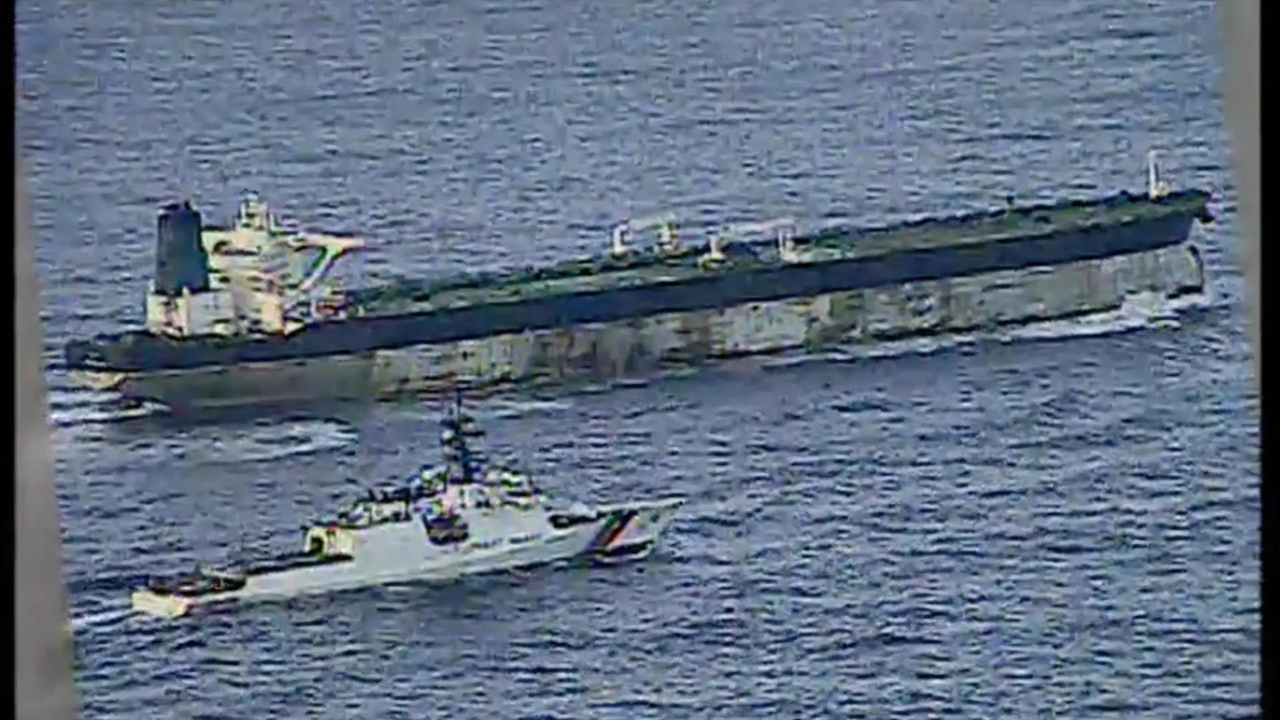
Just days later, on January 9, Russia escalated its rhetoric against the West by accusing the United States of unlawfully seizing a vessel in international waters. According to Russian statements reported by the Times of India, the action constitutes a "forceful seizure" and a direct violation of maritime law. Moscow framed the incident as part of a pattern of aggressive U.S. behavior aimed at undermining Russian interests globally. While specific details on the vessel—such as its name, cargo, or precise location—were not immediately disclosed in available reports, the accusation comes amid heightened U.S. enforcement of sanctions against Russia imposed following the Ukraine invasion.
These events occur against the backdrop of prolonged geopolitical strain. The Russia-Ukraine war, now entering its fourth year, has seen repeated claims of incursions, sabotage, and assassinations from both sides. Putin's residence—likely referring to the Novo-Ogaryovo compound near Moscow—has been a focal point in past security alerts, including drone interceptions reported during the conflict. Western intelligence agencies, including the CIA, have consistently challenged Russian accounts of Ukrainian aggression, often attributing such incidents to internal dynamics or false-flag operations designed to justify escalations.
On the maritime front, the U.S. has intensified efforts to enforce sanctions on Russian oligarchs and entities linked to the Kremlin. Previous actions include the 2022 seizure of the Russian yacht Amadea in Fiji and other vessels tied to sanctioned individuals, justified under laws like the International Emergency Economic Powers Act. Russia has repeatedly decried these as "piracy," arguing they infringe on neutral flag states' sovereignty and international conventions such as the United Nations Convention on the Law of the Sea (UNCLOS). The latest claim fits into this narrative, potentially involving a ship transporting sanctioned goods or owned by a designated party.
Background
Russia's relations with the West have deteriorated sharply since the 2022 invasion of Ukraine, prompted by Moscow's assertions of NATO expansionism and historical claims over Ukrainian territory. The U.S. and allies have responded with over $100 billion in military aid to Kyiv, economic sanctions crippling Russian energy exports, and naval patrols in key waterways like the Black Sea. Incidents involving Putin's security have spiked; for instance, in May 2023, Ukraine claimed responsibility for a drone attack on the Kremlin, which Russia denied as staged.
Maritime disputes have also proliferated. Russia's shadowing of NATO ships in the Baltic Sea and U.S. seizures of shadow fleet tankers evading oil price caps have raised fears of miscalculation leading to direct confrontation. The U.S. State Department has not yet commented on the latest vessel seizure allegation, but past responses emphasize compliance with legal frameworks targeting illicit activities.
Outlook
As these accusations fly, diplomatic channels remain frigid. No immediate retaliatory actions have been announced by Russia beyond public condemnations, but the convergence of aerial attack claims and naval disputes signals a multi-domain escalation in hybrid warfare tactics. International observers, including the United Nations, have urged restraint to prevent broader conflict. With U.S. elections in the rearview and Europe's energy dependencies shifting, the trajectory of Russia-West relations remains precarious, dependent on de-escalatory measures that have so far proven elusive.
(Word count: 612)






