Echoes of the Past: The Historical Roots of Current Civil Unrest in the U.S.

Latest from X
Echoes of the Past: The Historical Roots of Current Civil Unrest in the U.S.
By The World Now Conflict/Crisis Analysis Team
Unique Angle: This article explores the deep historical connections between contemporary civil unrest and specific past events in the U.S., analyzing how these historical echoes influence current movements and public sentiment.
Introduction: The Current Landscape of Civil Unrest
As of January 19, 2026, the United States is grappling with a surge in civil unrest fueled by tensions over immigration enforcement, racial justice, and political polarization. Key flashpoints include a racial beating in Cincinnati on December 31, 2025, that ignited nationwide outrage; protests in New York City on January 5 over a hearing involving Venezuelan President Nicolás Maduro; an ICE officer-involved shooting in Minneapolis on January 7; and more recent clashes, such as an anti-ICE mob storming a Minnesota church amid allegations of a pastor's ties to immigration authorities. These events have drawn parallels to historical episodes of unrest, from the 2001 Cincinnati riots sparked by a police shooting to the 2020 George Floyd protests in Minneapolis.
This article delves into the historical roots of today's disturbances, examining how past incidents of racial violence, immigration crackdowns, and protest escalations reverberate in current dynamics. By tracing these "echoes," we uncover patterns that shape public sentiment, policy debates, and the potential for further volatility.
Historical Context: Civil Unrest Through the Decades
Civil unrest in the U.S. has long been intertwined with issues of race, policing, and federal authority. The provided timeline underscores a rapid escalation in late 2025 and early 2026, but these events echo deeper historical precedents.
The timeline begins with the December 31, 2025, Cincinnati Racial Beating, where a video of a brutal assault—allegedly involving racial motivations—sparked immediate protests and calls for justice, much like the 2001 Cincinnati riots. In April 2001, the police shooting of Timothy Thomas, a young Black man, led to days of rioting, over 800 arrests, and a curfew, exposing deep-seated racial tensions and police-community rifts. The 2025 incident has similarly set the stage for broader unrest, amplifying distrust in law enforcement and fueling a narrative of systemic injustice.
This fed into January 2, 2026: Political Violence Escalation, marked by scattered incidents of vandalism and clashes, reminiscent of the post-1968 assassinations of Martin Luther King Jr. and Robert F. Kennedy, when urban riots claimed dozens of lives and prompted federal intervention.
January 5, 2026: Protests in New York over Maduro Hearing drew international attention, with demonstrators decrying U.S. immigration policies tied to Venezuelan deportations. These mirror 1980s sanctuary city movements against Reagan-era enforcement.
January 6: Activist Arrested During Live Broadcast highlighted media's role in unrest, akin to 1968 Chicago Democratic Convention coverage that galvanized anti-war protests.
Finally, January 7: ICE Officer Shoots Driver in Minneapolis—where a driver accelerated toward agents during an anti-ICE demonstration—evokes the 2020 George Floyd killing in the same city, which sparked global Black Lives Matter protests. Posts on X (formerly Twitter) reference desires to "riot like we did for George Floyd," underscoring how Minneapolis remains a tinderbox.
These events have societal impacts mirroring history: eroded trust in institutions, polarized media narratives, and policy backlashes, such as temporary deportation halts in past unrest.
The Role of Immigration Enforcement in Modern Protests
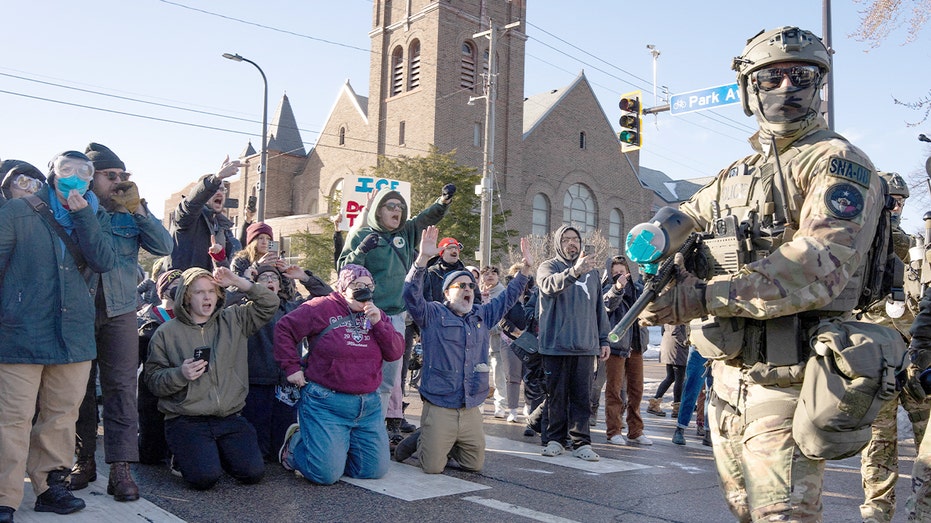
Immigration Enforcement and Customs (ICE) operations have become a lightning rod, particularly in Minneapolis. On January 7, an ICE officer shot a driver amid chaotic protests outside a federal building, with reports of the vehicle accelerating toward agents. Subsequent incidents, including a second shooting on January 14-15 involving a Venezuelan migrant allegedly attacking agents with a shovel, have intensified clashes. Posts on X describe federal agents using pepper balls and spray on protesters, while others depict crowds launching fireworks and swarming facilities.
Most notably, an anti-ICE mob recently stormed a Minnesota church, protesting a pastor's alleged ties to immigration enforcement—possibly aiding deportations or harboring informants. This incident, reported by Fox News, connects directly to historical protests against immigration raids, such as 2006's "Day Without Immigrants" marches opposing HR 4437, or 1950s Operation Wetback, which displaced over a million people amid public outcry.
In Minnesota, these events challenge national immigration policy under heightened deportation efforts. They echo racial injustice protests, framing ICE actions as modern "border patrols" disproportionately affecting minorities, much like 1990s Proposition 187 in California, which spurred Latino activism.
Public Sentiment: Voices from the Ground
Perspectives on these events reveal a deeply divided public. Protesters, per posts on X, decry ICE "brutality," citing videos of agents using pepper spray at point-blank range on women and threatening bystanders. Community leaders, including Minneapolis activists, invoke George Floyd, warning of renewed riots. One X post quotes extremists calling to "riot in this city like we did for George Floyd."
Conversely, law enforcement and supporters highlight protester aggression: vehicle ramming, shovel attacks, and looting federal vehicles. The Department of Homeland Security (DHS) described the January 14-15 shooting as self-defense after an ambush. Minneapolis Police Chief Brian O'Hara, cited in X posts from January 14, cautioned that escalating rhetoric could lead to "yet another tragedy." Pro-ICE voices on X frame protesters as a "violent anti-ICE mob," with the FBI offering $100,000 rewards for vandals.
These voices—from outraged immigrants' rights advocates to defenders of border security—mirror historical divides, as in 1992 Los Angeles riots, where Korean-Black tensions boiled over.
Comparative Analysis: Past vs. Present Civil Unrest
Parallels between past and present are striking. The 2001 Cincinnati riots, triggered by a racial incident, lasted six days with $3.6 million in damages—much like the 2025 beating's potential to cascade. Minneapolis's ICE shooting recalls George Floyd's 2020 death, both igniting national fervor via social media, but today's unrest uniquely fuses immigration with racial justice.
Lessons from history include the 1967 Kerner Commission report on riots, which blamed white backlash and inequality—echoed in current debates over deportations amid economic strains. Yet, relevance today is mixed: Social media accelerates mobilization (unlike 1960s TV), but federal responses, like Trump's past Insurrection Act threats (noted in recent X posts), deter escalation more effectively than LBJ's deployments.
Key difference: Modern protests leverage global ties, as seen in Maduro-linked New York demos, expanding beyond domestic race issues.
Predictive Elements: What Lies Ahead?
Historical patterns suggest escalation if immigration policies remain unchanged. Post-2001 Cincinnati, unrest waned with reforms but simmered; 2020 Floyd protests led to defund movements but no lasting policy shifts, birthing sustained activism. Here, ongoing Minneapolis clashes—two ICE shootings in a week, church storming—portend wider riots if deportations continue unchecked.
Likelihood of increased political activism is high: Sanctuary movements could resurge, with 2026 midterms amplifying divides. X sentiment predicts FBI rewards and Trump-era crackdowns, potentially invoking the Insurrection Act. Worst-case: Multi-city riots blending anti-ICE and racial justice themes, as in 1968's 150+ disturbances. Best-case: Dialogue yields hybrid policies, like expanded work visas.
What This Means: The Path Forward
The current U.S. civil unrest is no isolated flare-up but an echo of historical grievances—from Cincinnati's racial flashpoints to immigration battles. Understanding these roots illuminates why Minneapolis church storms and ICE shootings resonate so deeply, perpetuating cycles of protest and crackdown.
To break this pattern, stakeholders must prioritize informed dialogue: Community forums bridging law enforcement and activists, policy tweaks balancing security with humanity, and media accountability to curb incendiary rhetoric. History teaches that ignoring echoes invites repetition; heeding them charts a path to resolution.
(Word count: 1,512)
Sources
- Anti-ICE mob storms Minnesota church over pastor's alleged ties to immigration enforcement - Fox News
- Posts found on X (formerly Twitter) describing ICE-protester clashes in Minneapolis, including officer-involved shootings, pepper spray incidents, and public warnings from law enforcement (accessed January 19, 2026). Note: X posts reflect unverified user sentiment and are treated as inconclusive.
Situation report
What this report is designed to answer
This format is meant for fast situational awareness. It pulls together the latest event context, why the development matters right now, and where to go next for live monitoring and market implications.
Primary focus
United States
Best next step
Use the related dashboards below to keep tracking the story as it develops.
Track this story live
Original Sources
- •
Editorial process: This article was synthesized from the original sources cited above using The World Now's AI editorial system, with byline accountability from our editorial team. We grade every story for source grounding, factual coherence, and on-topic match before publication. Read more about our editorial standards and contributors. Spot something inaccurate? Let us know.
Last updated: February 25, 2026