
Ebola Infects 676 and Kills 136 in DR Congo as Virus Reaches New Areas
The Ebola outbreak declared on May 15 in the Democratic Republic of the Congo has infected 676 people and killed 136, with the virus spreading into new areas of Ituri, North Kivu and South Kivu provinces amid severe challenges including lack of an approved vaccine for the Bundibugyo strain, overcrowded displacement camps with no running water, and inadequate isolation capacity.
Outbreak Scale and Geographic Spread
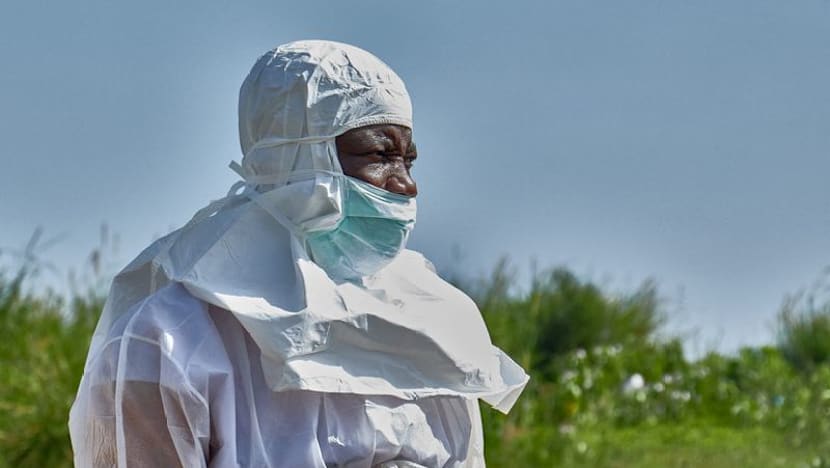
The Ebola outbreak is centered on Ituri province with cases now in North Kivu and South Kivu. [2] Since the outbreak was declared on May 15, there have been 676 confirmed Ebola cases, including 136 deaths in the DRC, according to the latest figures from the WHO. [2] There are a further 119 suspected cases, while 32 patients have recovered. [2] The outbreak continues to expand both in terms of case numbers but also in terms of geographic spread. [2] Cases were being identified in new health zones within the three affected provinces on an almost daily basis. [2] That reflects really the scale of this outbreak: a scale that is much bigger than what is being detected, and the high mobility of the population. [2] While in recent weeks, cases in new areas could be traced back to travel from hotspots, now local community spread in new areas is also seen. [2] There are still many blind spots in some areas that are high risk. [2]
Conditions in Kigonze Displacement Camp
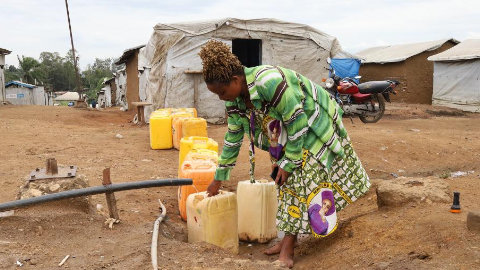
At the Kigonze camp for displaced people on the outskirts of Bunia, the capital of Ituri Province in eastern Democratic Republic of the Congo, the daily struggle against Ebola begins with something as basic as water. [1] Since early morning, Furha Jeannette, a displaced mother of four, had been waiting at a water point alongside other women and children. [1] The taps were dry. [1] Rows of yellow jerrycans lined up beside them remained empty after hours of waiting. [1] "You see how we live here," she said. [1] "Since 6 o'clock in the morning, we have not even found one jerrycan of water. There is no water. We do not know how to wash our hands. The taps are dry." [1] Bunia is one of the epicenters of the Ebola outbreak, which has so far infected 676 people and killed 136. [1] In Kigonze, those challenges are compounded by overcrowded shelters, chronic water shortages, and poor sanitation. [1] Local media, citing camp officials, estimate that at least 11,700 people live in the camp, spread across about 2,600 households, though local sources say the actual population may be significantly higher. [1] According to Nzodjo Lusi Etienne, head of the camp, Kigonze has not recorded any confirmed Ebola cases. [1] However, as the outbreak spreads across Ituri and neighboring provinces, the camp's living conditions have made prevention an increasingly urgent concern. [1] "Here we have no Ebola case. But our situation is complicated." [1] Etienne now spends most of the day walking through the camp carrying a megaphone, urging residents to remain vigilant. [1] His voice echoes along narrow pathways lined with makeshift shelters, where families live in cramped conditions and seasonal rains frequently turn the ground into mud. [1] "When we heard the information about Ebola, we started raising awareness so that we would not be contaminated by this virus," he said through the speaker. [1] "Everyone must wash their hands regularly and keep a distance." [1] Across the camp, shelters were patched together with worn tarpaulins and pieces of wood. [1] Residents say rainwater often seeps into their homes, while many latrines are damaged, overflowing, or unusable. [1] Wastewater flows close to living areas, heightening fears of disease transmission. [1] Standing outside her shelter, Bi Kanza Caudine, a displaced mother of seven, pointed to the muddy ground surrounding her home. [1] "Look at where we live. How can we avoid disease in these conditions?" she said. [1] "When it rains, water enters the house and turns everything into mud." [1] She said many shelters needed urgent rehabilitation. [1] "They could help us reinforce these shelters or give us the means to build others," she said. [1] "This situation has lasted too long, and it increases the risk of contamination." [1] For Gerare Mbocho, a displaced father of six, sanitation remains the camp's most pressing challenge. [1] "For the moment, the big problem here is our toilets. They are in bad condition," he said. [1] "Our hygiene facilities should be improved to protect us from Ebola." [1]
Response Challenges and Gaps
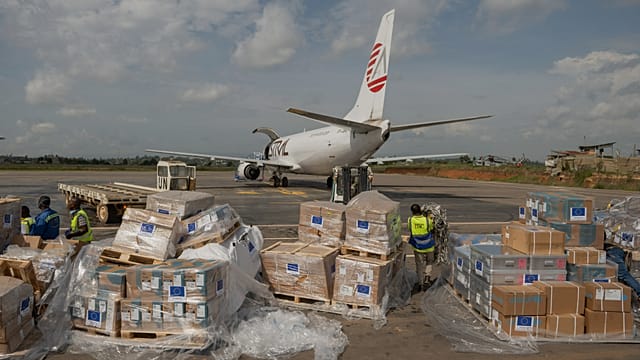
Response has been hampered by uncertainty surrounding the initial cases, the absence of an approved vaccine for the Bundibugyo strain, community mistrust, and persistent insecurity. [1] No approved vaccines or treatments exist for the rare Bundibugyo species of the virus responsible for the current outbreak. [2] Contact tracing remained below ideal levels, with just over 70 percent of contacts being appropriately traced. [2] "That's a huge improvement from where we were about a week or two ago, but it's still too low to ensure appropriate control," Olivier le Polain, the WHO's head of epidemiology and analytics for response, said. [2] "Surveillance can scale up, but if you don't have any space to put your patients safely, it becomes very difficult," he added. [2] He said that compared to where the epidemiology is heading, the current capacity of 250 isolation beds across the affected provinces would not be enough and needed scaling up quite rapidly. [2]
Impact on Children and Vulnerable Populations
The UN children's agency UNICEF warned of a likely rise in cases amongst children via household transmission in the coming weeks. [2] After returning from Ituri's capital Bunia, Douglas Noble, UNICEF's global incident manager for Ebola, said that in the province, more than half of children aged under five are chronically malnourished. [2] "The point is: these are already very vulnerable children," he told reporters. [2] "As the outbreak evolves we must be prepared for increasing household transmission, which means we may see more children affected in the days ahead," based on previous Ebola crises. [2] "We are expecting it, and we are taking steps in our interventions... to respond to that," he told reporters. [2]
Cross-Border Spread to Uganda
The outbreak has also spread across the border into Uganda, which has recorded 19 confirmed cases, including two deaths. [2] The African Union's health agency said Thursday that the situation in Uganda was under control. [2] The WHO classifies the Ebola risk as very high within the DRC; high for Uganda; high for countries sharing land borders with the DRC and Uganda; and low elsewhere. [2]
Broader Humanitarian Context
The situation in Kigonze reflects broader vulnerabilities in eastern DRC, where years of conflict have forced large numbers of civilians from their homes. [1] According to the World Food Program, 7.8 million people are internally displaced across the country, while 26.5 million face acute food insecurity. [1] The emergency in the DRC is one of the most complex humanitarian crises in the world, the United Nations High Commissioner for Refugees warned. [1]
What to watch next: The WHO has stated that isolation bed capacity stands far below the anticipated need based on how the outbreak is spreading, with cases identified in new health zones on an almost daily basis and local community transmission now occurring beyond initial travel links.