
Earthquake Japan: Magnitude 7.7 Quake Prompts Tsunami Advisory
A magnitude 7.7 earthquake Japan event has struck off the coast of Japan, leading authorities to issue a tsunami advisory in response to the powerful seismic activity.[1][2] This development underscores the immediate risks associated with such a significant quake in a seismically active region.
Main Earthquake Event
The primary earthquake event registered at a magnitude of 7.7, occurring off the Japan coast, which classifies it as a powerful seismic occurrence capable of generating widespread concern.[1][2] Reports from monitoring sources highlight this as a major event, with the quake's location off the coast directly contributing to the subsequent alerts issued by Japanese authorities.[2] The magnitude 7.7 reading indicates substantial energy release, consistent with descriptions of a powerful earthquake that demands rapid response measures.[2]
Details from initial reports emphasize the quake's offshore positioning, a factor that elevates the potential for secondary effects beyond ground shaking alone.[1][2] Off the Japan coast, such events have historically necessitated vigilant monitoring, and this instance aligns with that pattern by prompting immediate official action.[2] The national news coverage frames it as a powerful earthquake triggering further coastal hazards, reflecting the scale of the event as perceived in real-time reporting.[2]
Further context from the reporting underscores the quake's impact potential, given its magnitude and coastal proximity.[1] Japanese seismic networks would have detected the 7.7 magnitude swiftly, enabling the cascade of advisories that followed.[2] This main event serves as the focal point of the seismic sequence, with its off-coast epicenter playing a critical role in the escalation to tsunami-related precautions.[1][2]
Tsunami Advisory Details
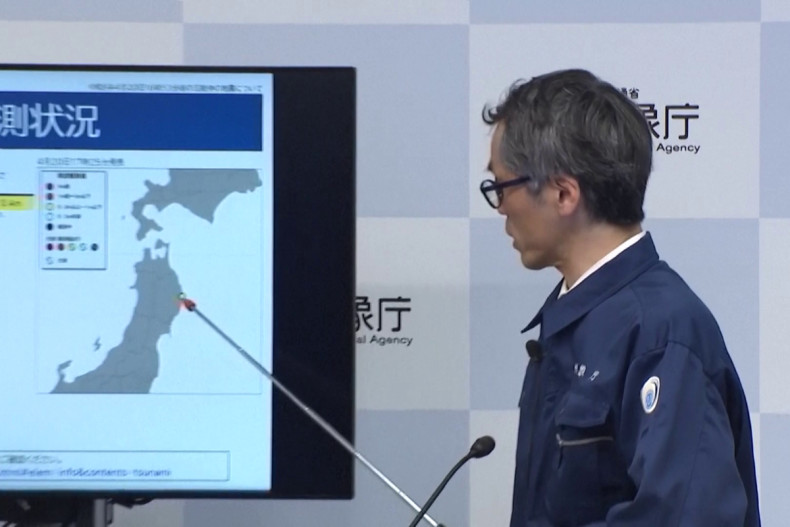
Japan issued a tsunami advisory directly following the magnitude 7.7 quake, a standard protocol triggered by the powerful earthquake off the Japan coast.[1][2] This advisory was activated to alert coastal populations to potential wave activity generated by the offshore seismic disturbance.[1] The decision to trigger the advisory reflects the assessed risk from the quake's characteristics, particularly its location and strength.[2]
Reports confirm that the advisory stemmed from the immediate aftermath of the 7.7 magnitude event, with authorities prioritizing public safety in tsunami-prone areas.[1] The powerful nature of the earthquake off the coast necessitated this measure, as outlined in national news updates.[2] Japan's tsunami advisory system, responsive to such offshore quakes, ensures timely dissemination of information to mitigate risks.[1]
The context of the advisory issuance highlights the interplay between the quake's magnitude and its coastal positioning, prompting a precautionary stance.[2] This step was taken without delay, aligning with protocols for events of this scale off the Japan coast.[1][2] Coverage from sources like Bangkok Post explicitly notes Japan triggering the advisory after the 7.7 quake, emphasizing the direct causal link.[1]
Related Seismic Activity
In addition to the main magnitude 7.7 event, related seismic activity included a magnitude 4.8 earthquake reported 107 km ENE of Miyako, Japan, at a depth of 35.4 km.[3] This quake, detected by USGS monitoring, occurred in proximity to the primary event, contributing to the regional seismic profile.[3] The shallow depth of 35.4 km for this 4.8 magnitude event suggests potential for noticeable surface effects in the vicinity of Miyako.[3]
Another related quake was a magnitude 4.0 event 114 km SE of Shima, Japan, recorded at a significantly deeper depth of 327.3 km.[4] This deeper positioning indicates a different tectonic interaction compared to shallower events, though still part of the broader activity in the region.[4] The location 114 km southeast of Shima places it within Japan's seismically active zones.[4]
These additional earthquakes—a 4.8 magnitude at 107 km ENE of Miyako with 35.4 km depth and a 4.0 magnitude at 114 km SE of Shima with 327.3 km depth—illustrate ongoing tremors following the primary offshore quake.[3][4] The contrast in depths, from relatively shallow to deep, reflects the varied nature of seismic releases in the area.[3][4] USGS data provides precise locations, underscoring the clustering of activity around Japan's eastern and southern coastal vicinities.[3][4]
The 4.8 magnitude quake's shallower depth of 35.4 km could amplify felt intensities near Miyako, while the 4.0 event's 327.3 km depth likely resulted in less surface disruption despite its distance from Shima.[3][4] Together, these reports from USGS contribute to a fuller picture of the seismic environment post the main event.[3][4]
Source and Timing Information
Information on the earthquake Japan sequence, including the magnitude 7.7 quake and tsunami advisory, was reported through national news channels with a publication timestamp of 20260421T021500Z.[2] This timing captures the event in its early stages, providing a snapshot of official responses as they unfolded.[2] GDELT-sourced national news framed the powerful earthquake off Japan coast as the lead story, aligning with the advisory issuance.[2]
The publication date and time of 20260421T021500Z indicate real-time dissemination, essential for public awareness during such events.[2] Sources like this ensure traceability of the main quake details and its coastal impact.[2] Timing details from this report contextualize the sequence, from the offshore quake to the advisory trigger.[2]
What to watch next: Ongoing monitoring for aftershocks, including potential events similar to the reported magnitude 4.8 and 4.0 quakes near Miyako and Shima, as well as updates on the tsunami advisory status following the offshore magnitude 7.7 event.[2][3][4]