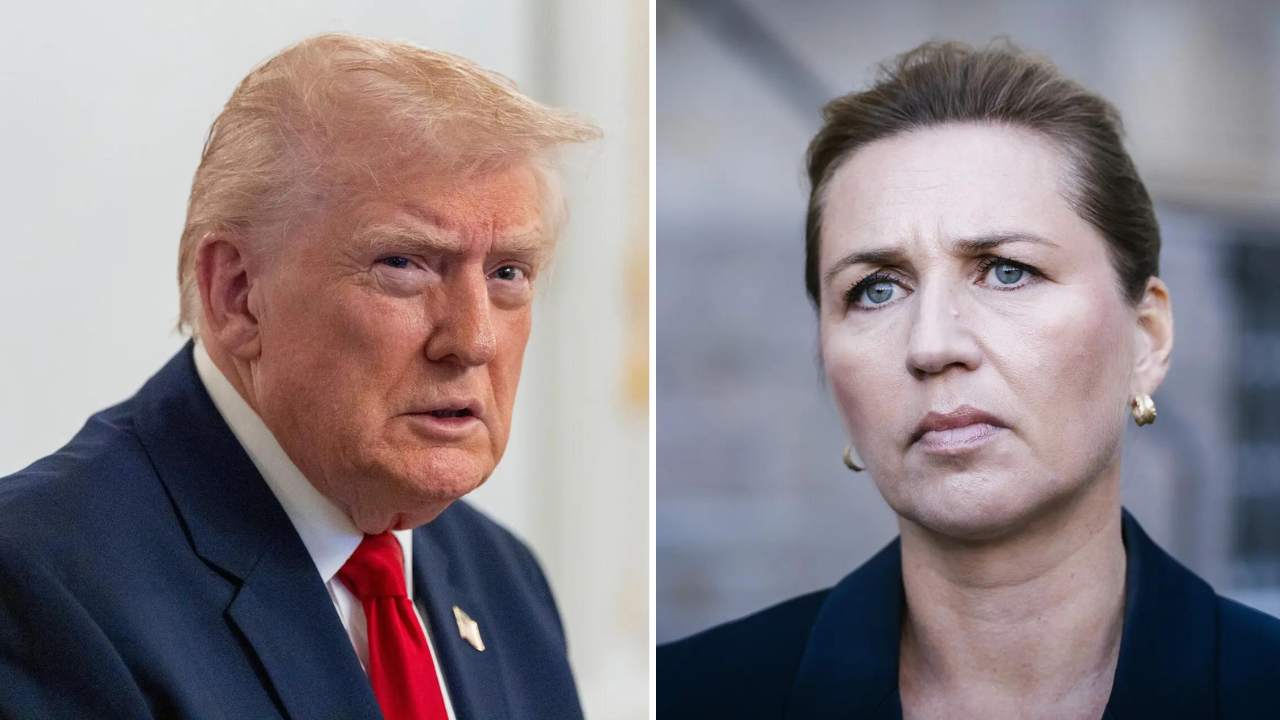

Denmark's Prime Minister Issues Stark NATO Warning to US Amid Renewed Trump-Greenland Dispute
Copenhagen, Denmark — Denmark's Prime Minister Mette Frederiksen has delivered a forceful rebuke to U.S. President Donald Trump's renewed assertions of interest in Greenland, warning that any American military action against a NATO ally would sever all cooperation between the alliance and Washington.
The remarks, made public on January 6, 2026, underscore escalating tensions over the strategic Arctic territory, which Trump has repeatedly described as vital to U.S. national security. Frederiksen categorically rejected the claims, labeling them "unacceptable" and reaffirming that neither Denmark nor Greenland entertains any notion of selling or ceding the island. "Denmark and Greenland have repeatedly ruled out any sale or annexation," she stated, according to reports from the Times of India.
Frederiksen's warning extends beyond the Greenland issue, invoking NATO's core principle of collective defense under Article 5. She cautioned that "if the US attacks another NATO country," it would trigger an immediate end to all cooperation with the alliance. The prime minister also asserted strong backing from Europe, claiming full continental support for Denmark's position in the standoff.
Escalating Rhetoric in Arctic Geopolitics
The exchange revives a diplomatic flashpoint that first erupted during Trump's first presidency. In August 2019, Trump publicly floated the idea of purchasing Greenland from Denmark, citing its geostrategic value amid growing competition in the Arctic from Russia and China. The proposal, which included tweets and public statements, prompted a swift and indignant response from then-Prime Minister Frederiksen, who declared, "Greenland is not for sale." The comments led to the cancellation of a planned state visit to the U.S. and strained bilateral ties temporarily.
Greenland, a semi-autonomous Danish territory with a population of around 56,000, holds immense significance due to its vast mineral resources, including rare earth elements critical for green energy technologies, and its position overlooking key Arctic shipping routes. The U.S. maintains the Pituffik Space Base (formerly Thule Air Base) on the island under a longstanding defense agreement with Denmark, dating back to the Cold War era. This facility is crucial for missile defense, satellite tracking, and monitoring Russian activities in the polar region.
Trump's recent comments, described as a "renewed claim" that the U.S. "needs" Greenland for security reasons, appear to echo these historical concerns. They come at a time of heightened Arctic militarization: Russia has bolstered its northern fleet and reopened Soviet-era bases, while China invests heavily in polar infrastructure under its "Polar Silk Road" initiative. NATO has responded by increasing exercises in the region, with Denmark playing a pivotal role as the territorial sovereign.
Frederiksen's statement was framed not just as a defense of sovereignty but as a litmus test for NATO's unity. Denmark, a founding NATO member since 1949, has committed significantly to alliance goals, including hosting U.S. troops at a new base in Greenland announced in 2023 and boosting defense spending to meet the 2% GDP target amid Russia's war in Ukraine.
Broader Implications for Transatlantic Relations
The Danish leader's remarks highlight underlying frictions in U.S.-Europe relations under Trump's second term, which began in January 2025. Trump has frequently criticized NATO allies for insufficient defense contributions and questioned the alliance's value, while pushing for greater European burden-sharing. His administration has prioritized Arctic security, with initiatives to counter Russian and Chinese influence, but such overtures toward Greenland risk alienating partners.
European leaders have rallied around Denmark. Frederiksen noted "full support by Europe," reflecting a broader continental wariness of unilateral U.S. actions. The European Union, while not directly involved in Greenland's defense, has deepened ties with the territory through investment in sustainable development and raw materials partnerships.
NATO Secretary General Jens Stoltenberg, who has navigated Trump's skepticism before, reiterated the alliance's indivisibility in recent statements but avoided direct comment on the Greenland dispute. Analysts point to the potential for this episode to test Article 5's red lines, though no immediate military escalation is anticipated.
Historical Context and Denmark's Stance
Denmark's control over Greenland stems from colonial ties formalized in 1953, with the island granted home rule in 1979 and expanded self-government in 2009. Foreign policy and defense remain Danish prerogatives, aligning closely with NATO. Public sentiment in Greenland leans toward independence aspirations, but economic dependencies on Denmark and strategic U.S. presence complicate any shift.
Frederiksen, who has led Denmark's Social Democrats since 2019, has positioned herself as a staunch defender of multilateralism. Her government has pivoted Denmark toward stronger Arctic defense postures, including a 2023 defense agreement expanding U.S. access to Greenland bases.
Outlook: Navigating Alliance Tensions
As Arctic competition intensifies, the Greenland dispute could foreshadow challenges to NATO cohesion. Diplomatic channels remain open, with routine U.S.-Danish military consultations ongoing. However, Frederiksen's warning signals zero tolerance for aggression, potentially galvanizing European resolve.
For now, the rhetoric serves as a reminder of the delicate balance in transatlantic security. Both sides emphasize shared interests in countering non-Western powers, but sovereignty disputes like Greenland's could strain that partnership if not managed carefully.
(Word count: 712)






