
Denmark Protests US Social Media Post Fueling Greenland Territorial Speculation
Copenhagen, Denmark — Denmark has expressed strong irritation over a social media post by Katie Miller, wife of senior Trump adviser Stephen Miller, depicting Greenland overlaid with a US flag and captioned "SOON." The January 4, 2026, post has reignited tensions surrounding longstanding US interest in the strategically vital Arctic territory, coming amid reports of White House discussions on acquiring or even seizing the Danish autonomous region.
The image, shared on an unspecified platform, quickly drew backlash from Danish officials, who viewed it as a provocative hint at territorial ambitions. This incident unfolds against a backdrop of heightened US assertiveness under President Donald Trump, following the US military's recent capture of Venezuelan President Nicolás Maduro. According to reports, Trump and his top advisers have openly discussed Greenland as a potential next focus, with options ranging from negotiating a purchase from Denmark to more aggressive measures, including the use of US forces.
Denmark's foreign ministry issued a statement on January 5 condemning the post as "irresponsible and inflammatory," emphasizing Greenland's status as an autonomous territory within the Kingdom of Denmark. "Such displays undermine the sovereignty of our nation and our partners in the Arctic," the ministry said, without directly naming Miller. The reaction underscores growing European unease over what analysts describe as a belligerent shift in US foreign policy, particularly within the NATO framework where Denmark is a founding member.
Escalating US Interest in Greenland
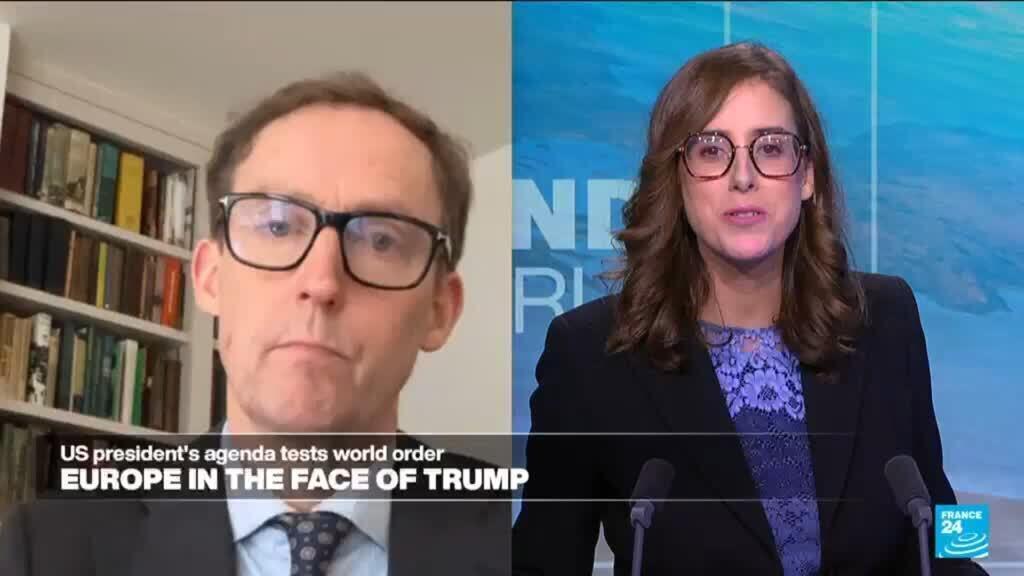
The controversy arrives at a sensitive moment for US-Danish relations. A France 24 report published January 8 details how the Trump administration's agenda is testing global norms, spotlighting Greenland after the dramatic Venezuelan operation. The article notes explicit discussions among US leaders about Greenland's "strategically located Arctic territory," highlighting its melting ice sheets, rare earth minerals, and military positioning amid competition with Russia and China in the region.
Greenland, with a population of around 56,000 primarily Indigenous Inuit people, governs its internal affairs but relies on Denmark for defense and foreign policy. The island's vast landmass—four times the size of California—holds untapped resources estimated at trillions in value, including uranium, zinc, and potential oil reserves, drawing global powers as climate change opens new shipping routes and access.
This is not the first time US ambitions have clashed with Danish sovereignty. In 2019, during Trump's first term, he publicly floated the idea of purchasing Greenland, prompting ridicule from then-Danish Prime Minister Mette Frederiksen, who called it "absurd." The White House even explored the notion seriously, canceling a state visit in response to Copenhagen's firm rejection. Recent developments suggest a more confrontational posture, with the Maduro capture—executed by US special forces in late December 2025—demonstrating a willingness to project power unilaterally.
Katie Miller, a former Trump administration press aide and vocal supporter of her husband's hardline immigration policies, has a history of provocative online activity. Her post, timestamped January 4 at 14:39 GMT, amplified existing rumors within conservative US circles about annexing Greenland to bolster American dominance in the Arctic. Stephen Miller, a key architect of Trump's past policies, has not commented publicly, but the timing aligns with reported White House strategy sessions.
Strategic Stakes and NATO Implications
Greenland's Pituffik Space Base (formerly Thule Air Base), operated by the US under a 1951 defense agreement with Denmark, already hosts critical radar and missile defense systems. Expanding control could enhance US surveillance of Russian activities in the Arctic, where Moscow has militarized outposts, and counter China's infrastructure investments, including a now-canceled airport project in the Nuuk region.
The France 24 analysis raises "urgent questions" for Europe: how to respond to a White House perceived as increasingly aggressive while preserving NATO unity. Danish Prime Minister Mette Frederiksen, still in office, has reaffirmed alliances but warned against "unilateral adventures." NATO Secretary General Jens Stoltenberg, in a January 7 briefing, stressed the alliance's commitment to territorial integrity, indirectly addressing the Greenland flap without specifics.
Greenlandic leaders, led by Premier Múte Egede, have voiced independence aspirations but prioritize Danish protection. In a Nuuk statement, Egede called for "respect from all nations," highlighting local concerns over environmental impacts from resource exploitation.
Broader Geopolitical Context
The Arctic Council, comprising eight nations including the US and Denmark, has struggled with consensus amid militarization. Russia's 2022 invasion of Ukraine sidelined Moscow from the body, leaving a vacuum. US moves on Greenland could accelerate a new Cold War dynamic in the thawing north, where summer sea ice has declined 13% per decade since 1979, per NASA data.
As of January 9, the Miller post remains online, garnering millions of views and polarized reactions. Denmark has summoned the US ambassador for consultations, signaling diplomatic escalation. While no military posturing has been reported, the episode tests post-2024 election realities under Trump's second term, where America First doctrines increasingly intersect with alliance obligations.
European leaders, from Brussels to Berlin, watch warily, debating sanctions or unity declarations. For Greenland, caught in great-power crosshairs, the "SOON" caption evokes not just irritation, but existential questions about self-determination in a warming world.
(Word count: 712)






