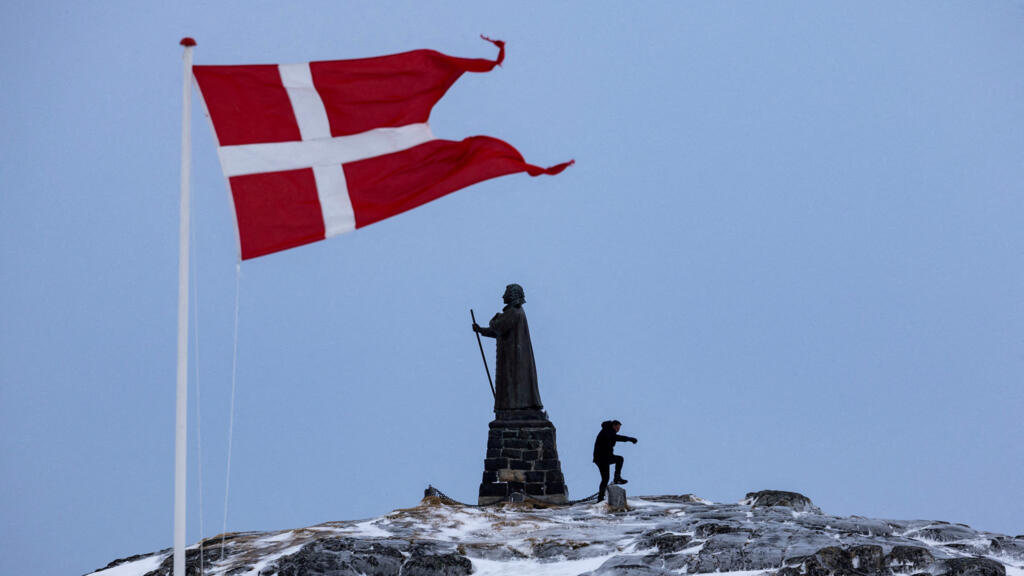

Denmark and Greenland Push for Dialogue as Trump Administration Reiterates Greenland Takeover Ambitions
Copenhagen, Denmark — Denmark and its self-governing territory of Greenland are urgently seeking talks with U.S. Secretary of State Marco Rubio amid escalating tensions over President Donald Trump's renewed push for American control of the strategic Arctic island. The diplomatic outreach comes days after the White House affirmed that military options remain on the table, prompting sharp rebukes from European leaders.
The developments, reported on January 7, 2026, mark a intensification of a long-simmering geopolitical dispute. According to reports from France 24 and Newsmax, Danish and Greenlandic officials have requested a meeting with Rubio to address the Trump administration's doubled-down stance on acquiring Greenland. The island, rich in rare earth minerals and critical for Arctic security, has been a focal point of U.S. interest since Trump's first term.
White House statements on Tuesday explicitly noted that "the U.S. military is always an option," a remark that has fueled concerns across Europe. President Trump has framed the pursuit of Greenland as essential to U.S. national security, echoing his 2019 proposal to purchase the territory outright — an idea swiftly rejected by then-Danish Prime Minister Mette Frederiksen as "absurd." European leaders, including those from NATO allies, have once again dismissed the demands, underscoring the potential strain on transatlantic relations.
Philip Turle, a correspondent for France 24, examined the credibility of these threats in a recent analysis, questioning "how serious these threats could be." Turle's report highlights the strategic calculus: Greenland's position offers dominance over vital shipping lanes opening due to melting polar ice, as well as proximity to U.S. interests in countering Russian and Chinese influence in the Arctic. The U.S. already maintains the Thule Air Base on the island, a key missile warning site leased from Denmark since the Cold War era.
Danish officials have emphasized Greenland's autonomy while reaffirming its ties to Copenhagen. Greenland operates under a 1953 royal ordinance granting it self-rule in most domestic matters, with Denmark retaining control over foreign affairs, defense, and currency. Prime Minister Múte B. Egede of Greenland has historically opposed any sale or transfer, prioritizing Inuit self-determination and economic independence through resource development.
The timing of the renewed U.S. pressure aligns with broader Arctic competition. Russia has militarized its northern frontier, while China invests heavily in polar infrastructure under its "Polar Silk Road" initiative. Trump's comments, first surfacing around January 4, 2026, link the Greenland bid to U.S. strategic imperatives, though specifics on negotiations remain undisclosed.
Historical Context
Trump's interest in Greenland is not new. In August 2019, he publicly floated the idea of buying the territory, citing its resources and location. The proposal led to the cancellation of a planned state visit to Denmark and drew widespread mockery, but it spotlighted the island's geostrategic value. At the time, Frederiksen stated, "Greenland is not for sale," a position echoed by current leadership.
Greenland's population of about 56,000 is predominantly Inuit, and its economy relies on Danish subsidies alongside fishing and emerging mining prospects. Climate change has accelerated access to vast untapped reserves of uranium, zinc, and rare earths, drawing global powers. The U.S. has bolstered its presence through increased funding for Thule and partnerships under the banner of Arctic security.
Denmark, a NATO member hosting U.S. forces at Pituffik Space Base (formerly Thule), navigates a delicate balance. While supportive of alliance commitments, Copenhagen views any coercive approach to Greenland as a violation of sovereignty.
Diplomatic Fallout and European Response
The White House's military rhetoric has elicited swift condemnation. Leaders from France, Germany, and the UK have publicly rejected Trump's overtures, with some warning of damage to NATO cohesion at a time of heightened global threats. Newsmax reported the Danish-Greenlandic bid for Rubio talks as a proactive step to de-escalate, potentially paving the way for high-level discussions.
Rubio, confirmed as Secretary of State in the new Trump administration, has yet to respond publicly to the request. His hawkish stance on China and Russia suggests alignment with Trump's Arctic priorities, though diplomatic channels could temper escalation.
Outlook
As temperatures — both literal and figurative — rise in the Arctic, the Greenland saga tests U.S.-European ties. Successful talks with Rubio could avert crisis, but persistent U.S. pressure risks alienating allies and bolstering adversaries' narratives. Denmark's government has signaled willingness for dialogue on cooperation, such as expanded U.S. basing rights, short of outright transfer.
Analysts note that legal hurdles abound: Greenland's status under international law precludes unilateral annexation, and any deal would require broad consensus. For now, Copenhagen and Nuuk prioritize calm negotiations, underscoring that in the race for the melting North, diplomacy may prove the most potent strategy.
(Word count: 712)






