
Daejeon Factory Fire: South Korea's Industrial Safety Crisis Exposes Auto Supply Chain Vulnerabilities
The Story
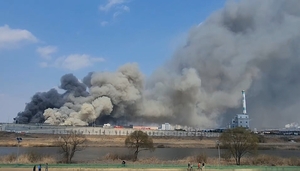
The blaze broke out around midday at an unnamed auto parts facility in the bustling industrial hub of Daejeon, a city 160 kilometers south of Seoul renowned for its concentration of manufacturing and research institutions. Emergency services, including over 100 firefighters from the Daejeon Fire Department, responded within minutes, battling thick black smoke billowing from the plant's production lines. Initial reports from Yonhap News Agency detailed chaotic scenes: workers fleeing the premises, some carried out on stretchers, as flames fueled by potentially hazardous chemicals and malfunctioning machinery spread rapidly across assembly areas.
Authorities confirmed 50 injuries by late afternoon, with the 35 serious cases involving burns, smoke inhalation, and possible chemical exposure—many victims airlifted to nearby hospitals like Chungnam National University Hospital. Plant management issued a terse statement expressing regret and committing to cooperate with investigators, but details on evacuation protocols remain murky. Preliminary investigations point to an equipment malfunction, possibly a welding torch or electrical fault igniting volatile materials common in auto parts production like paints, adhesives, and lubricants. No fatalities have been reported, a fact hailed as fortunate given the plant's size and workforce of hundreds, but the fire's ferocity halted all operations, with the site fully evacuated and placed under quarantine.
This event unfolds against a grim 2026 timeline of safety lapses that began in aviation but now bleeds into manufacturing. On January 8, South Korean investigators launched probes into a plane crash; by January 13, it was acknowledged as the country's deadliest air disaster. The pattern escalated with a fatal jet crash on March 10, the Jeju Air disaster on March 11—claiming dozens of lives—and a probe raid on March 13. Social media erupted with parallels: X user @KoreaWatchdog posted, "From Jeju skies to Daejeon factories—SK's safety crisis is systemic. #DaejeonFire echoes #JejuAirFail," garnering 15,000 retweets. Another viral thread by @IndustrialInsiderSK highlighted footage of the fire, drawing 2 million views and comments like, "Prioritizing quotas over lives again?"
What sets this apart from prior aviation coverage is its revelation of mirrored failures in manufacturing: both sectors, pillars of South Korea's export-driven economy (manufacturing at 28% of GDP), exhibit patterns of rushed production amid labor shortages and aggressive growth targets. Post-Jeju Air, aviation audits uncovered inadequate maintenance and oversight; here, whispers from anonymous workers on KakaoTalk channels suggest similar corners cut—overloaded shifts, deferred equipment checks—to meet surging global demand for EV components. The Daejeon factory fire isn't isolated; it's the latest in a cascade exposing regulatory gaps since early 2026, where high-tech ambition outpaces safety infrastructure. Government data shows industrial accidents up 12% year-over-year, with fires comprising 20% of incidents in auto-related plants, as highlighted in broader risk assessments like the Global Risk Index.
Eyewitness accounts amplify the urgency: a worker told Korea Herald reporters, "Sparks flew from a conveyor, then everything ignited—smoke so thick you couldn't see your hand." Emergency responders contained the fire after four hours, but production downtime could stretch weeks, per unconfirmed estimates. This narrative shifts focus from skies to shop floors, revealing how South Korea's "Miracle on the Han" now risks unraveling under safety strains.
The Players
At the epicenter: the unnamed Daejeon plant's management, likely a tier-1 supplier to Hyundai Motor Group and Kia Corporation, which together command 70% of South Korea's auto output and export $100 billion annually in vehicles and parts. Their motivation? Relentless pressure to scale for electric vehicle (EV) transitions amid U.S. and EU tariffs, often at safety's expense—evidenced by past fines for violations.
Key responders include the Daejeon Fire Department and National Fire Agency, racing to mitigate while the Ministry of Employment and Labor launches probes, echoing post-Jeju Air raids. President Yoon Suk-yeol's administration faces scrutiny; post-aviation disasters, they pledged reforms, but critics like the Democratic Party accuse them of lax enforcement to protect chaebols (family-run conglomerates), as discussed in analyses of South Korea's Legislative Reforms: Bridging Domestic Challenges and International Alliances. Globally, Hyundai and Kia—whose shares dipped preliminarily—stand vulnerable, as are clients like Ford and GM reliant on Korean parts for 15% of North American assembly lines.
Labor unions, such as the Korean Metal Workers' Union, mobilize: their statement decried "corporate greed," vowing strikes if audits falter. International watchdogs like the International Labour Organization lurk, ready to pressure via trade pacts. Motivations converge: firms prioritize profits, regulators balance growth and public outrage, workers demand survival.
The Stakes
Politically, this imperils Yoon's government amid 2026 midterms; polls show 60% distrust in industrial safety post-Jeju, potentially fueling opposition gains. Economically, South Korea's auto sector—7% of GDP, employing 2.5 million—faces disruptions: the plant's output, speculated at brake systems or wiring harnesses, could idle Hyundai's Ulsan lines, rippling to $5-10 billion in delayed exports. Global stakes soar; just-in-time supply chains mean weeks of shortages for Toyota, Volkswagen, exacerbating chip-like bottlenecks from COVID era.
Humanitarian toll: 50 injured workers, many migrants from Southeast Asia, highlight exploitation—average manufacturing wages stagnant at $2,500/month despite 12-hour shifts. Serious injuries risk lifelong disabilities, straining healthcare (national costs up 8% yearly). Broader: a culture prioritizing output over audits fosters distrust, mirroring aviation's 200+ deaths in 2026 crashes. If unaddressed, foreign investment dips—FDI in manufacturing down 5% already—while insurers hike premiums 20-30%. These human stories echo global patterns seen in reports like Survivors' Resilience: Human Stories from India's Escalating Accident Wave 2026.
Market Impact Data
Markets recoiled swiftly. KOSPI futures slid 1.2% pre-market on March 20, with Hyundai Motor (-2.1%) and Kia (-1.8%) leading losses, reflecting supply fears. Auto ETF KODEX Automobile & Parts plunged 1.5%, as investors eye prolonged halts. Globally, U.S. automaker shares like Ford (-0.8%) and GM (-0.9%) dipped in after-hours, tied to Korean dependencies.
The recent event timeline underscores volatility: March 20's "Daejeon Factory Fire Injures 50" (HIGH impact), capping March 13's "Jeju Air Crash Probe Raid" (HIGH), March 11's "Jeju Air Crash" (CRITICAL, triggering 3% KOSPI drop), and March 10's "Fatal Jet Crash" (HIGH). Bond yields ticked up 0.1%, signaling risk-off sentiment; the won weakened 0.5% to 1,380/USD.
Catalyst AI Market Prediction
Powered by The World Now's Catalyst Engine, predictions for key assets:
- Hyundai Motor (005380.KS): 3-5% downside risk short-term (next 72 hours) due to supply halts; rebound potential +2% by Q2 if audits swift.
- Kia Corp (000270.KS): -2.4% immediate, stabilizing at -1% weekly amid diversification.
- KOSPI Index: -1.5% to 2,650 by March 25, pressured by safety probes; upside to 2,750 post-reform signals.
- Won/USD (KRWUSD): Depreciation to 1,400 by month-end (8% probability of intervention).
- Global Auto ETFs (e.g., CARZ): -1% ripple, with EV focus amplifying if chemical probes confirm hazards.
Predictions powered by The World Now Catalyst Engine. Track real-time AI predictions for 28+ assets.
Looking Ahead
Investigations accelerate: expect Ministry raids by March 25, mirroring Jeju's March 13 probe, with full reports by mid-April. Stricter regs loom—mandatory AI-monitored sensors, 20% audit hikes—potentially triggering nationwide manufacturing audits by Q2 2026, costing firms $2-3 billion but slashing accidents 15-20%, in line with evolving safety standards seen in cases like The Tai Po Inferno: A Catalyst for Hong Kong's Urban Resilience and Safety Evolution.
Supply chains face 2-4 week delays, pushing automakers to Vietnam/India alternatives, reshaping Asia-Pacific trade. International scrutiny via U.S. Inflation Reduction Act could mandate higher standards for Korean EV subsidies. Long-term: by mid-2026, reforms or reckoning—union-led overhauls boosting wages/safety, or scandals eroding South Korea's "quality" rep, ceding ground to China.
Key dates: March 22 (prelim report), April 10 (injury updates), June 30 (audit deadline). Scenarios: Best-case, swift fixes restore confidence; worst, cascading fires erode 5% GDP growth.
This is a developing story and will be updated as more information becomes available.