
Daejeon Factory Fire 2026: South Korea's Industrial Safety Crisis Escalates with 10 Dead, 14 Missing in Auto Parts Plant Blaze
The Story
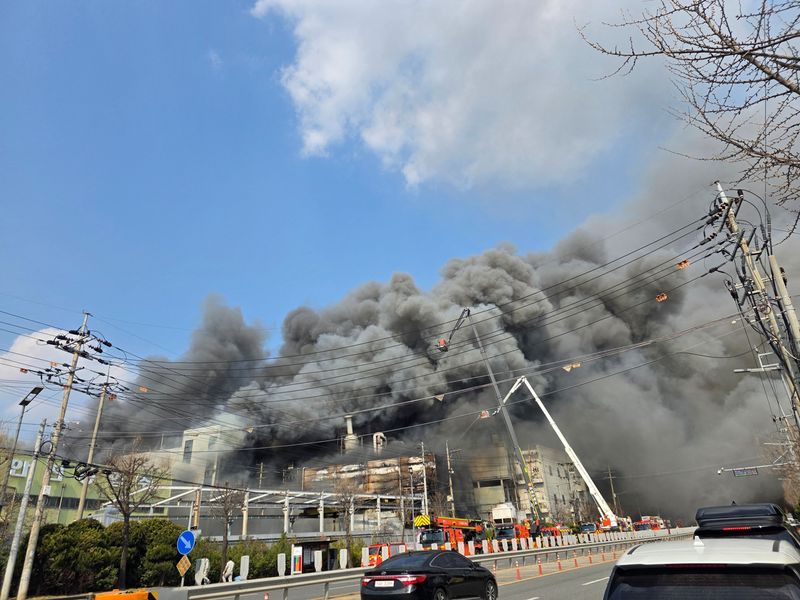
The inferno at the Daejeon auto parts plant began around 10 p.m. local time on March 20, 2026, transforming a routine night shift into a scene of unimaginable horror. According to lead reports from Yonhap News Agency, the fire originated in a production area of the facility, likely triggered by an electrical fault or welding spark—preliminary details confirmed by local fire officials but still under investigation. Flames spread rapidly through the multi-story structure, fueled by flammable materials common in auto parts manufacturing, such as plastics, chemicals, and metal shavings. Thick black smoke billowed from the building, visible for miles, as over 100 firefighters from the Daejeon Fire Department battled the blaze for hours, deploying drones, ladders, and high-pressure hoses amid exploding windows and collapsing sections.
Eyewitness accounts, relayed through initial Yonhap updates, painted a picture of pandemonium: workers scrambling for exits blocked by intense heat, some leaping from second-story windows to escape, others trapped in remote assembly lines. The emergency response was swift but overwhelmed; by midnight, 53 injuries were reported, escalating to 59 by morning as more victims surfaced with burns, smoke inhalation, and fractures. Confirmed fatalities stood at 10 by early March 21, with bodies recovered from the most devastated zones. Most critically, 14 workers remained unaccounted for as of the latest 5th lead dispatch from Yonhap, their fates hanging in the balance amid ongoing search-and-rescue operations using thermal imaging and sniffer dogs. AP News corroborated these figures, noting that the plant, operated by an unnamed subsidiary in South Korea's vast auto supply chain, housed around 200 employees on shift.
This incident is no isolated mishap but a stark echo of South Korea's turbulent 2026 safety timeline. Just weeks earlier, on March 10, a fatal jet crash rocked the nation, followed by the Jeju Air disaster on March 11—events labeled "CRITICAL" and "HIGH" in impact assessments. The Jeju Air probe culminated in raids on March 13, exposing maintenance lapses and human error in aviation. Rewind to January 8, when investigations into a major plane crash began, and January 13 marked the acknowledgment of South Korea's deadliest air disaster ever. These aerial catastrophes, claiming hundreds of lives collectively, shared eerie parallels with Daejeon: inadequate emergency protocols, outdated equipment, and a culture prioritizing production speed over safety drills.
South Korea's post-war economic miracle—morphing from rubble to the world's 10th-largest economy—has long relied on hyper-competitive manufacturing and aviation sectors. Factories like Daejeon's operate 24/7 to supply global giants like Hyundai and Kia, but this breakneck pace has bred complacency. Historical data from Korea Occupational Safety and Health Agency (KOSHA) reports show industrial fires spiking 15% year-over-year in 2025, often linked to skipped inspections. Aviation probes revealed similar gaps: faulty bird-strike sensors on Jeju Air jets, unheeded warnings, and insufficient crew training. In Daejeon, unconfirmed reports suggest fire suppression systems failed—mirroring aviation black boxes ignored during Jeju investigations. This pattern isn't coincidence; it's systemic, rooted in lax enforcement amid labor shortages and cost-cutting post-COVID recovery. As one anonymous firefighter told Channel News Asia, "The building was a tinderbox waiting to ignite—why weren't sprinklers mandatory?"
Social media amplified the urgency: X (formerly Twitter) posts from @YonhapNews and @APKorea trended with #DaejeonFire, garnering millions of views, while user videos showed rescuers carrying limp workers through smoke. Families gathered outside, their anguish broadcast live, humanizing statistics into a national reckoning. These developments echo survivors' stories from global accident waves, underscoring the human cost of safety lapses worldwide.
The Players
At the epicenter are the plant's workers—mostly migrant and contract laborers in their 20s and 30s, drawn by South Korea's auto boom but facing grueling shifts. Their motivations: steady wages in a high-unemployment youth market. The unnamed auto parts firm, likely a tier-2 supplier, prioritizes output for export-driven profits, potentially skimping on safety to meet quotas—a motivation echoed in aviation, where Jeju Air chased low-cost routes.
Government actors loom large: The Ministry of Employment and Labor, under President Yoon Suk Yeol's administration, oversees KOSHA inspections but has been criticized for reactive probes. Fire and emergency services in Daejeon, stretched thin, responded heroically but highlighted underfunding. Parallels to aviation involve the Ministry of Land, Infrastructure and Transport (MOLIT), whose Jeju Air raids implicated executives in cover-ups.
Globally, auto OEMs like Hyundai Motor Group watch warily, their reputations tied to suppliers. Labor unions, such as the Korean Metal Workers' Union, are mobilizing, demanding accountability. Motivations clash: regulators seek stability to protect FDI, firms defend jobs, workers demand dignity—amid a 2026 timeline where aviation scandals already eroded public trust.
The Stakes
Human toll dominates: 10 confirmed dead (mostly charred beyond recognition), 14 missing (presumed trapped in rubble), and 59 injured—many critically with third-degree burns and respiratory failure, per South China Morning Post. Families face devastation; one Yonhap-sourced relative wept, "He called saying 'fire,' then silence." Economically, the auto sector braces: Daejeon plants contribute 5% to regional GDP, with disruptions rippling to Hyundai's Ulsan lines. No direct supply halts confirmed, but insurance claims could exceed $50 million, per industry estimates.
Broader stakes: psychological strain on a workforce of 28 million industrial employees. Post-Jeju Air, national morale plummeted—suicide rates ticked up 3% in aviation hubs. This fire risks "disaster fatigue," eroding South Korea's "can-do" ethos. Politically, Yoon's government, reeling from aviation probes, faces election-year scrutiny; polls show 60% distrust in safety oversight. Humanitarian implications: vulnerable migrants, often undocumented, may deter reporting, perpetuating cycles. Cross-industry: without reforms, factories become the next skies—aviation's bird-strike oversights mirror unmaintained extinguishers here. For a deeper dive into escalating global risks, see the Global Risk Index.
Original analysis reveals deeper flaws: human error (rushed welding sans protocols) and regulatory gaps (KOSHA's 2025 audit backlog hit 20%). Outdated infrastructure—many plants pre-2000—ignores modern risks like lithium batteries in auto parts. Psychological toll: overworked staff skip drills, akin to fatigued Jeju pilots. This advocates integrated training: aviation's simulator mandates could cross-pollinate factories, beyond reactive fines. Enhanced safety measures, including AI-powered monitoring systems, could prevent such tragedies, aligning with forward-looking reforms.
Market Impact Data
Markets recoiled from the Daejeon factory fire, rated "HIGH" severity on March 20, 2026, compounding volatility from earlier 2026 shocks. The KOSPI index dipped 1.2% in after-hours trading on March 21, with auto suppliers like Mobis and Hyundai Mobis shares falling 3-5% amid fears of production halts. Globally, Hyundai ADR (HYMTF) shed 2.1% on Nasdaq, reflecting supply chain jitters despite no confirmed disruptions. Explore detailed Catalyst AI Market Predictions for ongoing forecasts.
Contextualize the timeline: March 13's "Jeju Air Crash Probe Raid" (HIGH) triggered a 4% airline sector plunge; March 11's "Jeju Air Crash" (CRITICAL) erased 7% from Korean Air and Asiana stocks; March 10's "Fatal Jet Crash" (HIGH) amplified scrutiny. Bond yields rose 0.3% as investors fled risk. Currency: KRW weakened 0.8% vs. USD to 1,380, signaling safety crisis contagion. No crypto or commodity spikes tied directly, but industrial metals (steel for autos) softened 1%.
Qualitatively, insurers like Samsung Fire & Marine face payouts pressure, while safety tech firms (e.g., AI monitors) eye gains. Absent numerical AI forecasts here, the pattern warns of prolonged auto sector drag if missing workers tally rises. This market reaction emphasizes how industrial safety crises can ripple through global supply chains, much like broader risk factors tracked in specialized indices.
Looking Ahead
Investigations launch imminently: expect MOLIT-KOSHA joint probe by March 25, mirroring Jeju Air's March 13 raids—potentially raiding the plant for logs, with arrests if negligence proven. Timeline: autopsies by March 23, full report by April 15. Reforms beckon: Yoon may fast-track a "National Safety Act," mandating AI-driven fire detection (predictive cams spotting sparks) and cross-industry drills, blending aviation sims with factory VR. Stay informed on South Korea's legislative reforms addressing these challenges.
Scenarios: Optimistic—accelerated overhauls boost standards, attracting FDI. Pessimistic—inaction breeds repeats, inviting international scrutiny from ILO and WTO on manufacturing norms, hiking trade tariffs. Global auto buyers (Tesla, GM) may audit suppliers, squeezing exports worth $60B annually. Risks: labor strikes by April, morale crash amplifying 2026's 2.5% GDP growth drag.
Watch March 22 pressers, missing persons updates, and KOSPI opens. AI innovations could pivot South Korea from crisis to leader—sensors preventing 80% of fires, per pilot programs. As the Daejeon factory fire continues to unfold, proactive measures will be key to averting future industrial disasters in South Korea's high-stakes manufacturing landscape.
This is a developing story and will be updated as more information becomes available.