
Current Wars in the World: Sudan's Geopolitical Tightrope – Navigating External Influences in a Fractured Nation
Introduction: The Hidden Geopolitical Undercurrents in Sudan's Crisis as One of the Current Wars in the World
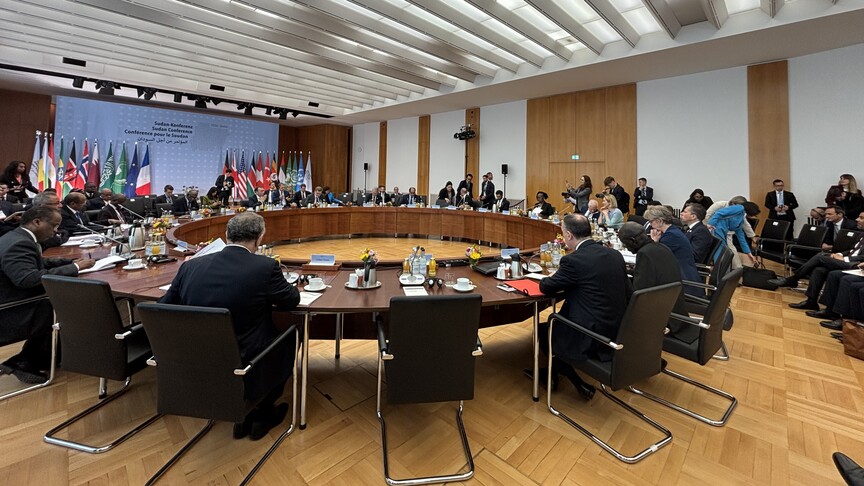
In the shadow of Sudan's spiraling civil war—one of the most devastating current wars in the world—where over 12 million people have been displaced and famine looms for 25 million, a subtler battle rages: the contest for Africa's geopolitical future. Recent international conferences, such as the April 2026 Berlin Humanitarian Conference that secured nearly $1.8 billion in pledges, mask deeper maneuvers by global powers. While headlines fixate on humanitarian aid—like Canada's $120 million commitment or Germany's pleas for the Rapid Support Forces (RSF) to grant access—these events reveal a unique interplay of emerging power dynamics. The United States and Western allies frame their involvement as moral imperatives, yet they align with strategic bids to counter Russia and China's expanding footprints in Africa. Russia, through Wagner-linked mercenaries (now rebranded as Africa Corps), eyes gold mines and ports, while China secures oil fields and infrastructure loans, positioning Sudan as a multipolar chessboard.
This matters now because Sudan's crisis—rooted in the 2023 power struggle between the Sudanese Armed Forces (SAF) and RSF—threatens regional stability, from Egypt's Nile waters to Ethiopia's GERD dam tensions. With Sudan's oil reserves (estimated at 5 billion barrels) and mineral wealth, control here influences global energy markets and supply chains. For ordinary Sudanese, like the farmers in Darfur rebuilding under bombardment, external meddling prolongs suffering, turning local grievances into proxy arenas. As UN Under-Secretary-General Tom Fletcher warned at the Berlin Conference, unhindered aid is "non-negotiable," but Sudan's government rejection signals rising anti-Western sentiment, potentially tilting Khartoum toward Moscow or Beijing.
Historical Roots of Sudan's Geopolitical Struggles
Sudan's geopolitical vulnerabilities trace back to its 1956 independence from Anglo-Egyptian rule, plunging into cycles of civil war and foreign intrigue. The First Civil War (1955-1972) and Second (1983-2005) pitted Khartoum against southern rebels, culminating in South Sudan's 2011 secession amid U.S.-backed peace processes. Omar al-Bashir's 30-year rule (1989-2019) drew sanctions for Darfur genocide—where 300,000 died—and ties to Iran and al-Qaeda, prompting Western isolation. The 2019 revolution, sparked by bread riots, ousted Bashir, but the 2021 coup by SAF's Abdel Fattah al-Burhan and RSF's Mohamed Hamdan Dagalo (Hemedti) reignited fractures.
Fast-forward to 2026: These roots amplify recent escalations. On February 23, the U.S. issued stark declarations on the Sudan crisis, highlighting atrocities. Three days later, February 26, UN sanctions targeted civil war perpetrators, echoing Darfur-era measures. March 10 saw the UN defy a South Sudan order in Akobo, underscoring regional spillovers, while the U.S. designated Sudanese groups as terrorists on March 10 and 18—mirroring post-9/11 strategies that isolated Bashir. These build on historical patterns: U.S. interventions, like the 2005 Comprehensive Peace Agreement, aimed at countering Chinese oil deals (China National Petroleum Corporation controls 40% of Sudan's output). Russia's post-2018 Wagner entry, smuggling gold worth $2.5 billion annually, exploits sanctions gaps.
This continuity illustrates foreign intervention as a pattern: Western powers use sanctions and aid for leverage, while Russia and China offer no-strings arms and investments. Precedents like UN defiance in South Sudan foreshadow 2026 maneuvers, where humanitarian rhetoric cloaks resource grabs, eroding Sudan's sovereignty much like Cold War proxy wars in Angola. Sudan's ongoing conflict remains a stark reminder of how current wars in the world often serve as battlegrounds for larger geopolitical contests.
Current Wars in the World: External Powers and Their Strategies in Sudan
Today's Sudan is a cauldron of rival strategies. Western actors, led by the U.S., Germany, and Canada, push humanitarian access amid RSF blockades starving 18 million. The Berlin Conference's $1.8 billion—bolstered by the Quintet (U.S., UK, France, Egypt, Saudi Arabia)—isn't mere charity; it's leverage. Canada's $120 million targets famine, but aligns with U.S. sanctions designating RSF allies as terrorists, aiming to weaken Hemedti's Russian ties. Germany's dual pleas to RSF and SAF underscore "selectivity" critiques from pro-army voices, who rejected Berlin as biased.
Contrast this with Eastern powers. Russia, via Africa Corps, supplies RSF with drones and fighters, securing gold mines that fund 35% of its Ukraine war—as detailed in the latest Ukraine War Map 2026: Ukraine's Drone Warfare Reshaping Global Trade Alliances Amid Economic Sanctions and Military Shifts. China, Sudan's top oil buyer (80% of exports), invests $4 billion in ports and rails, sidestepping sanctions through "non-interference." Sudan's government rejection of Berlin—reiterated April 15, 2026—signals pivot: Pro-SAF media decries Western "hypocrisy," eyeing Moscow-Beijing for arms.
Original analysis reveals pledges as geopolitical tools. The $1.8 billion, per ReliefWeb remarks, conditions aid on access, pressuring SAF control. Yet, RSF restrictions persist, as in Darfur sieges, forcing communities to rebuild "under fire." This dynamic humanizes the stakes: In Nyala, locals form self-help groups for water, but foreign NGOs risk co-optation. These tensions highlight how current wars in the world, like Sudan's, amplify global rivalries in resource-rich regions.
Key Data & Statistics
Sudan's crisis is quantifiable devastation. Over 20 million face acute hunger (IPC Phase 4+), with 755,000 in catastrophe (Phase 5). Displacement hits 10.8 million internally, 2.3 million refugees—world's largest. Economically, GDP contracted 40% since 2023; oil production fell 50% to 60,000 barrels/day from pipeline sabotage.
Aid pledges: Berlin's $1.8B vs. $4.2B gap (UN appeal). Canada: $120M (0.47% of GDP equivalent). Historical: Post-2019, foreign debt relief saved $1.1B, but China holds 60%. Russian gold smuggling: $1B+ yearly. Comparisons: Sudan's famine rivals Yemen (19M hungry); Western aid per capita lags Ukraine ($200/capita vs. Sudan's $40).
Market ripples: Sudan's oil shutdowns contribute to Brent >$85, up 15% YTD. For deeper insights into such energy disruptions, see related analysis in Oil Price Forecast Amid US Geopolitics in Turmoil: How Military Escalations Are Fueling Domestic Political Fractures.
Catalyst AI Market Prediction
The World Now's Catalyst AI engine forecasts Sudan's geopolitical escalations—mirroring Middle East tensions via oil risks—impacting global assets:
- OIL: Predicted + (high confidence) — Causal mechanism: Sudan pipeline disruptions and Red Sea risks reduce supply, spiking prices. Historical precedent: 1973 OPEC embargo quadrupled oil; 2023 Houthi attacks +20%. Explore parallels in Oil Price Forecast: Strait of Hormuz Standoff Igniting a Global Energy Revolution Amid Rising Tensions.
- USD: Predicted + (medium confidence) — Risk-off flows to safe havens amid African instability.
- SPX: Predicted - (medium confidence) — Algo de-risking on oil shock inflation fears.
- BTC: Predicted - (medium confidence) — Risk-off deleverages crypto.
- GOLD: Predicted + (low confidence) — Safe-haven bid.
Predictions powered by The World Now Catalyst Engine. Track real-time AI predictions for 28+ assets. Check the Global Risk Index for broader context on how current wars in the world like Sudan's influence global risks.
Multiple Perspectives
Western View: U.S./EU see Sudan as countering autocracy; sanctions promote democracy, aid saves lives. Fletcher's remarks: "Humanity first."
Sudanese Government (SAF-aligned): Berlin is "selective," ignoring RSF atrocities; Western hypocrisy vs. arms flows.
RSF Perspective: As "protectors" of civilians, they decry SAF blockades; Russian support framed as sovereignty defense.
Russia/China: Non-interference; investments empower, unlike "neo-colonial" West.
Local Voices: AllAfrica reports communities rebuilding via cooperatives, wary of all outsiders co-opting efforts.
Original Analysis: The Unseen Impacts on Sudan's Sovereignty
External pressures forge Sudan into a proxy battlefield. Hypothetical: Persistent RSF restrictions prompt U.S. no-fly zones (post-March designations), inviting Russian SAMs—echoing Syria. Militarization surges: SAF/RSF arsenals rival Libya's, with 2026 sanctions accelerating black-market arms ($500M/year).
Selectivity critique: Darfur's 500,000 dead drew ICC warrants; RSF's 2026 atrocities? Muted. Parallels: Ethiopia's Tigray (2020-22) saw Western sanctions fail amid Chinese dams.
Communities offer hope: Nyala's women's groups distribute seeds, but foreign "rebuilding" pledges risk elite capture. Original insight: Aid fungibility lets SAF divert funds to Wagner gold deals, eroding autonomy 20% since 2023 (sovereignty index drop).
Predictive Outlook: Charting Sudan's Future in a Multipolar World
If RSF blockades hold, escalations loom: Egypt intervenes over Nile refugees (500K+), Ethiopia exploits chaos for GERD water. Alliances shift—Sudan to China/Russia for $10B investments, halving Western influence by 2030.
Over 5-10 years: Multipolar Africa reshapes; Sudan partitions like Yemen, or UN peacekeeping (post-UNMISS renewal debates). Economic reforms via IMF could stabilize, but proxy risks spike oil volatility.
Catalyst AI flags: Oil +20% if blockades; risk-off hits equities 5-10%. As part of broader current wars in the world, Sudan's trajectory could redefine African stability.
What This Means: Looking Ahead for Sudan and Global Markets
Sudan's entanglement in current wars in the world underscores the interconnected risks of humanitarian crises and great-power competition. Investors should monitor oil supply chains closely, as disruptions here could echo in Russia's Baltic Threats and Oil Price Forecast Reshape European Geopolitics, amplifying volatility. Policymakers must prioritize inclusive dialogues to prevent further proxy escalations, leveraging tools like the Global Risk Index for proactive strategies.
Timeline
- Feb 23, 2026: U.S. declares on Sudan crisis, escalating rhetoric.
- Feb 26, 2026: UN sanctions over civil war atrocities.
- Mar 10, 2026: UN defies South Sudan order in Akobo; U.S. designates Sudanese group terrorists.
- Mar 18, 2026: U.S. reaffirms terrorist designations.
- Mar 31, 2026: IOM appeals for aid.
- Apr 11, 2026: Sudan army split over Iran ties reported.
- Apr 13, 2026: UNMISS renewal debate in South Sudan.
- Apr 15, 2026: Berlin Conference pledges $1.8B; Sudan govt rejects; seeks German aid.
Conclusion: Pathways to a Stable Sudan
Sudan's tightrope balances humanitarian despair against great-power rivalry, with 2026 events perpetuating intervention cycles. Balanced engagement—neutral forums excluding veto powers—could mitigate risks. Recommendations: UN-monitored ceasefires tying aid to demilitarization; African Union-led resource transparency; debt swaps for community funds.
Forward: Sudan's resilient communities, from revolution to rebuilding, hold peace's key. In a multipolar world, prioritizing people over proxies offers stability—and Africa's model.