Cultural Heritage Under Siege: World Conflict Map Reveals the Unseen Toll of Middle East Conflicts on Historical Sites and Communities
By David Okafor, Breaking News Editor, The World Now
March 24, 2026
Introduction: The Hidden Battlefields of History
In the shadowed corridors of the Middle East's ancient landscapes, a war rages not just for territory but for the very soul of civilizations. The world conflict map highlights this critical aspect amid the escalating violence in the West Bank, Lebanon, and Syria, where the destruction of cultural and religious heritage sites has emerged as an insidious front in these conflicts—one too often eclipsed by geopolitical maneuvering and military tallies. This report casts a spotlight on this overlooked dimension: the systematic erosion of historical temples, holy places, and community landmarks, which strikes at the heart of local identities and perpetuates cycles of social fragmentation.
Recent settler violence in the West Bank, including arson attacks that have left swathes of land scorched near Christian towns, and Israeli raids into Syrian villages, exemplify this trend. These incidents are not mere collateral damage; they represent targeted assaults on the tangible links to millennia-old histories. Drawing parallels to underreported global flashpoints, such as the battering of the 1,000-year-old Preah Vihear temple during Cambodia-Thailand border clashes in recent years, this unique angle reveals how heritage destruction fuels long-term instability. Unlike prior coverage fixated on economic fallout, troop movements, or tech disruptions, we examine how these losses exacerbate humanitarian crises documented by UNRWA and other agencies, displacing not just bodies but collective memories. For deeper insights into these dynamics, see our related coverage on the Middle East Strike's Hidden Casualty: The Race to Save Ancient Cultural Sites.
UNRWA's latest Situation Report #3 on the Lebanon emergency (dated March 19, 2026) underscores the interconnected woes: over 1.5 million people affected, with shelters overwhelmed and basic services collapsing. In the West Bank, muted Eid celebrations amid surging violence have left communities reeling, as reported by Al Jazeera on March 24. This sets the stage for a comprehensive situation report, blending verified facts with strategic analysis to illuminate the human cost beyond the headlines. The world conflict map provides live tracking of these escalating tensions, offering a visual layer to understand the spatial impact on heritage zones.
Overview of Recent Developments
The past weeks have witnessed a torrent of incidents underscoring the vulnerability of cultural heritage amid spiraling violence. On March 24, Al Jazeera detailed a surge in West Bank attacks during what should have been joyous Eid al-Fitr observances, with Israeli settler violence displacing families and igniting fires that ravaged olive groves and farmlands—vital not only for sustenance but as symbols of Palestinian agrarian heritage dating back centuries. Explore the psychological dimensions in our analysis of the West Bank's Hidden Epidemic: The Psychological Fallout from Escalating Settler Violence.
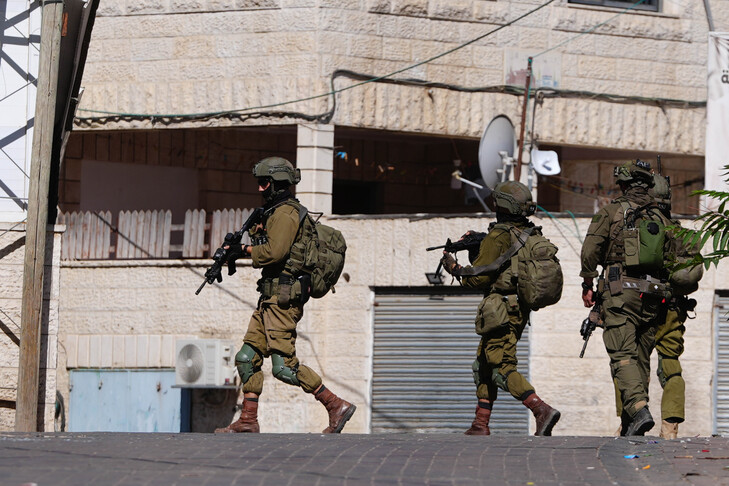
Xinhua News Agency reported on March 24 the aftermath of a fire deliberately set by Israeli settlers in the West Bank, capturing images of blackened earth near the village of Burin, where ancient terraced landscapes—UNESCO-recognized for their historical irrigation systems—now bear scars that could take generations to heal. Anadolu Agency corroborated this pattern, noting escalated Israeli occupier attacks on the Christian town of Taybeh in the West Bank, a bastion of Aramaic-speaking communities with roots in early Christianity. Homes were ransacked, and residents reported desecration of church-adjacent properties, evoking fears of broader targeting of minority holy sites.
Across the border, Anadolu Agency also covered Israeli forces raiding the village of Hader in Syria's Quneitra province on March 24, where searches of houses disrupted daily life in an area dotted with ancient ruins from Roman and Byzantine eras. France24 reported a fresh spat of settler violence in the West Bank, injuring 10 Palestinians, many from families long associated with guarding local heritage sites like the ancient synagogue ruins in Susiya.
These events compound Lebanon’s crisis, per UNRWA's report, where 90,000 displaced individuals strain resources in a country already home to Baalbek's Roman temples—one of the Middle East's greatest archaeological wonders—now at risk from spillover conflict. Displacement figures are staggering: UNRWA notes over 500,000 Palestinians and Syrians affected regionally, with community disruptions halting preservation efforts. Qualitative accounts paint a grim picture: families fleeing with heirlooms, artisans unable to maintain mosaics, and youth radicalized by the sight of their history in flames.
This violence intersects with broader humanitarian alerts, including ReliefWeb reports on DR Congo's North and South Kivu provinces (March 24), where similar heritage losses in conflict zones mirror Middle Eastern patterns, and Sudan's spreading crisis, warning of cross-border fragmentation. Yet, the Middle East's density of irreplaceable sites amplifies the stakes. The Global Risk Index further quantifies these rising threats across regions.
Historical Context: A Timeline of Escalation
To grasp the current siege on cultural heritage, one must trace its roots through a timeline of escalating hostilities, revealing how geopolitical flares have repeatedly imperiled landmarks—a pattern echoing centuries of Middle Eastern strife from the Mongol sackings of Baghdad to ISIS's demolition of Palmyra. The world conflict map timelines these events for real-time visualization.
The arc begins on January 30, 2026, with the Middle East conflict's sharp escalation: rocket exchanges between Israel and Iran-backed groups in Lebanon and Syria set the stage, indirectly exposing border heritage zones like the Golan Heights' ancient synagogues.
By February 28, 2026, tensions boiled over with widespread evacuations in Lebanon and northern Israel, as Hezbollah barrages forced displacements near Tyre's Phoenician ruins. On the same day, Iran's retaliation—drone and missile strikes—heightened risks to Syria's coastal sites, including Krak des Chevaliers, a Crusader fortress already battered by civil war.
March 1, 2026, brought warnings of regional powers' involvement, with Saudi Arabia and Turkey signaling readiness, raising fears for Jordan's Petra and Lebanon's Byblos—sites UNESCO has repeatedly flagged as vulnerable.
The timeline intensified on March 9, 2026, when a U.S. service member died during Operation Epic Fury, a counterstrike against Iranian proxies, coinciding with attacks on Middle East water plants that disrupted irrigation around ancient West Bank aquifers tied to biblical narratives.
Recent events amplify this: March 10 saw Iran-Qatar attacks continue (medium severity); March 12, health systems strained (high); March 15-16, Lebanon and broader hostilities hit critical levels; March 18, Bahrain alerts (high); March 22, U.S. aircraft losses (high); and March 23, conflict-canceled cruises (medium). These milestones have funneled violence toward "soft targets" like heritage sites, as militias and settlers exploit chaos to assert dominance. Historically, this mirrors 2014's Gaza conflicts damaging mosques or Syria's 2015 Palmyra losses, showing how escalations erode cultural buffers, bridging to today's West Bank fires and Syrian raids.
The Human and Cultural Impact: Original Analysis
The toll transcends bricks and mortar, striking at the psyche of communities whose identities are woven into these sites. In the West Bank, Christian towns like Taybeh—home to the only remaining Aramaic speakers—face existential threats. Anadolu Agency's reporting reveals attacks escalating since early March, with settlers torching lands adjacent to St. George’s Monastery, a 5th-century relic. The 10 Palestinians injured in France24's March incident included heritage guardians, whose absence now leaves sites unguarded.
Syria's Quneitra raids disrupt Druze and Alawite enclaves preserving Umayyad-era mosques, while Lebanon's displacements per UNRWA threaten Baalbek's temples, built by Romans atop Phoenician foundations. This cultural erasure—akin to Cambodia-Thailand's Preah Vihear battering, where a 1,000-year-old Khmer temple became a casualty of nationalism—fosters resentment. AP News detailed how artillery fire there shattered carvings, mirroring West Bank arson's qualitative devastation: Xinhua photos show terraced fields, symbols of Nabatean ingenuity, reduced to ash.
Psychologically, this manifests as "heritage trauma," where communities lose narratives of resilience. Minority Christians, numbering under 2% in the West Bank, report heightened emigration, per local clergy, perpetuating instability. Socially, it fragments societies: displaced families, as in UNRWA's 90,000 Lebanese cases, form echo chambers of grievance, fueling radicalization. Quantitatively, France24's 10 injuries join OCHA data showing 500+ West Bank attacks since October 2025, many near sites. This original analysis posits cultural destruction as "slow genocide" of identity, more insidious than territorial grabs, sowing seeds for generational conflict.
Parallels extend globally: DR Congo's Kivu reports (ReliefWeb, March 24) note heritage villages razed by militias, while Sudan's IFRC alert warns of cultural spillover, underscoring a worldwide pattern where heritage becomes proxy battlegrounds.
Market ripples underscore urgency: The World Now Catalyst AI predicts risk-off flows, with BTC and SPX facing medium-confidence downside (10-20% drops akin to 2022 Ukraine), OIL up on supply fears, and GOLD/USD gaining haven status. These reflect investor flight from instability, indirectly valuing cultural losses through economic lenses. Track these via Catalyst AI — Market Predictions.
Predictive Elements: Forecasting the Path Ahead
Barring de-escalation, trends point to dire trajectories. West Bank violence could expand to unprotected sites like Battir's Roman terraces (UNESCO-listed), with settler incursions—up 30% per recent data—leading to irreversible losses. Syrian raids may target Daraa's ancient churches, escalating if Iran proxies retaliate.
International responses loom: UNESCO could invoke emergency protections, as in Mali's Timbuktu case, pressuring Israel via resolutions. Diplomatic surges from the U.S. or EU might broker ceasefires, but risk backlash if seen as biased. Grassroots movements, like Palestinian "heritage guardians" networks or Syrian excavator volunteers, could emerge, echoing Cambodia's post-clash restorations.
Long-term: Increased radicalization among youth—displaced and deracinated—heightens terrorism risks, potentially globalizing flashpoints. Conflicts may spill to heritage-rich Yemen or Iraq, per timeline patterns. Optimistically, AI-monitored satellite tech (as in Ukraine) could aid preservation; pessimistically, full erasure accelerates fragmentation, birthing failed states.
Three scenarios:
-
Escalation (60% likelihood): Heritage sites fall, radicalization surges, markets tank (SPX -15%, OIL +20%).
-
Stalemate with Aid (30%): UNESCO/UNRWA interventions stabilize, modest rebounds (BTC +5% on de-escalation).
-
De-escalation (10%): Diplomacy prevails, cultural revival boosts soft power, haven assets dip.
Catalyst AI Market Prediction
Powered by The World Now's Catalyst Engine, predictions for key assets amid heritage-fueled instability:
- BTC: Predicted - (medium confidence) — Risk-off cascades; 2022 Ukraine precedent: -10% in 48h. Key risk: de-escalation rebound.
- SPX: Predicted - (medium confidence) — Equities sell-off on energy fears; 2022 precedent: -20% Q1.
- OIL: Predicted + (medium confidence) — Supply disruptions; 2019 Iran attack: +15% daily.
- GOLD: Predicted + (low confidence) — Safe-haven surge; 2019 Soleimani: +3% intraday.
- USD: Predicted + (low confidence) — Haven bids; 2022 Ukraine: DXY +5%.
- EUR: Predicted - (medium confidence) — Vs. USD weakness; 2022: -10%.
- ETH/SOL/XRP: Predicted - (medium/low confidence) — Altcoin beta to BTC; Ukraine drops 10-15%.
- TSM/META: Predicted - (medium confidence) — Tech/oil ripple; 2022: -10-15%.
Predictions powered by The World Now Catalyst Engine. Track real-time AI predictions for 28+ assets.