
Conflict in Ukraine: 189 Clashes Reported Over the Past Day
In the ongoing conflict in Ukraine, Ukrainian forces reported 189 military clashes across the battlefield over the past day, as per Ukraine's General Staff.[5] This update comes on day 1,526 of Russia's large-scale armed aggression against Ukraine, underscoring the persistent intensity of frontline operations.[5] Reports from Ukraine's General Staff also detail significant Russian losses, including 1,420 soldiers killed and wounded, alongside substantial equipment and UAV destruction.[1] Intense fighting has been noted particularly on key fronts like Pokrovsk, where 41 combat clashes occurred.[2] Additionally, Ukraine continues efforts to counter threats from Iranian-designed Shahed drones deployed by Russia, while North Korean soldiers fighting alongside Russian forces have been highlighted for extreme measures to avoid capture.[3][4]
Overview of Recent Clashes
The battlefield situation in the conflict has seen a high volume of engagements, with Ukraine's General Staff reporting 189 military clashes over the past day.[5] This figure represents the total number of combat interactions across various front lines, providing a comprehensive snapshot of the daily operational tempo.[5] As detailed in the official update, these clashes occurred amid day 1,526 of Russia's large-scale armed aggression against Ukraine, a milestone that emphasizes the protracted nature of the military confrontation.[5]
Ukraine's General Staff, responsible for coordinating and reporting on frontline activities, has consistently provided these daily tallies to inform on the scope of fighting.[5] The term "military clashes" encompasses a range of combat actions, from infantry assaults to defensive repulses, reflecting the dynamic and multifaceted nature of operations.[5] This past day's total of 189 indicates sustained pressure from Russian forces, met with Ukrainian resistance across multiple sectors.[5] Such reporting from the General Staff serves as a primary source for understanding the breadth of engagements, allowing for an assessment of where resources are most strained.[5]
In context, this number aligns with patterns of elevated activity observed in recent updates, though each day's specifics vary based on tactical developments.[5] The General Staff's documentation, titled "Battlefield sees 189 clashes over past day," directly captures the immediacy of these events, positioning them within the broader timeline of the war.[5] Analysts reviewing such data note that high clash counts correlate with attempts to advance or hold positions, though the exact distribution across fronts is detailed in sector-specific reports.[5] Ukraine's ability to log and publicize 189 clashes demonstrates operational resilience and transparency in communicating the scale of defensive efforts.[5]
Furthermore, the General Staff's role in aggregating these figures ensures that the overview remains focused on verifiable frontline occurrences, avoiding speculation.[5] This past day's engagements contribute to the cumulative toll of the conflict, with each clash potentially involving significant manpower and resources on both sides.[5] As the war progresses into its 1,526th day, such daily overviews from Ukraine's General Staff remain crucial for tracking the evolution of battlefield dynamics.[5]
Russian Military Losses
Russia suffered substantial personnel and material losses over the past day, with Ukraine's General Staff reporting 1,420 soldiers killed and wounded.[1] In addition to human casualties, Russian forces lost 512 pieces of equipment and over 1,900 UAVs, according to the updated data from the General Staff.[1] These figures, drawn from frontline assessments, highlight the toll exacted on Russian operations during the reported period.[1]
The breakdown provided by Ukraine's General Staff specifies that the 1,420 soldiers represent those killed and wounded, a category that captures the direct impact of combat engagements.[1] Meanwhile, the destruction of 512 pieces of equipment underscores vulnerabilities in Russian logistics and armored capabilities, as equipment losses can include vehicles, artillery, and other hardware essential for sustained advances.[1] The particularly high number of over 1,900 UAVs lost points to intensified aerial warfare, where unmanned systems play a critical role in reconnaissance and strikes.[1]
Ukraine's General Staff update, headlined "Russia loses 1,420 soldiers, 512 pieces of equipment and over 1,900 UAVs over past day," offers a precise tally derived from operational intelligence.[1] This level of attrition—1,420 personnel alongside massive equipment and UAV depletion—suggests challenges for Russian force regeneration and deployment.[1] The inclusion of UAV losses exceeding 1,900 in a single day reflects the scale of Ukraine's air defense successes against Russian drone swarms.[1]
In the context of daily reporting, these losses represent a significant setback, as equipment like the 512 pieces destroyed hampers mobility and firepower.[1] The General Staff's consistent methodology ensures comparability across updates, with the wounded and killed figure of 1,420 serving as a key metric of combat effectiveness.[1] Over 1,900 UAVs neutralized further diminishes Russian situational awareness and strike capacity, amplifying the strategic weight of these reports.[1] Such detailed disclosures from Ukraine's General Staff provide a window into the material cost borne by Russian forces in their efforts.[1]
{IMAGE_2}
Activities on Key Fronts
Combat activity has been particularly concentrated on key fronts, with the Pokrovsk direction recording the highest number of clashes.[2] Ukraine's General Staff reported that Ukrainian forces repelled 177 Russian attacks over the past day, of which 41 occurred on the Pokrovsk front.[2] This distribution illustrates the focal points of Russian offensive pressure and Ukrainian defensive responses.[2]
The Pokrovsk front's 41 combat clashes mark it as the most active sector, as per the General Staff's assessment.[2] Titled "Pokrovsk front sees 41 combat clashes out of 177 over past day – Ukraine's General Staff," the report emphasizes Ukrainian forces' success in repelling these assaults.[2] The total of 177 repelled attacks across fronts demonstrates widespread engagement, but Pokrovsk's prominence suggests it as a priority area for Russian maneuvers.[2]
Ukrainian troops' repulsion of 41 attacks on Pokrovsk indicates robust defensive postures, likely involving infantry, artillery, and electronic warfare measures.[2] The General Staff's focus on this front aligns with its strategic importance, potentially due to terrain, logistics routes, or proximity to other hotspots.[2] By highlighting 41 clashes out of 177, the report conveys the relative intensity, where Pokrovsk accounted for over 23% of repelled assaults.[2]
This pattern of 177 total repulsions, with 41 on Pokrovsk, reflects the decentralized yet coordinated nature of frontline fighting.[2] Ukraine's General Staff provides these specifics to outline where the burden of combat falls heaviest, informing resource allocation.[2] The Pokrovsk front's elevated activity—41 clashes—serves as a barometer for broader trends, with successful repulsions preserving territorial integrity.[2] Continued reporting from the General Staff will track whether this intensity persists or shifts.[2]
Shahed Drones in the Ukraine Conflict
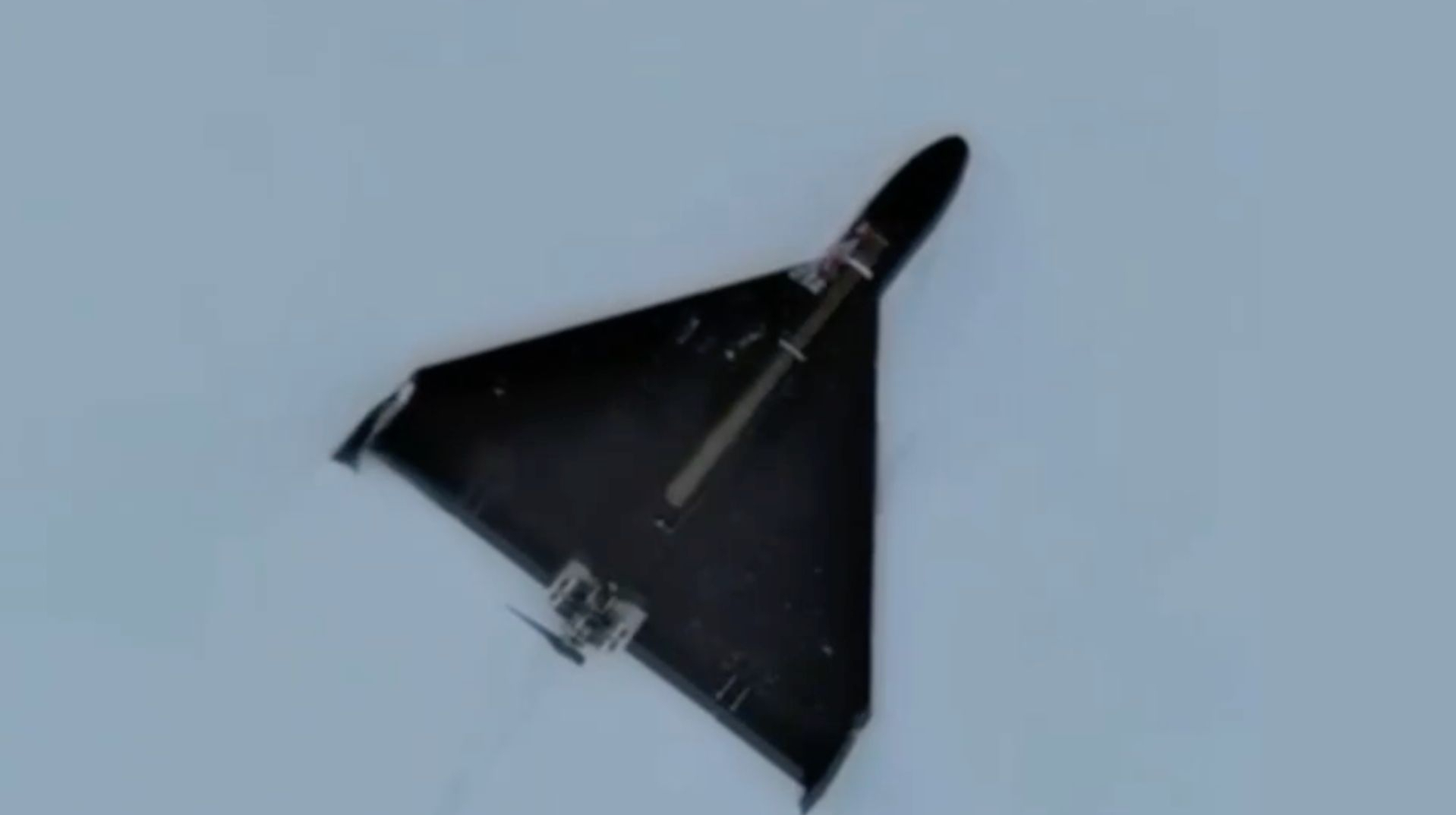
Russia's use of Iranian-designed Shahed drones has emerged as a significant challenge in the Ukraine conflict, prompting dedicated Ukrainian countermeasures.[3] These pioneering low-cost, long-range attack drones have become a scourge for Ukraine, with Russia unleashing thousands of them on its enemy every month.[3] Ukraine is actively pursuing strategies to defeat these threats, as explored in reports on its defensive innovations.[3]
The Shahed drones, designed by Iran, stand out for their low-cost production and extended range, enabling mass deployment against Ukrainian infrastructure and positions.[3] Russia's monthly launch of thousands amplifies their impact, turning them into a persistent element of the aerial campaign.[3] Titled "Inside Ukraine's drive to defeat the dreaded Shahed drone," coverage details how these weapons have evolved into a defining feature of the conflict.[3]
Ukraine's response involves a multifaceted drive to neutralize Shaheds, focusing on detection, interception, and disruption technologies.[3] The drones' status as a "scourge" stems from their ability to overwhelm defenses through sheer volume, with thousands deployed monthly by Russia.[3] Iranian design principles—emphasizing affordability and range—allow sustained operations, challenging Ukraine's air defenses.[3]
Efforts to counter Shaheds represent a critical adaptation in the Ukraine conflict, where low-cost threats demand innovative, scalable solutions.[3] Russia's reliance on thousands per month underscores the tactical shift toward drone saturation, met by Ukraine's proactive measures.[3] The pioneering nature of these Iranian drones has forced evolutionary changes in Ukrainian tactics, prioritizing anti-drone capabilities.[3] Ongoing developments in this area continue to shape the aerial dimension of the fighting.[3]
{IMAGE_3}
North Korean Soldiers in the Ukraine Conflict
North Korean soldiers deployed with Russian forces have been publicly praised by Kim Jong Un for resorting to self-detonation to avoid capture by Ukrainian troops.[4] This commendation confirms a long-suspected battlefield policy among these foreign fighters, involving grenade detonation as a means to prevent surrender.[4] Kim Jong Un highlighted troops who "self-blasted" during combat against Ukraine, framing it as commendable loyalty.[4]
The report, "Kim Jong Un praises troops who ‘self-blasted’ to avoid capture by Ukraine," details how these soldiers killed themselves via grenades while supporting Russia's war effort.[4] This tactic, now verified through North Korean leadership statements, reveals the extreme directives given to these contingents in the Ukraine conflict.[4] Fighting on Russia's side, the soldiers' actions were elevated as exemplary, avoiding capture at all costs.[4]
Kim Jong Un's praise extends to the policy of self-detonation, confirming suspicions of enforced no-surrender rules.[4] Deployed against Ukrainian forces, these North Korean troops embody foreign involvement, with their methods drawing international attention.[4] The use of grenades for self-destruction underscores the intensity of their commitment, as articulated by Pyongyang.[4]
This development adds a layer to the multinational aspects of the conflict, where North Korean participation includes such drastic measures.[4] Confirmation of the policy through Kim's statements provides insight into operational ethos among these fighters.[4] Their role alongside Russia, marked by self-blast actions, highlights evolving alliances and tactics.[4]
Emerging Elements in the Conflict
New dynamics are influencing the conflict, including Russia's deployment of Iranian-designed Shahed drones and the involvement of North Korean soldiers.[3][4] Ukraine's General Staff notes countermeasures against these drones, which Russia launches by the thousands monthly, while Kim Jong Un has endorsed North Korean troops' self-detonation tactics to evade capture.[3][4]
The integration of Shaheds—low-cost, long-range Iranian drones—represents a technological escalation, met with Ukraine's dedicated defeat strategies.[3] Simultaneously, North Korean fighters' confirmed policy of grenade self-destruction, praised by their leader, introduces human elements of foreign augmentation.[4] These factors combine to broaden the conflict's scope beyond traditional bilateral engagements.[3][4]
Ukraine's active response to Shahed threats parallels efforts to counter hybrid threats like foreign troops.[3] Kim Jong Un's public approval of self-blasting confirms tactical extremism among North Koreans fighting for Russia.[4] Together, drone proliferation and overseas personnel signal adaptive warfare approaches.[3][4]
These emerging aspects, grounded in official reports, illustrate the conflict's complexity, with Ukraine addressing both aerial and infantry innovations.[3][4]
What to watch next: Further General Staff updates on clash numbers like the recent 189, Russian losses exceeding 1,420 soldiers and 1,900 UAVs, Pokrovsk front activity, Shahed drone countermeasures, and developments involving North Korean troops will provide key indicators of evolving battlefield trends.[1][2][3][4][5]